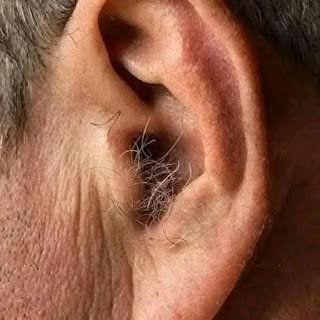
The graphic shows a close-up photograph of a human ear with visible hair growing from the external auditory canal, accompanied by an incomplete, sensationalized prompt: “DID YOU KNOW THAT? If hair grows on your ears, it’s because your body…”. While viral posts often frame ear hair growth as a sign of hidden diseases or extreme physiological imbalances, it is actually a benign, natural physiological phenomenon linked to aging, genetics, and normal hormonal shifts.
Biology and Causes of Ear Hair Growth
- Hormonal Sensitivity (Dihydrotestosterone – DHT): As individuals age—particularly men—hair follicles in specific areas, such as the outer ear canal and nostrils, become increasingly sensitive to testosterone and its byproduct, dihydrotestosterone (DHT). Rather than causing hair loss as it does on the scalp, DHT causes the fine, invisible vellus hairs in the ears to transition into coarse, visible terminal hairs (a process known as follicle miniaturization reversal or androgenic hair growth).
- Genetics: The tendency to sprout prominent ear hair is heavily influenced by hereditary traits. In some cultures and family lineages, ear hair growth is an inherited genetic trait passed down through paternal lines.
- Protective Biological Function: Tragus and canal hairs (tragi) serve a natural defense role. They act as a physical barrier to trap dust, dirt, debris, and insects, preventing foreign particles from entering the ear canal and reaching the delicate tympanic membrane (eardrum).
- Debunking Medical Myths: Viral claims often falsely link ear hair directly to heart disease or severe systemic illness. While historical studies explored minor correlations between Frank’s sign (earlobe creases) and cardiovascular health, ear hair itself is purely a benign physical trait rather than a primary medical diagnostic indicator.
Health Clickbait and Curiosity-Gap Engagement
Posts featuring anatomical close-ups paired with unfinished questions represent standard health-anxiety clickbait designed to exploit body insecurities.
Content creators utilize these tactics to manipulate platform algorithms:
- The Incomplete Premise Hook: Starting a post with an unfinished sentence (“If hair grows on your ears, it’s because your body…”) creates an artificial curiosity gap, enticing users to click or hunt through comments for the rest of the statement.
- Medical Anxiety Triggering: Implying that a normal physical trait is secretly caused by an alarming bodily defect forces users to stop scrolling and inspect their own bodies out of concern.
- Comment Section Farming: Viewers flood the post with guesses, personal anecdotes, or jokes, which drives up interaction metrics and tricks social algorithms into boosting the content’s viral distribution.
Ear hair growth is a completely normal, harmless result of aging and hormonal genetics that can be safely managed with routine trimming or grooming if desired.
Leave a Reply