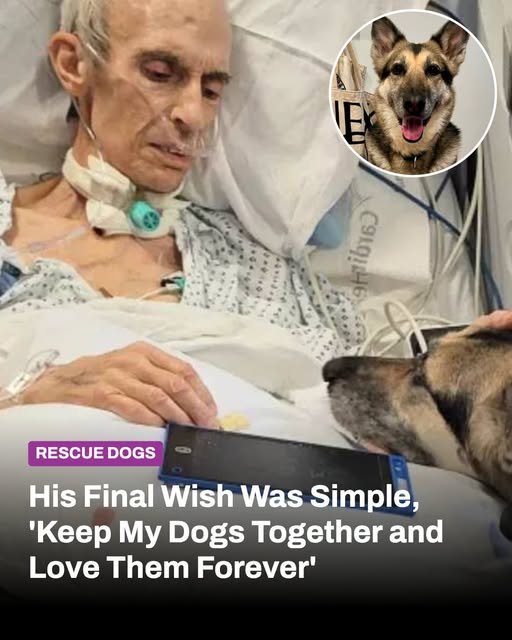
The graphic shows an elderly, terminally ill patient in a hospital bed with nasal cannulas and medical monitoring equipment, resting his hand near a dog. The banner reads: “RESCUE DOGS: His Final Wish Was Simple, ‘Keep My Dogs Together and Love Them Forever’”. This image documents a genuine, deeply poignant moment regarding end-of-life care and pet estate planning, though it is frequently republished online to leverage intense emotional responses.
The Human-Animal Bond in Palliative Care
- The Story Behind the Photo: This photograph captures terminal patient David “Daven” Cooper, who was receiving end-of-life care in a hospital setting. His primary wish before passing was to ensure that his two beloved German Shepherds, Shadow and Baby, would be adopted together into a loving home rather than separated or surrendered to a shelter system.
- Animal-Assisted Comfort in Hospitals: Modern palliative and hospice care programs increasingly accommodate visits from personal pets or certified therapy animals. Studies consistently show that contact with familiar pets reduces anxiety, lowers pain perception, and provides critical emotional comfort to terminally ill patients.
- Pet Estate Planning: The story highlights a critical, often-overlooked aspect of estate management: arranging legal guardianship, pet trusts, or dedicated rescue placement for surviving companion animals when an owner passes away.
Emotional Exploitation and Engagement Mechanics
While grounded in a real, heartbreaking human event, content aggregators frequently utilize photos of vulnerable, dying patients to manipulate social media platforms:
- High-Intensity Emotional Hooks: Photos depicting severe illness paired with self-sacrificing final wishes (“His final wish wasn’t for himself; it was for his dogs”) trigger overwhelming feelings of grief and empathy, guaranteeing that users stop scrolling.
- Comment Volume Generation: Heartwarming or tear-jerking animal welfare stories prompt thousands of viewers to leave condolences, prayers, and personal stories, creating massive comment engagement that triggers social media algorithms to boost post visibility.
- Monetization and Traffic Harvesting: Aggregator accounts use these emotionally charged posts to route traffic to ad-monetized blogs, digital storefronts, or dubious donation pages that may not actually benefit the shelter or family involved.
Ensuring companion animals are cared for after an owner’s passing is a meaningful aspect of end-of-life preparation, best secured through legal pet trusts or formal arrangements with trusted family and reputable rescue organizations rather than relying on viral internet pleas.
Leave a Reply