Blog

  • Deconstructing Health Shock Clickbait: Toxic Squash Syndrome (Bitter Bottle Gourd)

    Deconstructing Health Shock Clickbait: Toxic Squash Syndrome (Bitter Bottle Gourd)

    The image depicts a child sleeping in a bed beside an adult receiving medical care with oxygen tubes, overlaid with a picture of sliced green squash/bottle gourd (Lagenaria siceraria). The text claims “Family Of 4 Collapses After Eating This Vegetable. Doctors Warn Its Toxicity Can Be Stronger Than Arsenic.” This graphic represents a sensationalized food-fear engagement template designed to leverage medical shock value for clicks.

    Anatomy of the Compound & Clickbait Strategy

    • The Scientific Reality (Toxic Squash Syndrome): Members of the Cucurbitaceae family—including bottle gourds (lauki), zucchini, and cucumbers—contain natural defensive chemicals called cucurbitacins. While ordinary cultivated gourds contain safe, trace amounts, environmental stress (such as extreme heat, drought, or improper cross-pollination) can cause a massive spike in cucurbitacin levels. High concentrations taste extremely bitter and cause severe toxic gastroenteritis, rapid blood pressure drop (hypotension), and upper gastrointestinal bleeding.
    • Sensationalized Arsenic Comparison: While bitter bottle gourd juice can lead to severe illness or hospitalization if consumed in large quantities, claiming its toxicity is “stronger than arsenic” is an exaggerated hook intended to spark public panic.
    • Shock Value Visuals: Placing stock photos of hospitalized patients and children next to standard sliced vegetables exploits health anxiety and fear of common household foods.
    • Simple Prevention: The safety rule for gourds is straightforward—always taste a small piece raw before cooking or juicing. If it tastes unusually bitter, spit it out and throw the vegetable away immediately.
  • Deconstructing Health & Paranormal Hybrid Bait: The 3 A.M. Awakening

    Deconstructing Health & Paranormal Hybrid Bait: The 3 A.M. Awakening

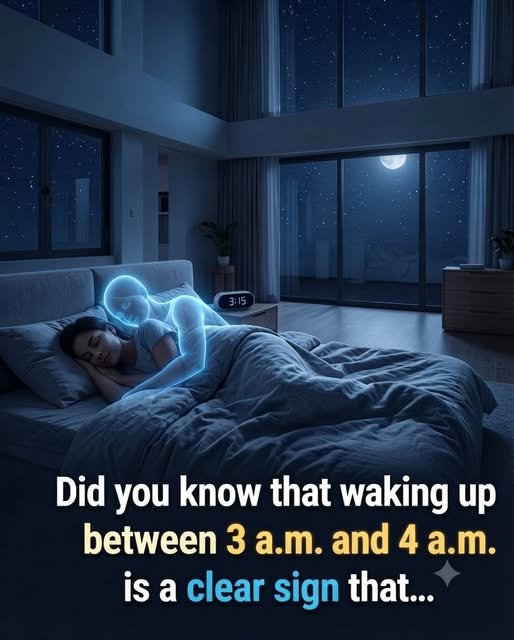
    The image pairs AI-generated artwork of a glowing, spectral entity hovering over a sleeping woman with a classic cliffhanger prompt (“Did you know that waking up between 3 a.m. and 4 a.m. is a clear sign that…”). This represents a cross-niche engagement template engineered to exploit both medical self-diagnosis anxieties and supernatural superstitions.

    Anatomy of the Mechanics & Clickbait Strategy

    • The Medical Reality: Experiencing brief awakenings around 3:00 to 4:00 AM is a routine feature of human sleep architecture rather than a medical crisis or spiritual phenomenon. As the body progresses through roughly 90-minute sleep cycles, deep slow-wave sleep dominates the early night, while lighter REM sleep and stage 2 sleep dominate the early morning hours. Common triggers for waking during this window include:
      • Circadian Rhythm Shifts: A natural drop in core body temperature and rising cortisol levels preparing the body for the morning.
      • Physiological Triggers: Alcohol processing, blood sugar fluctuations, mild sleep apnea, or bladder pressure.
      • Stress & Anxiety: High baseline cortisol causing hyper-arousal during lighter sleep stages.
    • The Supernatural Crossover Hook: Layering a glowing ghostly figure over the image taps directly into long-standing urban legends and folklore regarding the “witching hour” (traditionally 3:00 AM). Fusing spiritual superstition with medical-sounding phrasing maximizes emotional resonance across diverse audiences.
    • The Cliffhanger Funnel: Leaving the sentence unfinished with an ellipsis (“is a clear sign that…”) forces viewers to click the comment section or external link to find out the “hidden diagnosis” or supernatural cause.
    • Algorithmic Monetization: High comment volume driven by users sharing their personal sleep experiences signals urgency to platform algorithms. Page administrators use this artificially boosted visibility to expand follower counts and route user traffic toward monetized blog networks or unverified health supplements.
  • Deconstructing Sleep Disruption Clickbait: The “3 A.M. Phenomenon” Trap

    Deconstructing Sleep Disruption Clickbait: The “3 A.M. Phenomenon” Trap

    The image features an AI-generated scene of a sleeping woman overlaid with a glowing blue, spectral figure, paired with the text: “Did you know that waking up between 3 a.m. and 4 a.m. is a clear sign that…” This graphic represents a classic medical anxiety and supernatural crossover engagement template engineered to turn standard human physiology into a spooky or alarming mystery.

    Anatomy of the Physiology & Clickbait Strategy

    • The Scientific Reality: Waking up briefy around 3–4 a.m. is a standard part of normal human sleep architecture, not a omen or medical crisis. Most adults complete 90-minute sleep cycles; by 3:00 a.m., sleep shifts heavily into lighter REM stages. Factors like natural cortisol spikes, room temperature changes, blood sugar dips, aging, or mild sleep apnea commonly cause brief awakenings during this window.
    • Supernatural & Fear Framing: By pairing a medical-sounding prompt with a glowing, ghost-like spirit, the image deliberately bridges two high-engagement niches: paranormal superstition (e.g., the “witching hour”) and self-diagnostic medical anxiety.
    • The “Clear Sign That…” Cliffhanger: The sentence cuts off before revealing the answer. This artificial curiosity gap forces users to click into the comment section or follow external links to find out what “condition” or “spirit” is supposedly visiting them.
    • Algorithmic Monetization: Universal relatable experiences (like waking up mid-night) make prime engagement hooks. Users flood the comments sharing their own sleep struggles, which boosts the post’s visibility and allows content networks to monetize traffic via ad-heavy blogs or pseudoscience remedies.
  • Deconstructing Hygiene Fear Clickbait: The Demodex Mite Trap

    Deconstructing Hygiene Fear Clickbait: The Demodex Mite Trap

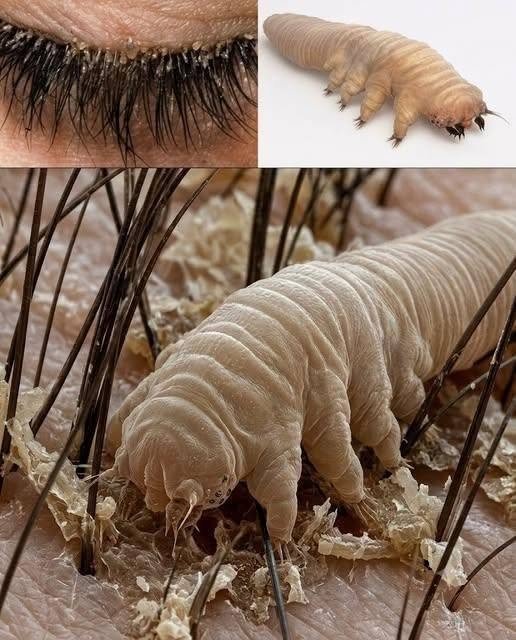
    The image pairs close-up macro shots of human eyelashes with flaky crust along the lid margin alongside 3D biological renderings of microscopic skin parasites, paired with the incomplete clickbait hook “Here are the consequences of sleeping with…” This graphic represents a classic hygiene-shaming and disgust-based engagement template engineered to sensationalize ordinary human biology for viral reach.

    Anatomy of the Organism & Clickbait Strategy

    • Identification: The organisms shown are microscopic face mites (Demodex folliculorum and Demodex brevis). These microscopic arachnids live inside hair follicles and sebaceous glands on human faces (especially eyelashes, eyebrows, and noses). They are a completely normal part of the human skin microbiome—present on virtually all adult humans—and feed on dead skin cells and natural sebum.
    • Pathologizing Normal Biology: While an overpopulation of Demodex mites can occasionally cause blepharitis (eyelid inflammation) or exacerbate rosacea, the post frames a harmless, ubiquitous microorganism as a terrifying “consequence” of poor hygiene, wet hair, or unwashed pillowcases.
    • The Incomplete Sentence Hook: Leaving the caption unfinished (“Here are the consequences of sleeping with…”) pairs with electron-microscope style imagery to induce immediate disgust, forcing viewers to click “See More” or search the comments to figure out what behavior allegedly caused the “infestation.”
    • Algorithmic Monetization: Disgust and skin anxiety are powerful drivers of social media interaction. Content networks deploy these close-up microscopic renderings to provoke visceral reactions, build page reach, and funnel viewers to ad-monetized sites selling unnecessary skin cleansers or eyelid scrubs.
  • Deconstructing Health Panic Clickbait: The Bed Bug Exaggeration Trap

    Deconstructing Health Panic Clickbait: The Bed Bug Exaggeration Trap

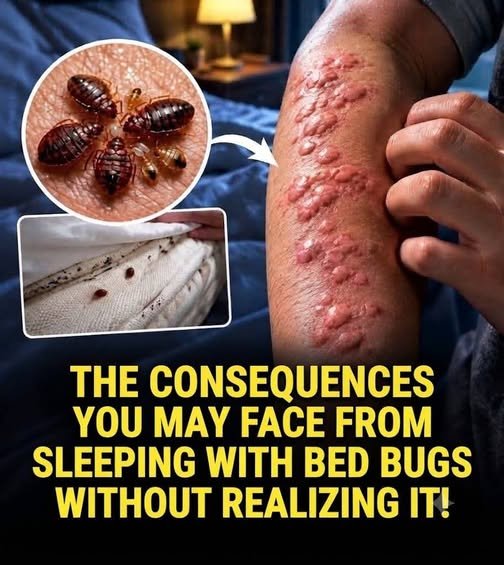
    The image features an arm covered in severe, raised, confluent skin lesions next to inset graphics of bed bugs (Cimex lectularius) and a contaminated mattress seam, paired with text reading, “THE CONSEQUENCES YOU MAY FACE FROM SLEEPING WITH BED BUGS WITHOUT REALIZING IT!” This graphic represents a classic health anxiety and disgust-based clickbait template engineered to trigger visceral horror and mass sharing.

    Anatomy of the Misinformation & Clickbait Strategy

    • Medical Disconnect & Image Exaggeration: Real bed bug bites typically appear as small, itchy, red bumps often arranged in a line or cluster (“breakfast, lunch, and dinner” pattern). The severe, blistering rash depicted on the main arm photo does not represent a standard bed bug reaction; it resembles severe contact dermatitis, shingles, or an AI-generated extreme skin condition designed purely for graphic shock value.
    • Sensationalized Fear Framing: By pairing graphic medical imagery with an alarming warning (“without realizing it”), the post targets the universal phobia of unseen parasites invading personal home spaces.
    • The Suspense Narrative: The user prompt cuts off mid-sentence (“These Are the Consequences of Sleeping with…”), working in tandem with the visual shock to drive viewers to click “See More” or check the comment section for details.
    • Monetization Funnel: Parasite anxiety is one of the highest-performing drivers of digital engagement. Content networks deploy these sensationalized graphics to build page traffic, farm likes and shares from panicked users, and direct traffic to ad-monetized blogs selling unverified pest control or medical remedies.
  • Deconstructing Optical Illusion Clickbait: The Sky “Eye” Pareidolia Trap

    Deconstructing Optical Illusion Clickbait: The Sky “Eye” Pareidolia Trap

    The image displays a grid of four photo panels showing backlit night clouds parted around the moon above a treeline, paired with a classic mystery caption (“My brother took this photo only 21 km from our house… no one noticed the most important detail!”). This graphic represents a pareidolia-driven engagement template engineered to trigger optical curiosity and artificial debate.

    Anatomy of the Illusion & Clickbait Strategy

    • The Optical Illusion (Pareidolia): When viewed as a whole, the cloud formation lit by the moon naturally resembles a giant, glowing human eye staring out of the dark sky. The crescent moon forms the glint or pupil, while the surrounding breaks in the dark cloud cover form the sclera and eyelids. This psychological phenomenon—where the human brain perceives familiar shapes (like faces or eyes) in random patterns—is known as pareidolia.
    • The “Hidden Detail” Lie: Claiming that “no one noticed the most important detail” is a deliberate mind game. There is no secret anomaly, hidden craft, or secondary detail in the image. The entire focus is simply the eye-like optical illusion created by normal cloud geometry.
    • Grammatical Inconsistency as Bait: Notice the subtle contradiction in the caption (“My brother took this photo… She shared it on her page”). Content farms frequently use automated or translated text templates with pronoun errors, which double as accidental comment-bait when users enter the reply section to point out the typo.
    • Algorithmic Monetization: Prompts claiming a “hidden detail” force viewers to stare at the image longer (increasing dwell time) and zoom in. When users jump into the comments to ask what the detail is or state that they see an eye, the platform algorithm registers massive engagement, boosting the post’s reach to monetize ad impressions.
  • Deconstructing Health Advisory Clickbait: The Left-Side Sleeping Diagram

    Deconstructing Health Advisory Clickbait: The Left-Side Sleeping Diagram

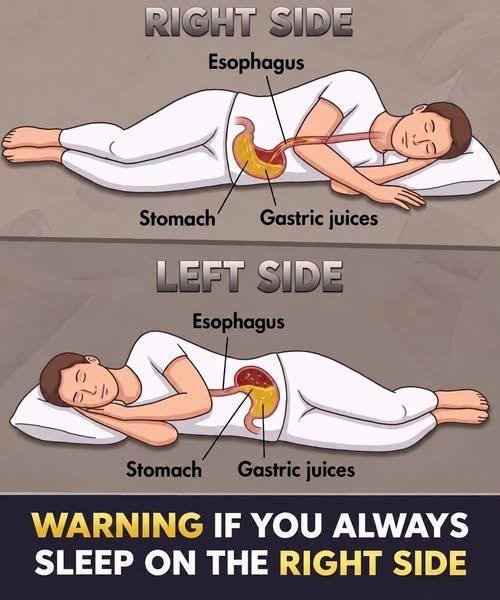
    The image depicts an anatomical diagram comparing gastric juice levels in the stomach when sleeping on the right side versus the left side, overlaid with a dramatic text banner stating, “WARNING IF YOU ALWAYS SLEEP ON THE RIGHT SIDE.” This graphic represents a health-anxiety clickbait template that takes a legitimate medical nuance and repackages it with alarmist framing to drive social media sharing.

    Anatomy of the Science & Clickbait Strategy

    • The Underlying Medical Fact: The core anatomical premise shown is actually rooted in real gastroenterology principles. Because the human stomach curves natural toward the left side of the abdomen, sleeping on your left side keeps the junction between the stomach and esophagus (the lower esophageal sphincter) above the level of gastric acid. Sleeping on your right side places the stomach higher than the sphincter, allowing stomach acid to pool against it and potentially trigger acid reflux (GERD) or heartburn.
    • The “WARNING” Alarmism: While left-side sleeping is often recommended for people suffering from chronic acid reflux or during late-stage pregnancy, framing right-side sleeping with a stark “WARNING” is designed to induce unnecessary panic in healthy individuals who do not suffer from digestive issues.
    • The Engagement Strategy: Health posts that use medical illustrations combined with urgent warnings tap into self-diagnosis tendencies. Viewers share the post with family members or leave comments asking for medical advice, which rapidly boosts the post’s visibility across social feeds.
    • Monetization Funnel: Aggregator pages deploy these simplified health diagrams to gain authority, build massive follower counts, and direct users to ad-heavy health blogs, supplement sales, or affiliate links in the comment section.
  • Deconstructing Public Health Panic Clickbait: The Toilet Paper Needle Myth

    Deconstructing Public Health Panic Clickbait: The Toilet Paper Needle Myth

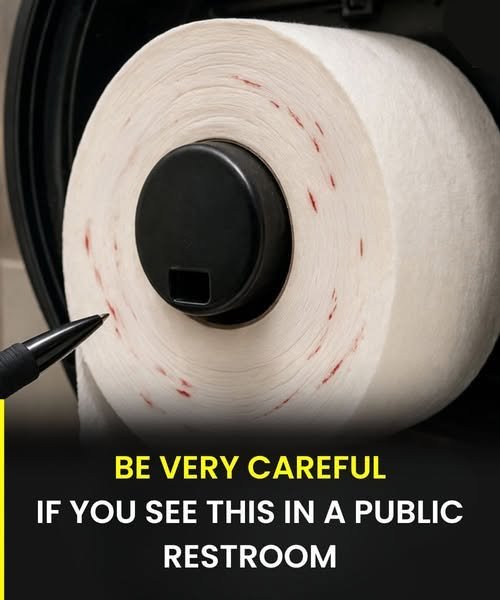
    The image shows a large roll of public restroom toilet paper marked with red flecks, pointed at by a pen, accompanied by text reading, “BE VERY CAREFUL IF YOU SEE THIS IN A PUBLIC RESTROOM.” This graphic represents a classic fear-mongering viral warning template that weaponizes urban legends to generate outrage and mass shares.

    Anatomy of the Myth & Strategy

    • The Viral Legend: The post relies on a recurring internet rumor claiming that red marks on public toilet paper rolls are blood left behind by intravenous drug users cleaning contaminated needles.
    • The Practical Reality: In commercial manufacturing and custodial maintenance, red or pink markings on large paper rolls typically indicate either a factory end-of-roll marker (notifying custodians to change the roll soon) or minor dye transfer/machinery residue from the production process.
    • Fear-Based Engagement: Leveraging anxieties around public hygiene, blood-borne pathogens, and illicit drug use guarantees an immediate emotional reaction. Users share the post out of a sense of public duty to “warn” friends and family without verifying the claim.
    • Algorithmic Monetization: High share counts and frantic comment sections signal to platform algorithms that the image is critically urgent content. Page administrators use this viral velocity to farm followers, build page reach, and steer users toward ad-monetized external sites.
  • Deconstructing Celebrity Clickbait: The Shiloh Jolie-Pitt Silence Myth

    Deconstructing Celebrity Clickbait: The Shiloh Jolie-Pitt Silence Myth

    The image pairs a portrait of Shiloh Jolie-Pitt with her father, Brad Pitt, alongside a sensationalized, unfinished headline: “Brad Pitt’s daughter has broken her silence: ‘My dad used to…’” This graphic is a classic example of fabricated celebrity clickbait designed to exploit public curiosity surrounding high-profile family disputes.

    Anatomy of the Hoax & Strategy

    • Fabricated Quote: Neither Shiloh Jolie-Pitt nor any of Brad Pitt’s other daughters have given a tell-all interview or made a public statement featuring the phrase “My dad used to…” The quote is entirely invented to generate intrigue.
    • The Cutoff Sentence Hook: By leaving the statement unfinished with an ellipsis (…), the post triggers curiosity, prompting viewers to click through to external websites or engage in the comments.
    • Exploiting Real-World Context: The clickbait feeds on real-life news regarding the family’s dynamics. Shiloh legally dropped “Pitt” from her surname upon turning 18, and several of her siblings (including Zahara and Vivienne) have also publicly used “Jolie” instead of “Jolie-Pitt.” Content farms weaponize these actual events to make fake interview headlines sound plausible.
    • Algorithmic Monetization: High click-through rates and active discussions drive engagement metrics on social platforms. Page administrators use these viral tactics to farm traffic, build follower bases, and direct users to ad-monetized sites.
  • Deconstructing Health Panic Clickbait: Fordyce Spots

    Deconstructing Health Panic Clickbait: Fordyce Spots

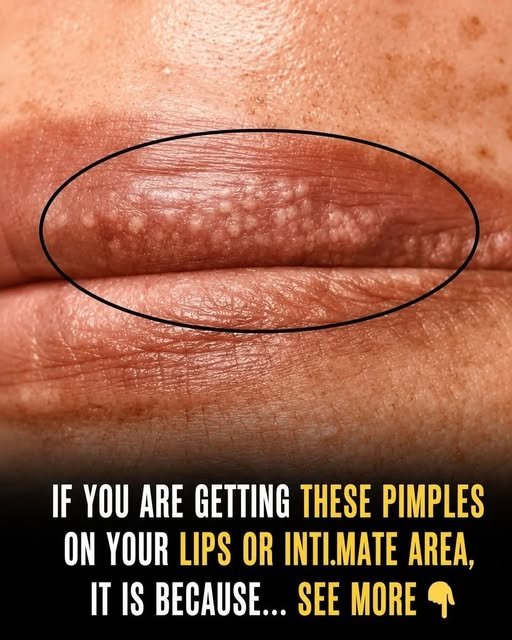
    The image shows a close-up of human lips featuring a cluster of small, yellowish-white bumps, overlaid with text stating, “IF YOU ARE GETTING THESE PIMPLES ON YOUR LIPS OR INTI.MATE AREA, IT IS BECAUSE… SEE MORE.” This graphic represents a classic medical fear-mongering engagement template designed to pathologize harmless, normal anatomical variations to farm clicks and sales.

    Anatomy of the Condition & Strategy

    • Identification: The image displays Fordyce spots (or Fordyce granules). These are completely benign, enlarged, ectopic sebaceous (oil) glands. They commonly appear as small, painless, non-contagious white or yellow bumps on the vermilion border of the lips or genital areas. Up to 80% of adults have them, and they require no treatment or medical intervention.
    • Sensationalized Framing: Content farms intentionally censor terms like “intimate” (“INTI.MATE”) to bypass automated content moderation filters while framing benign anatomy as a dangerous condition or STI (sexually transmitted infection).
    • The “See More” Funnel: Cutoff sentences like “IT IS BECAUSE… SEE MORE” force panicked viewers to click through to external blogs, sponsored landing pages, or quack remedies claiming to “cure” a completely natural bodily feature.
    • Algorithmic Monetization: Leveraging health anxiety and shame around skin anomalies ensures rapid user clicks and comment section queries. Page administrators exploit this concern to farm traffic and generate affiliate revenue.