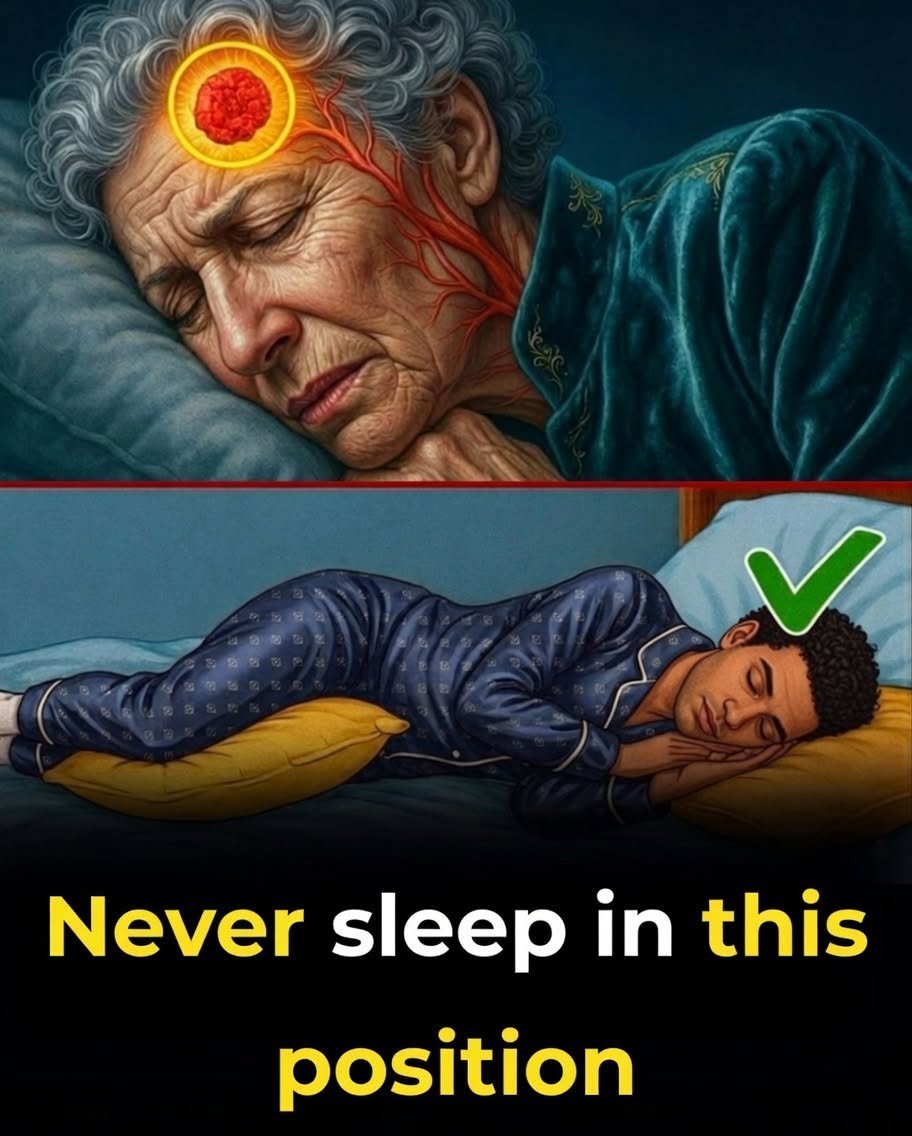
The sleeping position most often discussed in relation to stroke risk is lying flat on your back, or the supine position. However, it would be misleading to say that sleeping on your back directly causes a stroke. Research suggests that this position can worsen obstructive sleep apnea in some people, particularly when the airway becomes more likely to collapse during sleep. Sleep apnea repeatedly interrupts breathing and can contribute to oxygen fluctuations, blood-pressure changes, and cardiovascular stress. The American Heart Association notes that sleep apnea is a recognized stroke risk factor and that many people experience worse apnea when sleeping on their backs compared with their sides.
For seniors, this becomes particularly relevant when loud snoring, gasping, choking during sleep, morning headaches, excessive daytime sleepiness, or repeated nighttime awakenings are present. Studies involving people who have already experienced a stroke have found that obstructive sleep apnea can be strongly position-dependent, with breathing abnormalities often becoming more severe while lying on the back. Sleeping on the side may reduce airway obstruction for many people with positional sleep apnea, but that does not mean every older adult should force themselves into one specific sleeping position. Medical guidance emphasizes individual circumstances, comfort, mobility, respiratory conditions, and other health factors when determining appropriate positioning.
The most important message is therefore not to fear a particular sleeping posture, but to recognize possible sleep apnea and other stroke risk factors. If an older adult regularly snores loudly, stops breathing during sleep, wakes choking or gasping, or remains unusually tired during the day, discussing these symptoms with a healthcare professional may be worthwhile. Managing established risk factors such as high blood pressure, diabetes, smoking, and sleep apnea can be far more important than simply changing sleep position. Disclaimer: This article is for general educational and informational purposes only and does not constitute medical diagnosis, treatment, or personalized health advice. Sleeping on your back does not automatically cause a stroke, and evidence linking sleep position to stroke risk is largely connected to sleep apnea rather than the position itself. Online health claims may be exaggerated, misleading, or unauthenticated, so always verify important information through reliable medical sources and consult a qualified healthcare professional about persistent sleep or breathing problems.
Leave a Reply