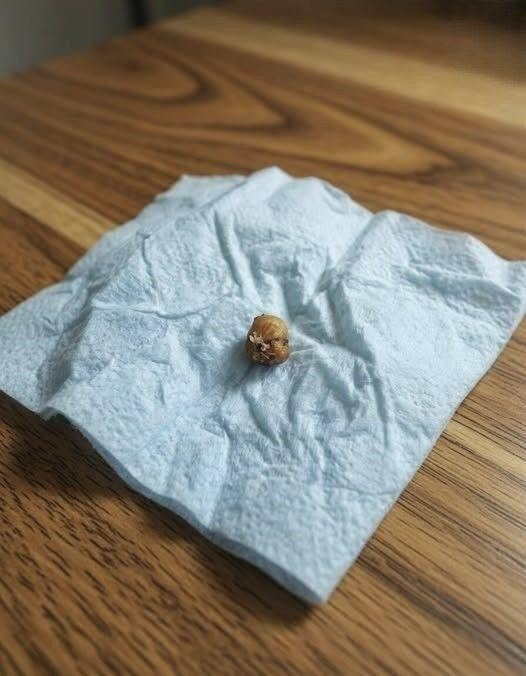
Finding a strange object in someone’s hair can definitely be unsettling, especially when it appears unexpectedly during washing. If the object was about 1 cm long, several possibilities should be considered, and its exact appearance matters. Head lice themselves are usually much smaller—adult lice are approximately 2–3 mm long, around the size of a sesame seed—so a 1-cm object would be unusually large for a louse. (cdc.gov) It could instead be a piece of hair or keratin material, dried product residue, a strand wrapped in debris, or another harmless substance that became detached during washing. One possibility that is often mistaken for lice eggs is a hair cast, a small cylindrical keratin structure that surrounds the hair shaft and can sometimes detach easily. Hair casts are generally only a few millimeters long, however, so a genuinely 1-cm specimen would need closer examination. (pubmed.ncbi.nlm.nih.gov)
Another possibility worth checking is head lice or their eggs, particularly if your girlfriend has scalp itching, a crawling sensation, or small objects firmly attached to individual hairs close to the scalp. Lice eggs (nits) are usually yellow, brown, or tan and are cemented tightly to the hair shaft; they do not simply fall away like dandruff. (aad.org) Importantly, finding one mysterious object does not prove that she has lice. The CDC says the best way to confirm an infestation is to find a live crawling louse, preferably by carefully examining wet hair with a fine-toothed lice comb. (cdc.gov) Avoid immediately applying strong insecticides or home remedies based solely on a mystery object.
The easiest way to narrow it down is to take a clear close-up photograph of the object next to a ruler or coin for scale. Note whether it is moving, whether it has visible legs, whether it is hard or soft, and whether anything appears attached to it. If there are multiple similar objects in the hair, persistent scalp itching, sores, or visible crawling insects, a pharmacist, dermatologist, or other healthcare professional can examine the scalp and confirm whether treatment is necessary. Disclaimer: This article is for general educational and informational purposes only and does not provide a definitive identification or medical diagnosis. A written description alone is not enough to determine what the 1-cm object was. Always verify suspected lice or other scalp conditions through a qualified healthcare professional before beginning treatment.
Leave a Reply