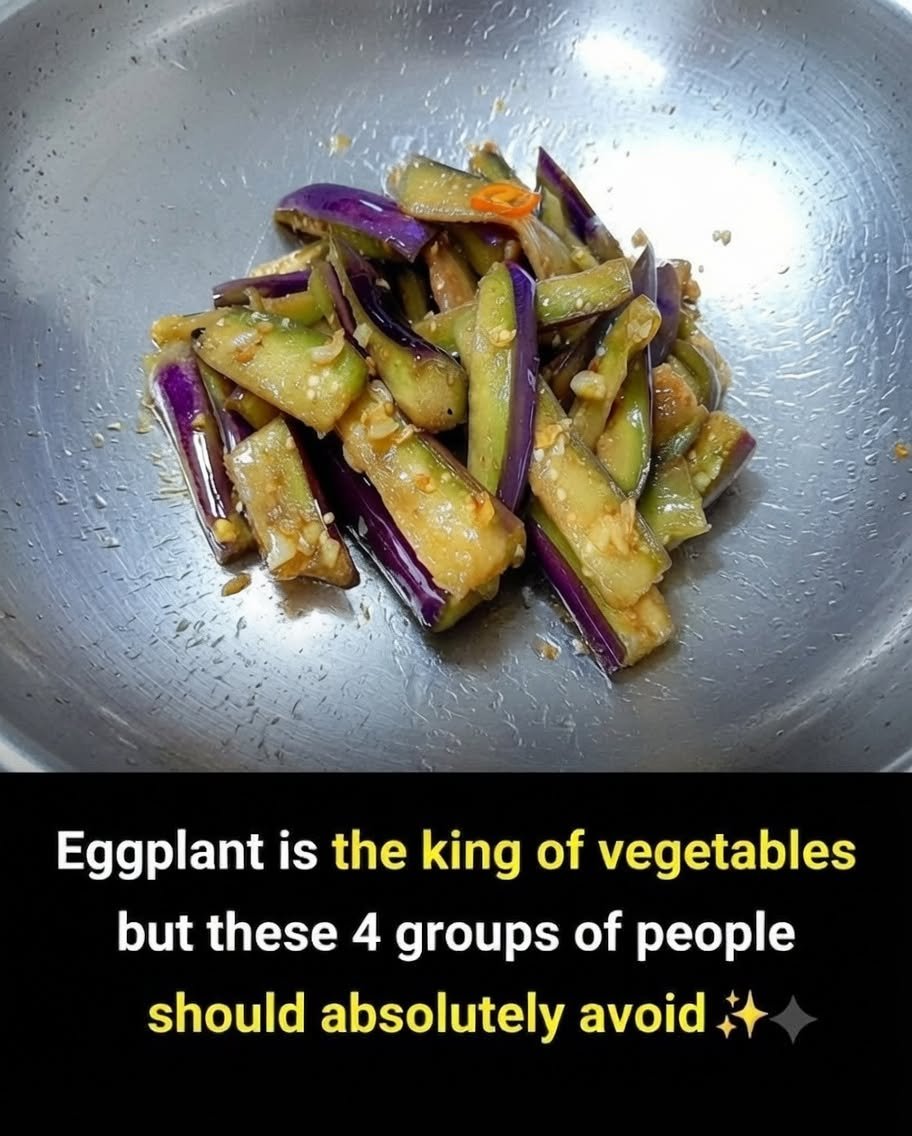
Eggplant, also known as aubergine or brinjal, is a nutrient-rich vegetable that can fit easily into a balanced diet. It provides fiber, potassium, vitamins, and antioxidant plant compounds, while naturally being relatively low in calories. Its purple skin contains compounds such as anthocyanins, which are being studied for their antioxidant properties. Eating eggplant as part of a varied diet may therefore be a simple way to increase vegetable intake. However, calling it a “superfood” or claiming that it can cure a particular disease would go beyond the available evidence. The way it is prepared also matters: deep-frying eggplant can cause it to absorb substantial amounts of oil, dramatically increasing its calorie and fat content. Baking, grilling, steaming, or lightly sautéing can be more practical choices.
Despite its benefits, some people may need to be more cautious. Rare eggplant allergies have been reported, and reactions can include itching, hives, swelling, gastrointestinal symptoms, or, in severe cases, difficulty breathing. Anyone who develops facial or throat swelling, breathing difficulty, or other signs of a serious allergic reaction after eating eggplant should seek emergency medical care. Eggplant is also a member of the nightshade family, but there is no strong evidence that the small amounts of naturally occurring solanine in ordinary eggplant servings make arthritis worse for most people. People who notice a consistent personal reaction should discuss it with a healthcare professional instead of assuming that all nightshade vegetables are harmful.
Another group that may need individualized dietary advice is people with kidney disease or certain potassium-management requirements. Interestingly, eggplant is generally considered a lower-potassium vegetable compared with many other commonly eaten vegetables, and kidney-disease nutrition guides list it among lower-potassium choices. Nevertheless, people with impaired kidney function may have very different potassium limits depending on blood-test results, medications, and disease severity. The safest approach is to enjoy eggplant in reasonable portions and focus on the overall quality of the diet rather than labeling one vegetable as universally good or bad. Disclaimer: This article is for general educational and nutritional information only and does not constitute medical diagnosis, treatment, or personalized dietary advice. Most people can enjoy eggplant as part of a balanced diet, but allergies and individual medical conditions can change what is appropriate. Health claims online may be exaggerated, misleading, or unauthenticated, so always verify important information through reliable medical sources and consult a qualified healthcare professional for personalized guidance.
Leave a Reply