Category: Uncategorized

  • Deconstructing Synthetic Narratives: AI-Generated Family Drama Clickbait

    Deconstructing Synthetic Narratives: AI-Generated Family Drama Clickbait

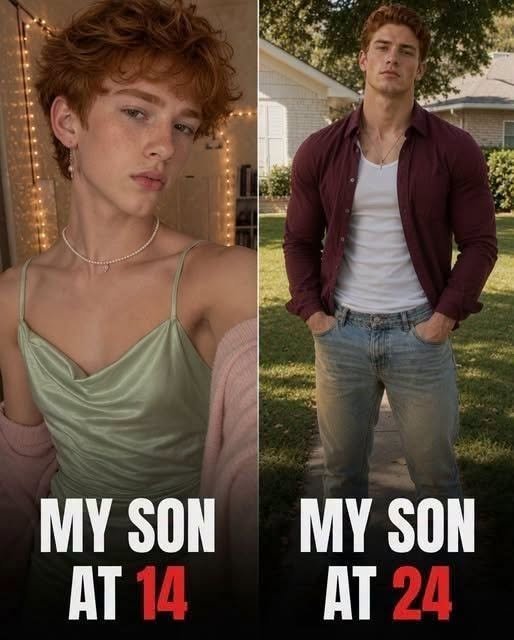
    Social media posts featuring sensationalized multi-paragraph narratives—often titled along the lines of “My Son Ran Away… Six Years Later He Came Back” paired with side-by-side transformation photos—are a widespread form of digital storytelling clickbait. These posts combine artificial visuals with fictional cliffhanger plots to exploit reader emotions and generate online engagement.

    Visual and Narrative Deconstruction

    • AI-Generated Imagery: The side-by-side photo comparison labeled “MY SON AT 14” and “MY SON AT 24” does not feature real people. Both portraits display classic characteristics of generative AI rendering, including hyper-smooth skin textures, synthetic lighting, and artificial facial symmetry designed to look like a dramatic glow-up.
    • Fabricated Drama Arc: The accompanying story uses predictable melodrama tropes—a supportive single mother, an overbearing military stepfather, an emotional family confrontation, a sudden disappearance, and a mysterious six-year return ending on a dramatic cliffhanger.
    • Inconsistent Timelines: The prompt caption relies on common math errors frequently found in recycled clickbait templates, claiming the son left on his 18th birthday and returned “six years later” at age 24, while the graphic labels display age 14 and age 24.

    The Business Behind Digital Fiction Bait

    Pages on platforms like Facebook and TikTok publish these long-form fictional stories alongside synthetic images to achieve specific engagement and monetization targets:

    1. Maximize Dwell Time: The long text forces users to spend several minutes reading on the platform, which algorithms treat as high-quality engagement, boosting the post’s organic distribution.
    2. Comment Section Manipulation: By ending the narrative at a critical climax (“First… I need my stepdad to finally tell you the truth”), the post drives hundreds of curious readers to ask for a “Part 2” or search the comments for answers.
    3. External Link Monetization: Prompts such as “Full Detail Link in Comment” lure users out of the platform onto ad-monetized blogs, content farms, or affiliate link networks designed to generate revenue per click.

    Recognizing synthetic portraits and formulaic cliffhanger stories helps users navigate social media without falling for artificial engagement traps meant to farm clicks and views.

  • Garment History: The Purpose of the Shirt Locker Loop

    Garment History: The Purpose of the Shirt Locker Loop

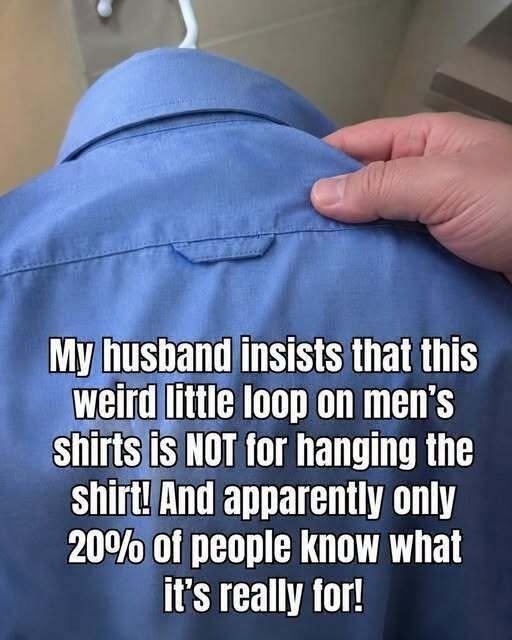
    The small fabric loop located on the back yoke of men’s dress shirts—often called a locker loop or fruit loop—was originally designed for a very simple, practical purpose: hanging the shirt on a peg or hook without causing wrinkles.

    Historical Origins and Design Evolution

    • Nautical Roots: The feature originated in the 1960s with East Coast Ivy League tailors and clothing manufacturers like Gant, who adapted the feature from maritime uniforms. Sailors aboard ships hung their shirts on small wall hooks rather than using modern clothes hangers or closets.
    • Locker Room Utility: The feature became immensely popular among Ivy League students and athletes, who used the loops to hang their button-downs inside gym lockers during changing, keeping the fabric smooth and off the floor.
    • Cultural Symbolism: During the 1960s, locker loops took on a social meaning among young men. Cutting or tearing the loop off signaled that a man was in a committed relationship, while a intact loop implied he was single.

    Social Media Context and Engagement Tactics

    Social media posts featuring mundane clothing details paired with claims like “My husband insists this is NOT for hanging… only 20% of people know what it’s really for!” are classic examples of engagement farming.

    Content creators frame simple historical features as mysterious secrets to manipulate viewer behavior:

    1. Trigger Debate: Fabricating a domestic disagreement or false function encourages thousands of users to comment with opposing opinions, boosting the post’s placement in platform algorithms.
    2. Drive External Traffic: Captions such as “Check Comment Link in Comment” lure curious readers into comment sections to click links pointing to ad-heavy websites, affiliate pages, or spam blogs.

    Despite modern clothes hangers rendering the feature largely cosmetic, major apparel brands continue to include locker loops on heritage-style button-down shirts as a nod to classic menswear design.

  • Viral Media Context: Emotional Storytelling and Engagement Dynamics

    Viral Media Context: Emotional Storytelling and Engagement Dynamics

    The collage depicts a male healthcare worker standing at a patient’s bedside while looking down at a mobile device. Memes featuring this photo—often paired with dramatic headlines like “Male nurse doesn’t know he’s on camera as he grants patient’s last wish”—are widely circulated across social platforms.

    Social Media Narrative vs. Context

    • Emotional Hook: The caption frames the scene as a candid, heartwarming moment where a nurse fulfills a dying patient’s final request, drawing on themes of compassion and selflessness in healthcare.
    • Engagement Drivers: Phrases suggesting the subject was captured “unaware” or “on camera” appeal to viewers’ desire for authentic, unscripted human connection.
    • Algorithmic Impact: Stories of personal sacrifice and emotional moments consistently yield high resharing rates, comment counts, and emotional reactions, driving the post to the top of feed algorithms.

    Digital Content Strategies

    1. Re-captioning Existing Media: Online pages regularly take static photographs of healthcare settings and attach uplifting or tragic backstories to maximize virality.
    2. Comment Section Monetization: These viral posts frequently redirect users to the comment section or external link trees, monetizing the high traffic via ad impressions or affiliate marketing.

    While the exact viral story attached to the image may be exaggerated or unsourced, it highlights the ongoing public appreciation for the dedication and empathy shown by nurses and medical staff every day.

  • Kitchen Tool Identification: The Handheld Wire Cheese Slicer

    Kitchen Tool Identification: The Handheld Wire Cheese Slicer

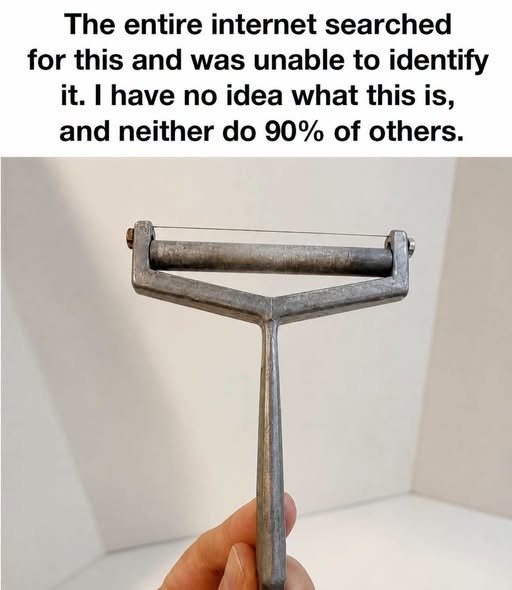
    The metal implement featured in the photograph is a vintage handheld wire cheese slicer, a common household kitchen tool designed for cutting uniform slices from blocks of semi-firm cheese.

    Design and Mechanical Operation

    • Taut Cutting Wire: The key component of the device is a thin, tightly stretched stainless steel wire mounted across the top frame. This wire acts as a blade, slicing cleanly through cheese without sticking or tearing the block.
    • Guide Roller: Positioned directly below the wire is a rotating metal roller. As the user pulls the tool across a cheese block, the roller rests against the top surface to maintain a consistent depth, determining the thickness of each slice.
    • Ergonomic Frame: The cast aluminum or stainless steel handle provides leverage, allowing smooth, continuous cuts with minimal pressure required from the user.

    Social Media Context and Engagement Tactics

    Viral graphics presenting everyday household kitchen tools alongside dramatic claims like “The entire internet searched for this and was unable to identify it” are classic examples of engagement farming.

    Content creators intentionally post recognizable, mass-produced vintage items with sensationalized captions to achieve specific algorithmic goals:

    1. Trigger High Comment Volume: Claiming that “90% of others” cannot identify a familiar item prompts thousands of viewers to comment with the correct name, sharing how often they use it in their own kitchens.
    2. Drive Traffic to External Links: These graphics frequently include captions such as “Full Detail Link in Comment,” directing curious users to comment sections containing links to ad-monetized blogs, affiliate storefronts, or spam websites.

    While modern cheese planes, board-mounted wire slicers, and adjustable guillotine cutter designs have evolved over time, classic roller-and-wire slicers remain widely manufactured and used in kitchens around the world.

  • Insect Identification: Carpet Beetles Under the Mattress

    Insect Identification: Carpet Beetles Under the Mattress

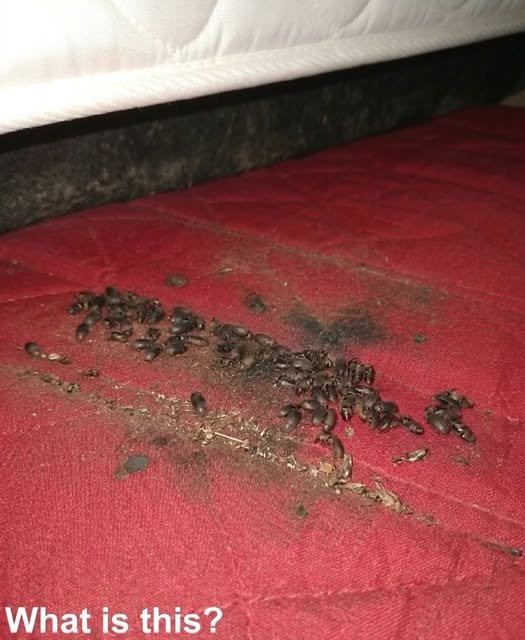
    The cluster of small, dark, hard-shelled insects shown in the photograph are black carpet beetles (Attagenus unicolor) or a related species within the family Dermestidae.

    Biological Profile and Characteristics

    • Appearance: Adult carpet beetles are small (typically 2 to 5 millimeters long), oval-shaped insects with hard wing covers (elytra) ranging from dark brown to solid black.
    • Habitat & Diet: Unlike bed bugs, carpet beetles do not feed on human blood or bite. Instead, they and their larvae feed on natural fibers, keratin, and organic debris—such as shed skin cells, hair, wool, feather remnants, and natural cotton or linen components found along mattress seams and bed frames.
    • Distinction from Bed Bugs: Bed bugs are flat, reddish-brown, flightless parasites that hide in tight seams and feed at night, whereas carpet beetles are rounder, have hard protective shells, and can fly.

    Practical Control and Removal Steps

    1. Thorough Vacuuming: Vacuum every seam, crease, and underside of the mattress, box spring, bed frame, and surrounding floor/skirting boards using a crevice attachment to remove adults, larvae, and eggs.
    2. High-Heat Cleaning: Remove and wash all bedding, sheets, and mattress covers in hot water (at least 60°C / 140°F) and dry on high heat to eliminate all life stages.
    3. Steam Treatment: Applying steam to the seams and underside of the mattress penetrates deep into the fabric weave, killing hidden eggs and larvae.
    4. Protective Encasement: Enclosing the mattress and box spring in a zippered, pest-rated protector blocks access and prevents future infestations.

    Social Media Context and Engagement Tactics

    Sensationalized social media posts featuring pest clusters paired with dramatic, panicked stories (“I heard a noise… I froze in place… What is this?”) are classic examples of engagement farming.

    Creators stage or repurpose startling photos with cliffhanger narratives to achieve specific metrics:

    1. Drive High Engagement: The shocking visual prompts viewers to react in fear, share personal pest stories, or correct the drama, inflating the comment count.
    2. Algorithmic Promotion: Platforms prioritize posts with high comment velocity, pushing the content to wider feeds to generate clicks and ad revenue.

    While a cluster of carpet beetles under a mattress requires basic cleaning and pest management, these insects are non-hazardous, non-parasitic scavengers rather than dangerous pests.

  • Visual Deception: Identifying the Sprouting Germinated Seed

    Visual Deception: Identifying the Sprouting Germinated Seed

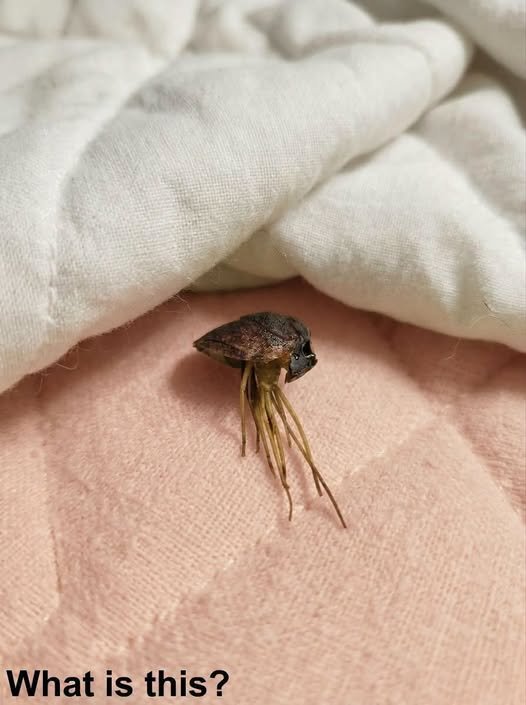
    The object shown upside-down under the blanket in the photograph looks like an alien organism or a strange deep-sea crustacean, but it is actually a sprouted seed or pit, likely from a fruit like an avocado, lychee, or rambutan.

    Biological Identification and Mechanism

    • The Shell/Cap: The dark, shell-like upper structure is the outer coat (testa) of the seed, which splits open as the embryonic plant inside expands.
    • The “Legs”: What appear to be insect legs or tentacles are actually emerging primary taproots and secondary root structures growing outward to anchor the plant and absorb moisture.
    • Internal Germination (Vivipary): This often occurs when a seed begins germinating inside a ripe fruit prior to harvesting, or when a discarded fruit pit finds enough ambient moisture and darkness—such as inside a laundry pile or household corner—to sprout roots.

    Social Media Context and Engagement Farming

    Viral posts featuring unusual botanical specimens or dried seed pods paired with anxious captions like “I came home tired… I discovered this under my blanket… What is this?” are standard forms of digital engagement farming.

    Content creators stage these everyday biological oddities in absurd household locations (like inside a bed) to achieve specific online goals:

    1. Pique Curiosity and Fear: The visual resemblance to a giant spider, beetle, or parasite triggers an immediate emotional response, compelling viewers to click, share, or read further.
    2. Maximize Comment Activity: Prompting viewers to guess what the object is results in thousands of comments filled with joke responses, genuine concern, and factual corrections, which signals algorithms to push the post to wider audiences.

    While encountering a rooted pit under bed covers makes for a startling visual illusion, the object is entirely harmless plant matter rather than a dangerous pest.

  • Domestic Artifact Identification: The Antique Charcoal Box Iron

    Domestic Artifact Identification: The Antique Charcoal Box Iron

    The object featured in the photograph is an antique charcoal box iron, a heavy cast-iron domestic appliance widely used for pressing clothes and textiles from the 19th century into the early 20th century, before widespread electrification.

    Design and Mechanical Operation

    • Internal Heat Source: Unlike solid “flat irons” or “sad irons” that required heating on a hot stove, a charcoal iron featured a hollow internal body designed to hold burning charcoal embers, keeping the heavy metal base continuously hot during use.
    • Air Circulation Features: The cutouts or vents along the lower sides allowed airflow to keep the charcoal burning, while the decorative, bird-shaped latch at the front secured the hinged lid to contain ash and embers.
    • Ergonomic Construction: The wooden handle atop the cast-iron bracket protected the user’s hands from conducting extreme thermal heat radiating from the iron’s heavy base.

    Social Media Context and Engagement Farming

    Viral posts displaying recognizable antique household items paired with provocative claims—such as “I’m positive you will not know what this is. If you really know this then you must be old”—are standard examples of online engagement farming.

    Content creators frequently circulate these nostalgia-driven prompts to achieve several algorithmic goals:

    1. Maximize Comment Volume: Challenging the viewer’s age or knowledge prompts thousands of users to comment with the correct name, personal childhood memories, or defenses of their age.
    2. Boost Algorithmic Visibility: High comment frequency signals strong user interaction to social media algorithms, pushing the image into broader user feeds to generate clicks and ad revenue.

    While modern electric irons and steamers have rendered charcoal irons obsolete in most domestic settings, these cast-iron tools remain iconic pieces of historical domestic technology and popular vintage collectibles worldwide.

  • Identifying Head Lice: Understanding Transmission, Treatment, and Social Media Clickbait

    Identifying Head Lice: Understanding Transmission, Treatment, and Social Media Clickbait

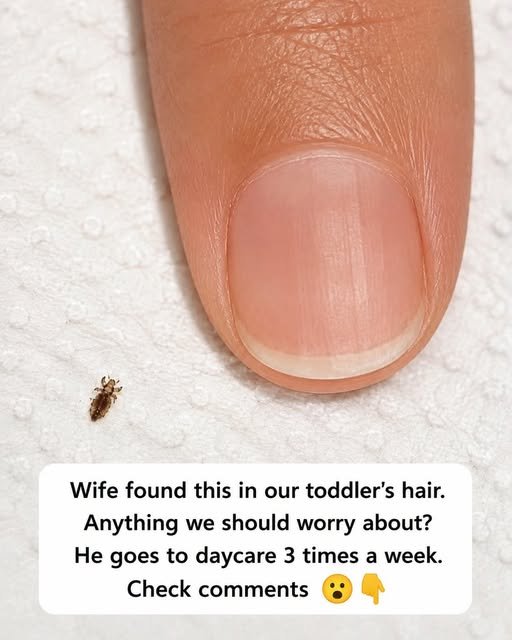
    The tiny insect featured next to a human fingernail is a adult head louse (Pediculus humanus capitis), a common parasite that resides on human scalps. Head lice infestation, medically known as pediculosis capitis, is a very frequent occurrence among young children attending daycares, preschools, and elementary schools worldwide.

    Identification and Transmission

    • Physical Characteristics: Head lice are wingless, tan-to-grayish insects about the size of a sesame seed (2–3 mm long) with specialized claws adapted for grasping hair shafts.
    • How They Spread: Contrary to popular myths, lice cannot fly or jump; they spread almost exclusively through direct head-to-head contact during play, naptime, or shared activities.
    • Signs of Infestation: Common indicators include intense scalp itching (caused by an allergic reaction to louse bites), tickling sensations in the hair, small red bumps on the neck or scalp, and the presence of tiny white-to-tan oval eggs (nits) firmly glued near the base of hair shafts.

    Treatment and Prevention Guidelines

    Treating head lice involves applying an over-the-counter or prescription pediculicide lotion or shampoo followed by thorough wet-combing with a fine-toothed nit comb to remove remaining eggs. Household precautions include washing recently used bedding, clothing, and hats in hot water and drying on high heat. While annoying and inconvenient, head lice do not carry or transmit infectious diseases and are not a sign of poor personal hygiene or an unclean home environment.

    Social Media Context and Engagement Tactics

    Social media graphics displaying extreme close-ups of household pests paired with anxious parenting captions (such as “Anything we should worry about? Check comments”) are frequently deployed as engagement farming. Content creators post these familiar childhood scenarios to spark wide debate in the comment section—where users share personal remedies, debate daycare policies, and click external links to ad-monetized blogs or commercial product pages.

  • Identifying Historical Tools: The Vintage Sewing Thimble

    Identifying Historical Tools: The Vintage Sewing Thimble

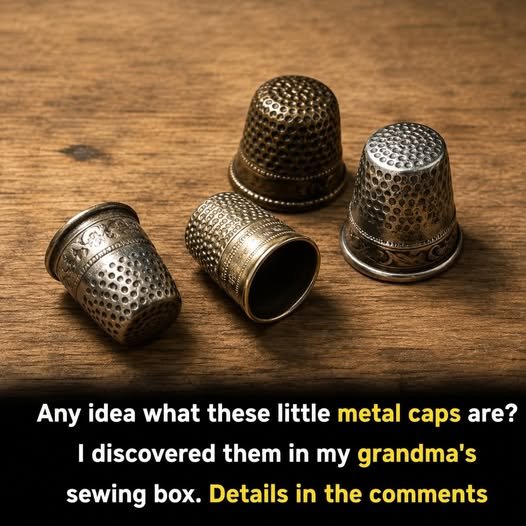
    The objects pictured in the image are traditional metal sewing thimbles. Commonly made from materials like brass, sterling silver, steel, or pewter, these small, cap-shaped protective devices have been fundamental tools in hand-sewing, tailoring, and mending for centuries.

    Purpose and Functionality

    • Finger Protection: A thimble is worn over the fingertip—typically the index or middle finger—to protect the skin from being repeatedly pricked or bruised while pushing a needle through heavy fabrics or thick materials like leather.
    • Dimpled Texture: The distinctive pit marks, or “dimples,” surrounding the exterior are designed to catch the dull eye end of the sewing needle, preventing it from slipping while force is applied.
    • Decorative Bands: Many vintage and antique thimbles feature decorative engraved bands near the rim, making them popular collectible items and heirloom keepsakes.

    Social Media Context and Engagement Tactics

    Viral posts presenting common vintage items alongside inquisitive captions like “Does anyone have a clue what these are…” or “Details in the comments” are standard examples of engagement farming. Notice the contradiction between the user’s prompt (“found in my grandmother’s crockery cupboard”) and the text on the image (“discovered them in my grandma’s sewing box”).

    Content creators intentionally post recognizable everyday items with mismatched text or false mystery to:

    1. Trigger High Comment Activity: Encouraging thousands of users to correct the text or identify the obvious object, which boosts the post’s visibility across platform algorithms.
    2. Drive External Clicks: Directing users to comment sections that contain links to ad-monetized blogs, spam storefronts, or external clickbait pages.

    While hand-sewing has largely been supplemented by modern machines, thimbles remain essential tools for quilters, tailors, and needlework enthusiasts worldwide.

  • Fact-Checking Celebrity Death Rumors: The David Bradley Hoax

    Fact-Checking Celebrity Death Rumors: The David Bradley Hoax

    Social media graphics formatted as obituaries—featuring dark background overlays, dramatic headlines, and birth-to-death years (such as “1936–2026”)—are a prevalent form of engagement farming. The actor pictured is acclaimed English performer David Bradley, and the claim that he has died is false.

    Key Errors in the Graphic

    • The Actor: David Bradley is a prolific actor celebrated for his roles as Argus Filch in the Harry Potter film franchise, Walder Frey in Game of Thrones, Abraham Setrakian in The Strain, and the First Doctor in Doctor Who.
    • Incorrect Birth Year: The graphic states his birth year as 1936, but Bradley was born on April 17, 1942.
    • Current Status: David Bradley is alive and continuing his acting career.

    Why Social Media “R.I.P.” Posts Spread

    Accounts across social platforms often post exaggerated or entirely fabricated celebrity death announcements to capitalize on public nostalgia and emotion. By using vague, somber headlines (“Sad News About This Beloved Actor”), these pages aim to:

    1. Boost Algorithmic Reach: Prompting users to leave condolences or ask who the person is drives high comment activity, signaling platforms to feature the post in more feeds.
    2. Drive Click-Throughs: These graphics frequently link to external, ad-monetized blogs or spam sites designed to generate ad revenue from curious visitors.

    When encountering unexpected celebrity news on social media, always verify the information through major entertainment news outlets or official talent representatives before sharing or commenting.