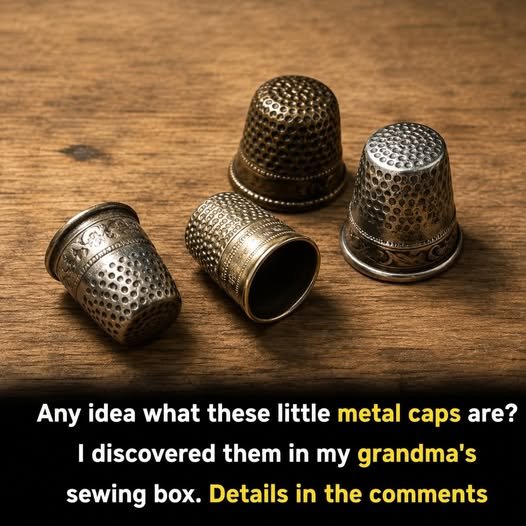
The objects pictured in the image are traditional metal sewing thimbles. Commonly made from materials like brass, sterling silver, steel, or pewter, these small, cap-shaped protective devices have been fundamental tools in hand-sewing, tailoring, and mending for centuries.
Purpose and Functionality
- Finger Protection: A thimble is worn over the fingertip—typically the index or middle finger—to protect the skin from being repeatedly pricked or bruised while pushing a needle through heavy fabrics or thick materials like leather.
- Dimpled Texture: The distinctive pit marks, or “dimples,” surrounding the exterior are designed to catch the dull eye end of the sewing needle, preventing it from slipping while force is applied.
- Decorative Bands: Many vintage and antique thimbles feature decorative engraved bands near the rim, making them popular collectible items and heirloom keepsakes.
Social Media Context and Engagement Tactics
Viral posts presenting common vintage items alongside inquisitive captions like “Does anyone have a clue what these are…” or “Details in the comments” are standard examples of engagement farming. Notice the contradiction between the user’s prompt (“found in my grandmother’s crockery cupboard”) and the text on the image (“discovered them in my grandma’s sewing box”).
Content creators intentionally post recognizable everyday items with mismatched text or false mystery to:
- Trigger High Comment Activity: Encouraging thousands of users to correct the text or identify the obvious object, which boosts the post’s visibility across platform algorithms.
- Drive External Clicks: Directing users to comment sections that contain links to ad-monetized blogs, spam storefronts, or external clickbait pages.
While hand-sewing has largely been supplemented by modern machines, thimbles remain essential tools for quilters, tailors, and needlework enthusiasts worldwide.
Leave a Reply