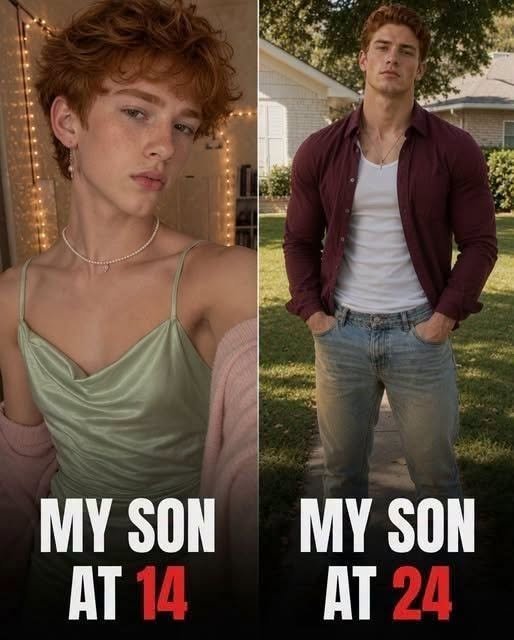
Social media posts featuring sensationalized multi-paragraph narratives—often titled along the lines of “My Son Ran Away… Six Years Later He Came Back” paired with side-by-side transformation photos—are a widespread form of digital storytelling clickbait. These posts combine artificial visuals with fictional cliffhanger plots to exploit reader emotions and generate online engagement.
Visual and Narrative Deconstruction
- AI-Generated Imagery: The side-by-side photo comparison labeled “MY SON AT 14” and “MY SON AT 24” does not feature real people. Both portraits display classic characteristics of generative AI rendering, including hyper-smooth skin textures, synthetic lighting, and artificial facial symmetry designed to look like a dramatic glow-up.
- Fabricated Drama Arc: The accompanying story uses predictable melodrama tropes—a supportive single mother, an overbearing military stepfather, an emotional family confrontation, a sudden disappearance, and a mysterious six-year return ending on a dramatic cliffhanger.
- Inconsistent Timelines: The prompt caption relies on common math errors frequently found in recycled clickbait templates, claiming the son left on his 18th birthday and returned “six years later” at age 24, while the graphic labels display age 14 and age 24.
The Business Behind Digital Fiction Bait
Pages on platforms like Facebook and TikTok publish these long-form fictional stories alongside synthetic images to achieve specific engagement and monetization targets:
- Maximize Dwell Time: The long text forces users to spend several minutes reading on the platform, which algorithms treat as high-quality engagement, boosting the post’s organic distribution.
- Comment Section Manipulation: By ending the narrative at a critical climax (“First… I need my stepdad to finally tell you the truth”), the post drives hundreds of curious readers to ask for a “Part 2” or search the comments for answers.
- External Link Monetization: Prompts such as “Full Detail Link in Comment” lure users out of the platform onto ad-monetized blogs, content farms, or affiliate link networks designed to generate revenue per click.
Recognizing synthetic portraits and formulaic cliffhanger stories helps users navigate social media without falling for artificial engagement traps meant to farm clicks and views.
Leave a Reply