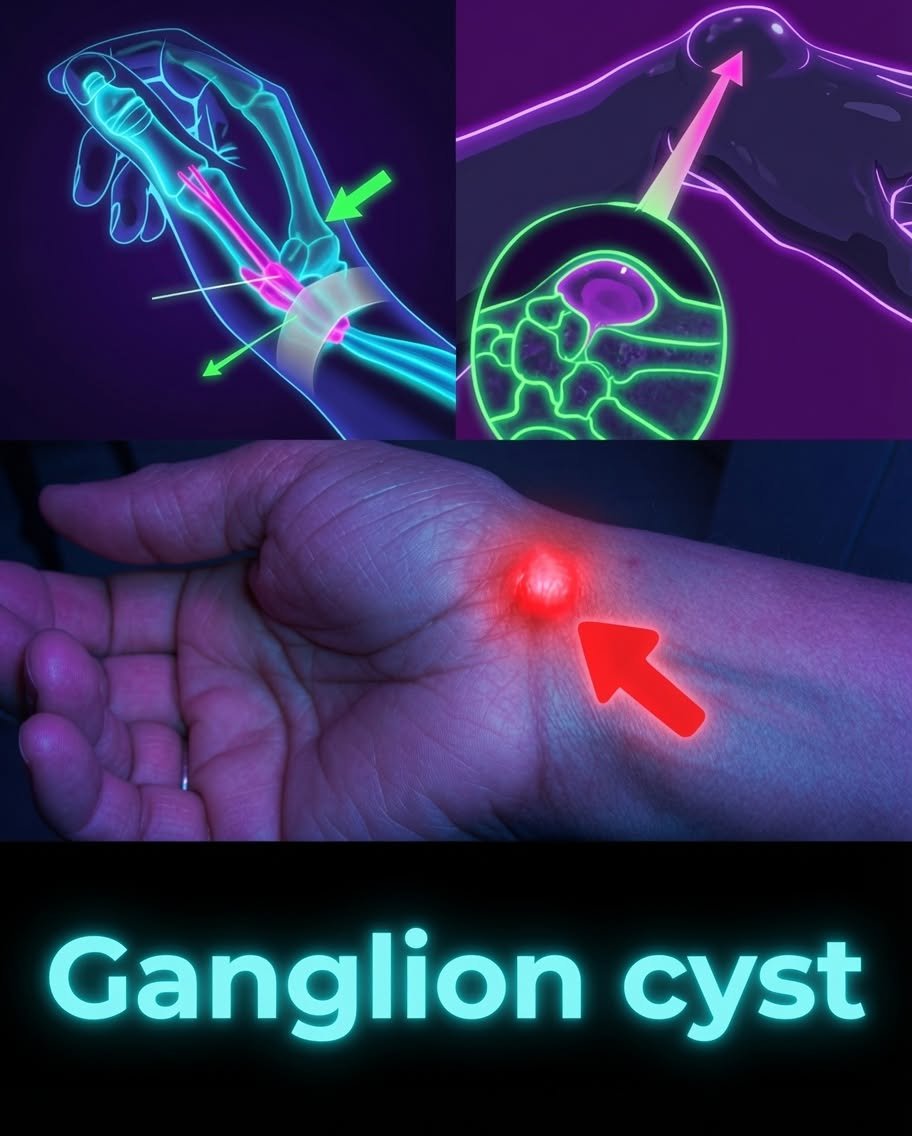
A small lump on the wrist can be unsettling, but one of the most common causes is a ganglion cyst. These are fluid-filled lumps that usually develop near a joint or tendon and are especially common around the wrist and hand. They can range from smaller than a pea to several centimeters and may feel soft, firm, or rubbery. Many ganglion cysts are painless and can gradually become smaller or disappear without treatment. (NHS) A previous wrist injury may sometimes contribute, although the exact reason many ganglion cysts develop is not always known. Other possibilities include a skin cyst, tendon-related swelling, arthritis-associated changes, or swelling following an injury. Because several conditions can produce a similar-looking lump, its appearance alone cannot establish the diagnosis.
The location, texture, movement, and associated symptoms can provide useful clues. A smooth lump appearing near a wrist joint, particularly on the back of the wrist, is commonly associated with a ganglion cyst. (NHS) Some lumps may become more noticeable when the wrist is bent or after increased use, while others can fluctuate in size over time. A ganglion can occasionally cause aching, pain during movement, tingling, numbness, or weakness if it presses against nearby structures. (Gloucestershire Hospitals NHS Foundation Trust) Importantly, you should never try to burst, puncture, or hit a wrist lump yourself. Attempting to break a cyst can cause infection, bleeding, or injury to surrounding tissues. (NHS)
Most uncomplicated ganglion cysts do not require immediate treatment, particularly when they are painless and do not interfere with hand movement. However, a medical evaluation is appropriate if the lump gets larger, becomes hard and immovable, causes persistent pain, or is associated with numbness or weakness. A lump that becomes very painful, hot, or red deserves prompt assessment because infection or another problem may need to be ruled out. (NHS) If treatment is necessary, healthcare professionals may consider observation, aspiration with a needle, or—in selected persistent cases—surgical removal. The best option depends on the diagnosis and how much the lump affects daily activities. Disclaimer: This article is for general educational and informational purposes only and does not constitute medical advice, diagnosis, or treatment. A wrist lump can have several causes, and only a qualified healthcare professional can determine the underlying condition. Always verify health information through reliable medical sources and seek professional evaluation for new, growing, painful, or unusual lumps.
Leave a Reply