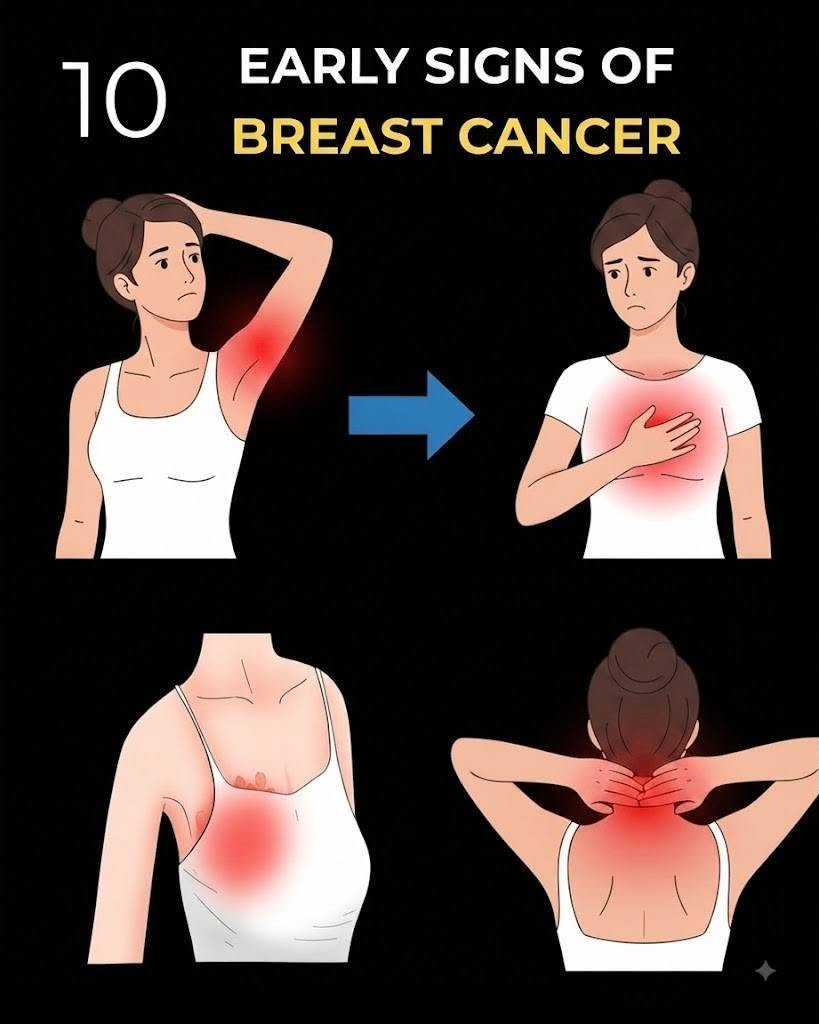
Digital media platforms frequently feature illustrated medical infographics—such as split-panel diagrams highlighting various bodily areas with glowing red pain markers—paired with sensationalized headlines like “Could These 10 Symptoms Be Linked to Bre.ast Can.cer? Here’s What to Know…” and “10 EARLY SIGNS OF BREAST CANCER”. These viral posts rely on censorial text modifications (such as “bre.ast can.cer”), alarming diagnostic listicles, and high-stakes health anxiety hooks to bypass content moderation filters, provoke intense medical panic in comment sections, and drive rapid social media sharing and ad-monetized click-through rates rather than offering accurate oncological or clinical education.
From an oncology and clinical diagnostics perspective, while awareness of breast cancer symptoms is vital for early detection, viral listicles often conflate common, non-specific physical discomforts with definitive cancer indicators. While certain clinical signs—such as a new hard lump, skin dimpling, nipple inversion, or unexplained localized changes—warrant professional investigation, general bodily aches, shoulder tension, or minor skin variations can stem from a wide array of benign physiological causes, hormonal fluctuations, musculoskeletal strain, or normal aging. Content-farming networks systematically compile broad lists of generalized symptoms and associate them with high-mortality diseases to manipulate recommendation algorithms and maximize digital ad revenue.
Navigating health concerns and evaluating cancer screening guidelines effectively relies on evidence-based medical protocols rather than self-diagnosing via social media infographics. Standard clinical care emphasizes routine mammographic screenings, clinical breast examinations, and prompt evaluation by a healthcare provider for any persistent, unexplained localized changes. Understanding how engagement algorithms weaponize health anxiety helps consumers approach online medical content with critical media literacy. For verified guidance on cancer screening schedules, diagnostic evaluations, or oncology concerns, consulting board-certified oncologists, primary care physicians, or accredited women’s health organizations provides authoritative, scientifically grounded care.
Leave a Reply