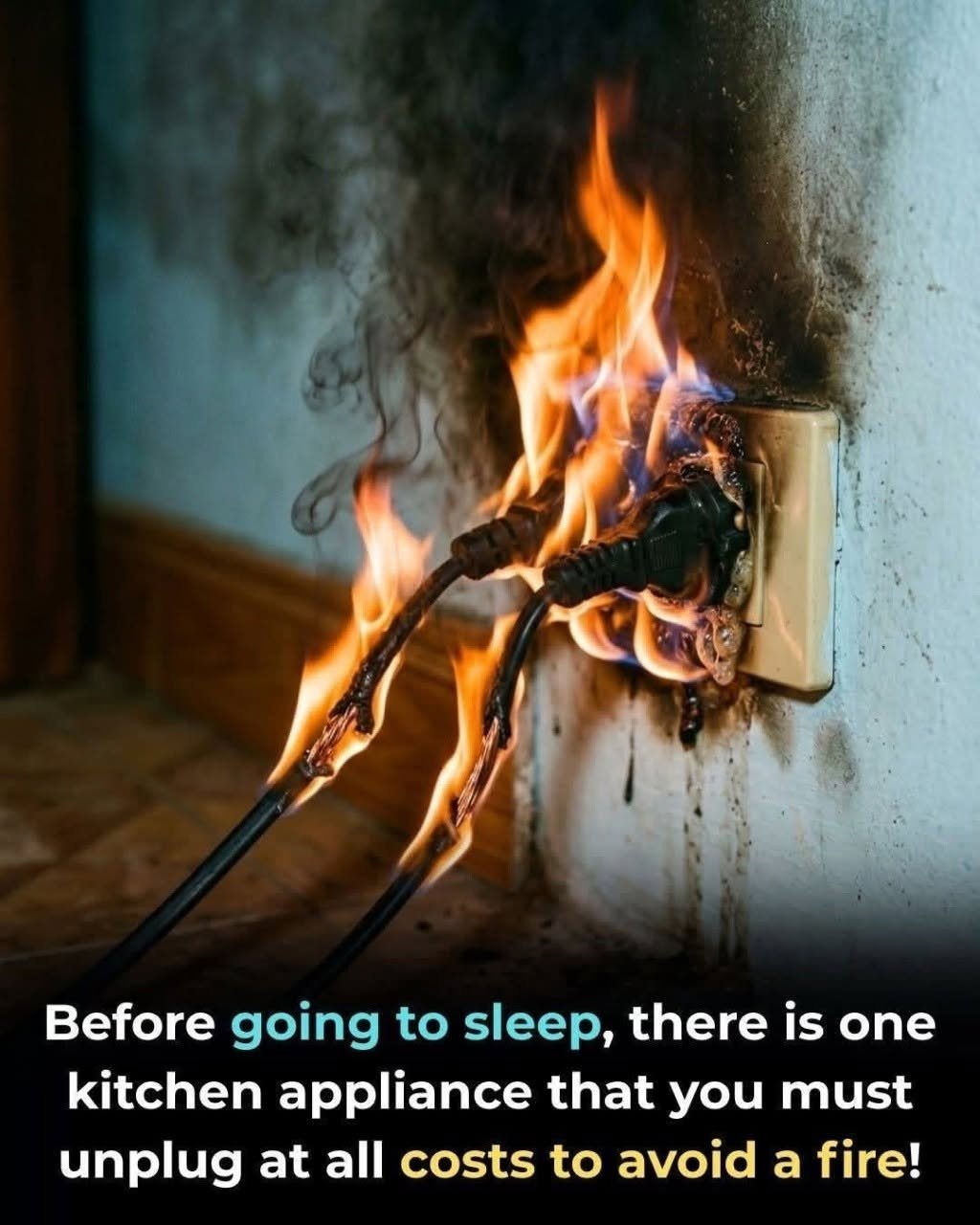
Digital media platforms frequently feature dramatic hazard photography—such as an electrical outlet engulfing power cords in flames—paired with urgent, alarmist headlines stating “Unplug These 5 Appliances When You’re Done Using Them” and “Before going to sleep, there is one kitchen appliance that you must unplug at all costs to avoid a fire!”. These viral posts rely on terrifying fire imagery, numerical listicle hooks, and catastrophic hazard warnings to bypass content moderation filters, incite household paranoia in comment sections, and drive rapid social media sharing and ad-monetized click-through rates rather than offering accurate electrical engineering or fire safety education.
From an electrical engineering and consumer product safety perspective, modern UL-certified kitchen appliances undergo rigorous safety testing and incorporate built-in thermal cutoffs, internal fuses, and automatic shut-off switches specifically designed to prevent electrical fires. While high-wattage heating appliances—such as space heaters, toaster ovens, electric kettles, and air fryers—do carry elevated risks if left unattended while actively operating or if plugged into damaged, loose, or overloaded electrical outlets, modern appliances left on standby draw negligible “phantom power” and present virtually zero risk of spontaneous combustion under normal conditions. Content-farming networks systematically take standard electrical safety tips and rare electrical surge scenarios, exaggerating them into imminent nightly disaster scenarios to manipulate recommendation algorithms and maximize digital ad revenue.
Managing household electrical safety and fire prevention effectively relies on established safety inspection protocols rather than succumbing to viral internet panic. Grounded fire safety recommendations focus on replacing damaged or frayed power cords, ensuring kitchen outlets utilize functional Ground Fault Circuit Interrupters (GFCIs), avoiding power strip overloading, and installing working smoke detectors throughout the home. Understanding how clickbait algorithms weaponize domestic fear helps consumers approach online safety warnings with critical media literacy. For verified guidance on appliance safety, electrical codes, or home fire prevention, consulting certified electricians, the National Fire Protection Association (NFPA), or local fire departments provides authoritative, scientifically grounded protection.
Leave a Reply