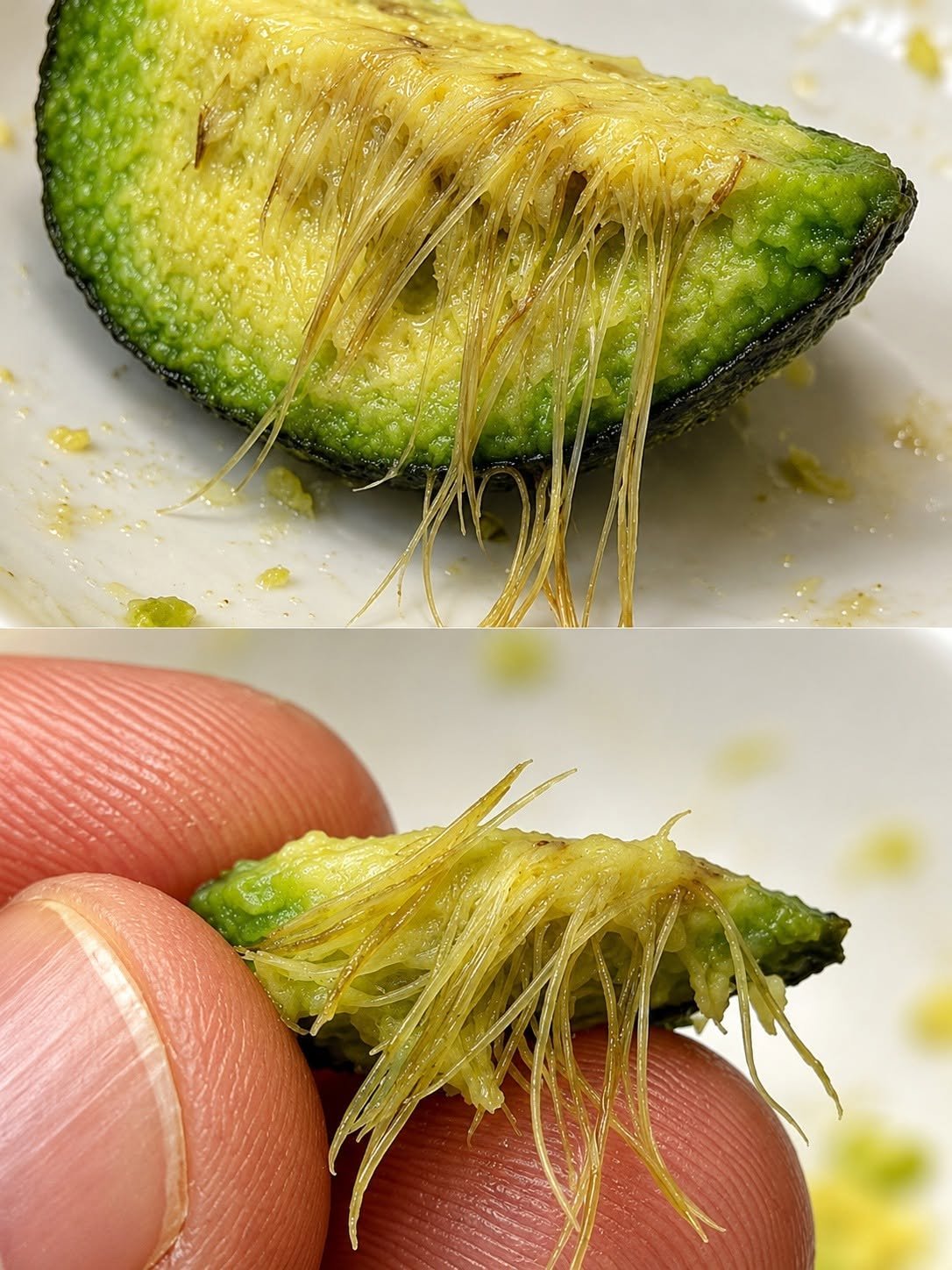
If you cut open an avocado and discover something unusual inside, there is usually no reason to panic. If what you found looks like thin strings or fibers running through the flesh, they are most likely vascular bundles—the avocado’s natural internal transport system. These structures carry water and nutrients through the developing fruit and can become more noticeable depending on the variety, growing conditions, and maturity of the avocado. They may look strange, but they are a normal part of the fruit’s anatomy. Scientific descriptions of avocado anatomy identify these veins as the stringy or sometimes dark fibrous material that remains as the fruit softens.
If the unusual object looks more like a small root, shoot, or sprout emerging from the avocado seed, that can also happen naturally. Avocado seeds contain an embryo capable of germinating, and occasionally the seed begins growing while it is still inside the fruit. Research on avocado seed development has documented cases where late-harvested fruit can germinate internally, with the developing root extending into the surrounding flesh. In that situation, what looks like a worm or strange growth may actually be the beginning of an avocado plant. If the surrounding flesh is fresh-looking, smells normal, and shows no signs of mold or spoilage, the unusual appearance alone does not prove that the fruit is contaminated.
Before serving avocado to children, however, it is sensible to inspect the entire fruit rather than focusing only on the unusual structure. Discard it if there is visible mold, a strong unpleasant or fermented smell, extensive dark or slimy decomposition, or other obvious signs of spoilage. If you are uncertain about what you found—especially if it genuinely looks like an insect, larvae, or contamination—take a clear photograph and have the fruit inspected rather than guessing. In most cases, unusual avocado fibers or a naturally sprouted seed are not signs of something dangerous. Disclaimer: This article is for general educational and food-safety information only and does not constitute medical advice. Without seeing the specific object, its identity cannot be confirmed with certainty. Always inspect produce carefully and verify unusual food-safety concerns through reliable sources or a qualified food-safety professional.
Leave a Reply