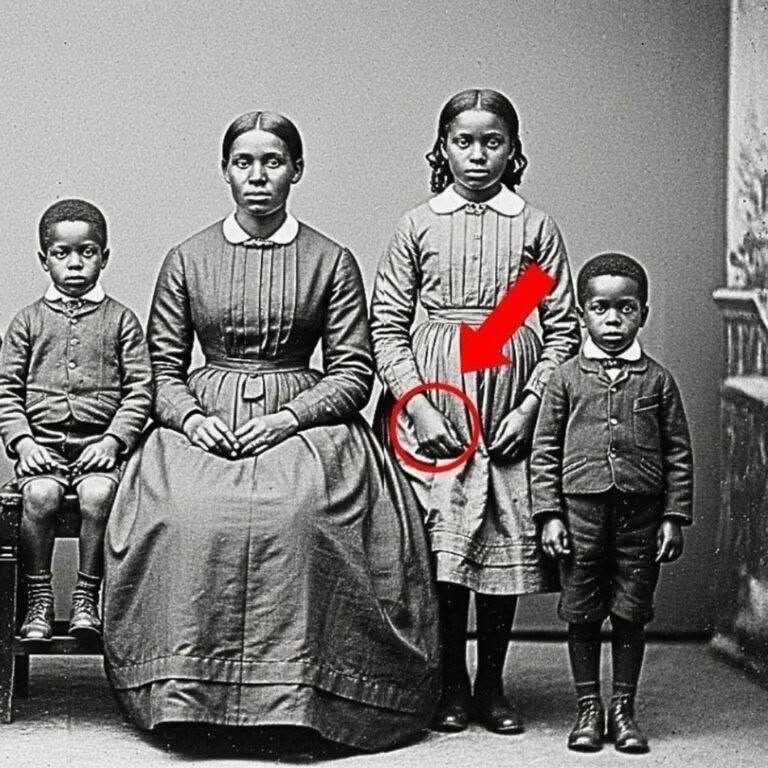
Digital media platforms frequently feature simulated historical photographs paired with intriguing, mysterious captions—such as inviting viewers to examine a strange anomaly in a purported 1872 family portrait. These viral posts rely on artificial visual oddities and pseudo-historical hooks to provoke intense curiosity, puzzle-solving engagement, and rapid online comment sharing rather than presenting authentic archival records.
From a digital forensics and media analysis perspective, the image presented is not an authentic 19th-century daguerreotype or albumen print, but rather a synthetic, AI-generated composition. Generative image models frequently produce subtle anatomical distortions—such as unnatural finger configurations, asymmetrical hand placements, or an extra digit—especially in older aesthetic styles rendered in monochrome. Content-farming operations systematically manufacture these synthetic “historical anomalies” and attach cryptic, clickbait narratives to trick viewers into scrutinizing fake details, thereby boosting platform engagement algorithms and ad revenue.
Evaluating historical imagery effectively requires cross-referencing archival collections, understanding early photography constraints (such as long exposure times and rigid studio bracing), and consulting verified museum databases rather than trusting unverified social media teasers. Recognizing how generative AI creates artificial visual glitches helps maintain a critical perspective on modern digital media. If you are seeking genuine historical documentation or vintage photographic analysis, consulting accredited institutional archives, libraries, and professional historians provides reliable, authentic context.
Leave a Reply