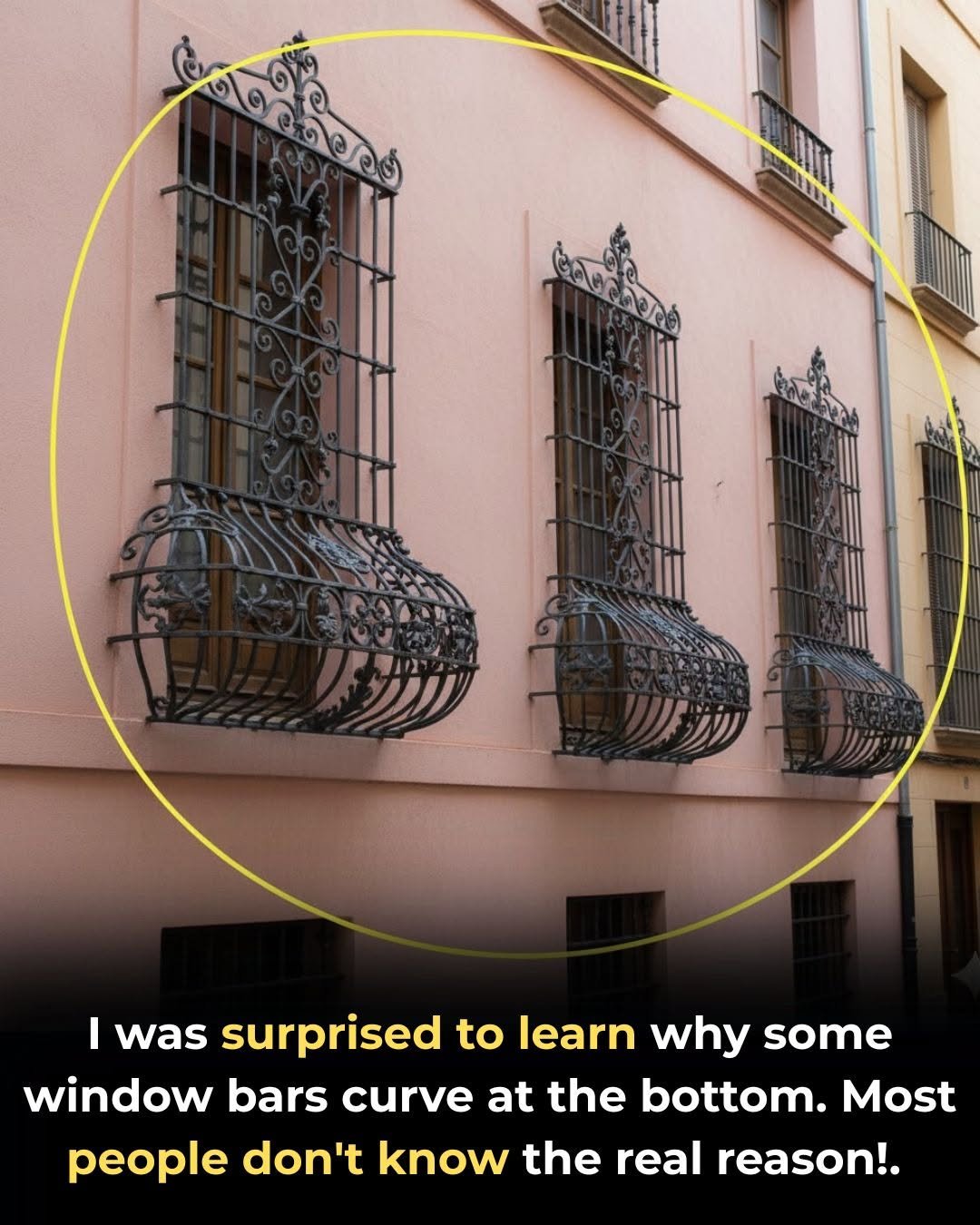
Digital media platforms frequently feature historical architectural photographs paired with mysterious, sensationalized clickbait headlines—such as claiming that curved window bars serve a hidden secret purpose that most people misunderstand. These viral posts are specifically engineered to provoke curiosity, wonder, and rapid online comment sharing rather than providing accurate, evidence-based architectural or historical education.
From an architectural history and design perspective, these distinct iron window guards—historically known as rejas in Spanish architecture—feature outward-bowing curves at the bottom for a very practical, functional reason rather than purely aesthetic decoration. The convex bulge was historically designed to allow interior residents to place large flower pots, plants, or cooling items on the windowsill without obstructing the window shutters or taking up indoor floor space. While modern internet myths frequently invent elaborate espionage or defensive legends around historical building features, traditional ironwork was primarily crafted to balance domestic utility, security, and ventilation. Sensationalized online content regularly mischaracterizes everyday architectural elements into shocking mysteries to maximize digital engagement metrics.
Appreciating architectural heritage involves exploring verified historical construction methods, urban design standards, and cultural building traditions rather than relying on exaggerated internet rumors. Evaluating structural designs is most reliable when based on architectural history and expert documentation. If you are interested in historical architecture or historic preservation, consulting specialized architectural guides or local heritage resources provides safe, accurate, and fascinating insights.
Leave a Reply