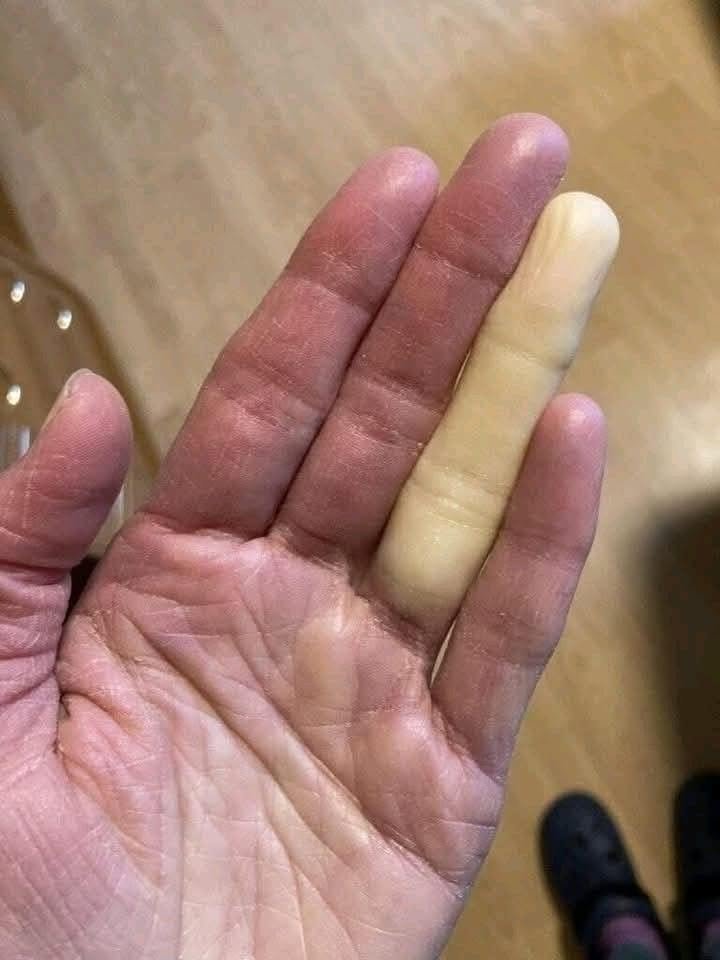
Digital media platforms frequently feature striking physical photographs and incomplete clickbait headlines—such as claiming that a sudden, stark discoloration in a single finger is a mysterious consequence of sleeping in a certain position or environment. These viral posts are specifically engineered to provoke visceral shock, health anxiety, and rapid online comment sharing rather than providing accurate, evidence-based vascular or medical education.
From a clinical rheumatology and vascular physiology perspective, the distinct blanching or whitening of digits depicted in the photograph is a classic manifestation of Raynaud’s phenomenon (or Raynaud’s disease/syndrome). This vasospastic condition involves an exaggerated vascular response to cold temperatures, emotional stress, or sustained mechanical compression, causing small peripheral arteries to temporarily narrow and restrict blood flow to specific fingers or toes. While sleeping in an awkward position can cause temporary nerve compression or numbness, classic episodic pallor followed by redness and tingling is typically driven by underlying circulatory vasospasms or autoimmune factors rather than sinister, mysterious bedtime habits. Sensationalized online narratives routinely misrepresent well-understood medical phenomena into alarming cautionary tales to maximize digital engagement metrics.
Maintaining optimal peripheral circulation and microvascular health involves keeping hands and feet warm in cool environments, managing stress, avoiding vasoconstrictors such as nicotine, and scheduling professional medical evaluations rather than relying on alarming internet generalizations. Personal health decisions and circulatory assessments should always reflect verified medical diagnostic procedures rather than online clickbait framing. If you experience sudden, painful, or persistent changes in skin color and sensation in your extremities, consulting a licensed physician, rheumatologist, or vascular specialist provides safe, evidence-based direction.
Leave a Reply