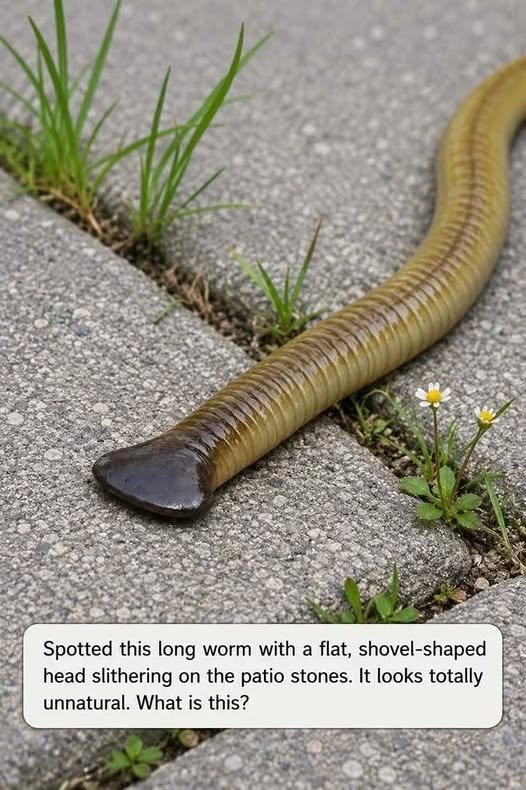
Discovering a long, elongated creature with a broad, shovel-shaped head slithering across patio stones can be striking, but this organism is a terrestrial planarian commonly known as a hammerhead worm (Bipalium species). Native to tropical and subtropical regions, these predatory land flatworms have spread globally via the commercial plant trade. That distinctive fan-shaped expansion at the front of its body is not a brain or face, but a specialized sensory head plate used to track prey through chemical signals in the soil.
Biological Characteristics and Ecological Impact
- Predatory Behavior: Hammerhead flatworms are carnivorous predators that feed almost exclusively on earthworms, slugs, and snails. They track earthworms into their burrows, subdue them using sticky secretions, and digest them externally.
- Toxin Production: Certain species of Bipalium produce small amounts of tetrodotoxin—a neurotoxin used to paralyze prey and deter predators. While not fatal to humans, handling them directly can irritate bare skin.
- Regenerative Abilities: Like many planarians, hammerhead flatworms possess extraordinary regenerative powers. Cutting or crushing a worm often results in each severed piece regenerating into a complete, new individual.
Safe Management and Eradication Methods
Because hammerhead worms consume beneficial earthworms that keep soil healthy, agricultural extension offices consider them an invasive pest in many non-native environments. If encountered in gardens or on outdoor walkways, avoid chopping them in half or handling them with bare hands. Instead, use gloved hands or tweezers to place the flatworm into a sealed container filled with rubbing alcohol, vinegar, or salt. Securely disposing of the container ensures effective pest control while protecting local soil ecosystems and resident beneficial earthworms.
Leave a Reply