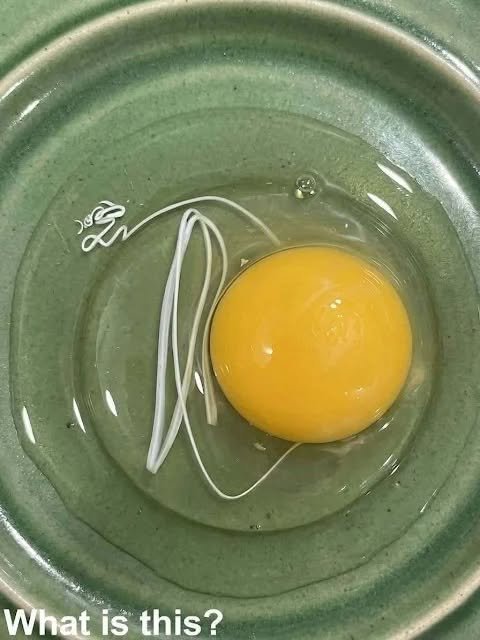
Cracking an egg to find a distinct white, string-like structure attached to the yolk can certainly cause concern, but the feature shown in the image is a completely natural anatomical structure known as the chalaza (plural: chalazae). Every fresh chicken egg contains two of these twisted protein strands, located on opposite sides of the yolk. Rather than being a parasite, worm, or manufacturing defect, a prominent and thick chalaza is actually a primary indicator that an egg is exceptionally fresh and high quality.
Biological Function and Characteristics of the Chalaza
- Anchor System for the Yolk: The main function of the chalaza is to act as a spring-like anchor, suspending the delicate yolk directly in the center of the egg white (albumen) to protect it from pressing against the shell walls.
- Made of Pure Protein: Chalazae are composed of specialized, dense protein fibers continuous with the egg white. They are entirely edible, completely safe to eat, and dissolve or blend away seamlessly when cooked or beaten.
- Sign of Freshness: As an egg ages in storage, the albumen thins out and the chalazae naturally weaken and fade. Finding a prominent, bright white, coiled strand means the egg was laid very recently.
Culinary Handling and Safety
- Cooking Compatibility: There is no need to remove the chalaza for standard frying, scrambling, or baking, as heat coagulates the protein just like the rest of the egg white.
- Optional Removal: Professional pastry chefs sometimes strain raw egg yolks through a fine mesh sieve to remove the chalazae only when preparing silky-smooth custards, puddings, or delicate dessert sauces.
- Edibility Verdict: Eggs displaying intact chalazae present zero health risks, allowing home cooks to safely prepare and enjoy their meals without worry.
Leave a Reply