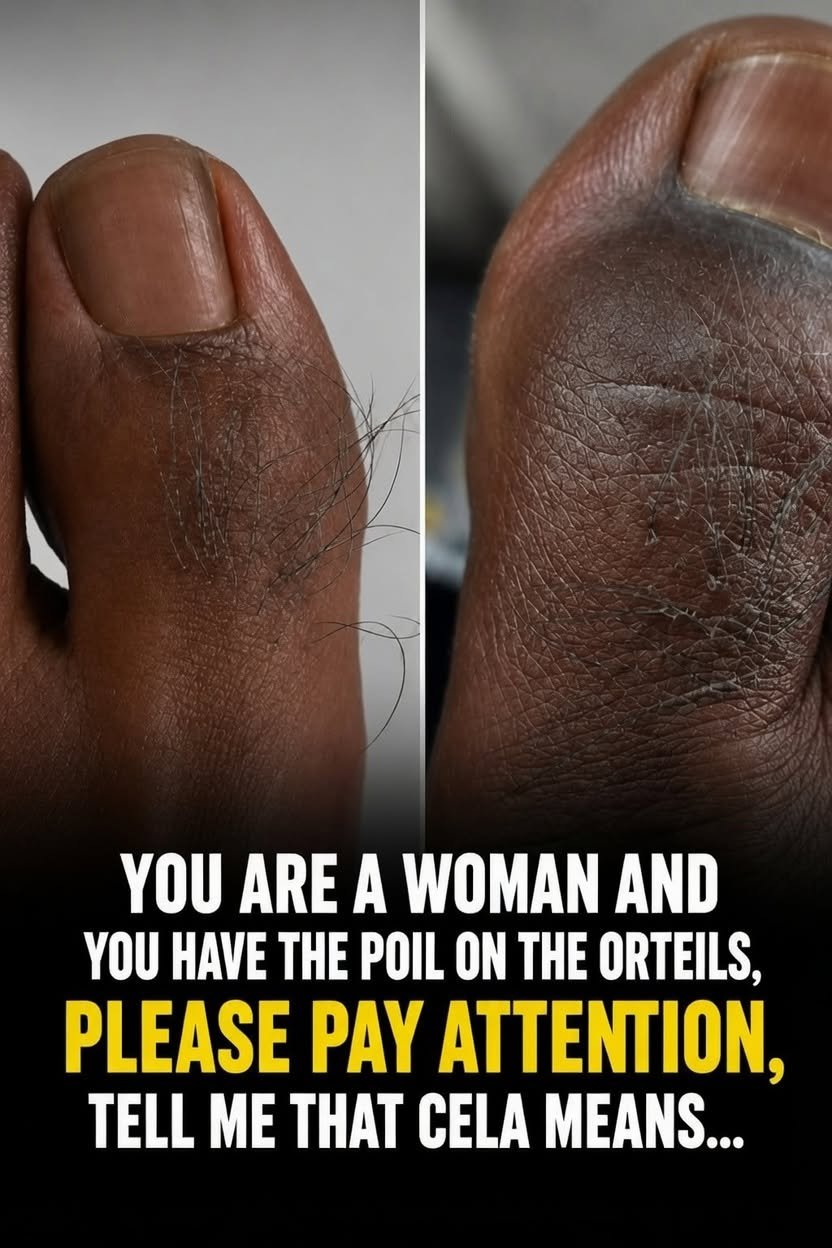
Hair on the toes is usually not a sign that something is wrong with your health. Body-hair growth varies naturally from person to person and can be influenced by genetics, age, ethnicity, and the sensitivity of individual hair follicles to hormones. Some women naturally have noticeable hair on their toes, feet, legs, or other areas without having any underlying medical condition. Medical sources explain that unwanted or excessive hair growth becomes more significant when it is thick, dark, and appears in a pattern that is unusual for the individual. This is sometimes called hirsutism, which is commonly associated with increased androgen activity. Therefore, seeing a few hairs on your toes by itself should not be interpreted as proof of a hormonal disorder, poor circulation, or another serious condition.
However, a sudden increase in coarse or dark body hair may deserve more attention, especially when it occurs alongside other changes. Hormonal conditions such as polycystic ovary syndrome (PCOS) can cause increased androgen activity and may be associated with excess facial or body hair, acne, irregular menstrual cycles, or difficulty with fertility. Less commonly, excessive hair growth can be linked to certain medications or other hormone-related conditions. Medical professionals are particularly interested when hair growth becomes noticeably heavier or develops rapidly over a period of months. Mayo Clinic recommends medical evaluation when significant or rapid excess hair growth occurs, especially if it is accompanied by signs such as a deeper voice, scalp hair loss, increased muscle mass, or other changes associated with elevated androgen activity. These symptoms do not automatically mean that a serious condition is present, but they can provide a reason for appropriate medical assessment.
For most people, toe hair is simply a normal variation of body hair and does not require treatment unless it is unwanted cosmetically. If you choose to remove it, ordinary grooming methods can be considered, while avoiding unnecessary or aggressive treatments that may irritate the skin. The bigger picture matters more than a single hair: consider whether your hair growth has changed recently and whether you have other symptoms involving your skin, menstrual cycle, weight, or general health. If you notice rapid or unusual changes, discussing them with a qualified healthcare professional or dermatologist can help determine whether hormone testing or another evaluation is appropriate. Disclaimer: This article is for general educational and informational purposes only and does not constitute medical advice. Hair on the toes alone cannot diagnose PCOS, hormonal imbalance, poor circulation, or any other disease. Health conditions can have different causes and symptoms in different people. Always verify health information through reliable medical or scientific sources and consult a qualified healthcare professional for personalized guidance.
Leave a Reply