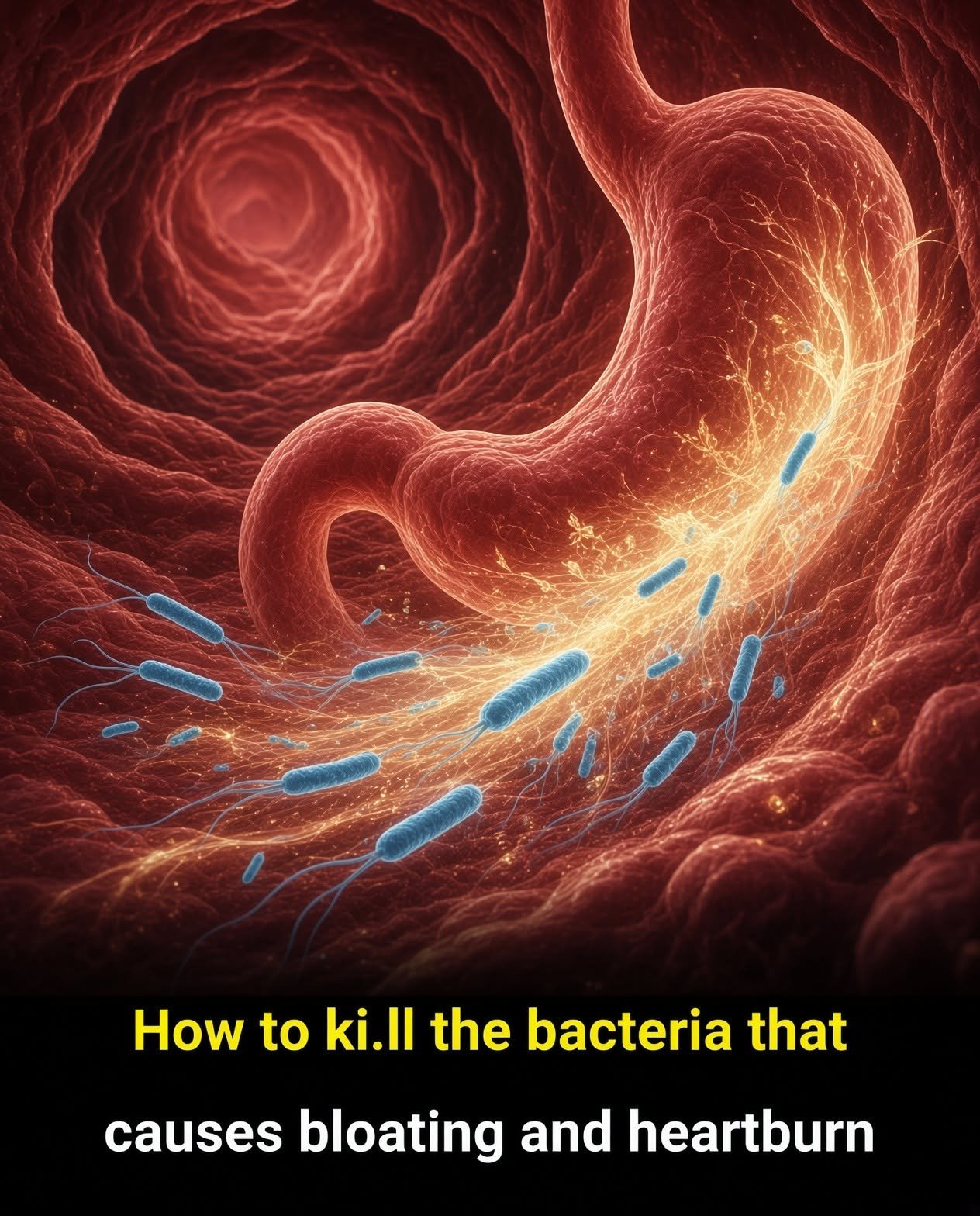
Persistent bloating, burping, stomach discomfort, and acid reflux can sometimes be associated with Helicobacter pylori (H. pylori), a bacterium that can infect the stomach lining. Mayo Clinic notes that H. pylori can cause symptoms such as bloating, frequent burping, stomach pain, and indigestion, although many infected people have no symptoms at all. However, it is important not to assume that bacteria are automatically the cause of reflux. GERD commonly occurs when stomach contents flow backward into the esophagus, and factors such as large meals, fatty foods, caffeine, carbonated drinks, eating late, and lying down soon after eating can worsen symptoms. If bloating or reflux keeps returning, a healthcare professional can determine whether testing for H. pylori or another digestive condition is appropriate.
If H. pylori is confirmed, antibiotics—not homemade “detox” remedies—are the established treatment. Doctors commonly use more than one antibiotic together with acid-reducing medicine, and follow-up testing is recommended after treatment to confirm that the infection has been cleared. H. pylori can be detected through tests such as a stool test or urea breath test, and sometimes through a biopsy during an endoscopy. Meanwhile, several everyday habits can help reduce bloating and reflux symptoms even when bacteria are not involved. Eating slowly, avoiding carbonated drinks, limiting personal trigger foods, and avoiding lying down for at least two to three hours after eating may help. Starting sleep on the left side can also reduce nighttime reflux for some people. These measures support digestive comfort, but they do not eradicate H. pylori if an infection is actually present.
The most effective strategy is therefore to identify the underlying cause rather than trying to eliminate “bad bacteria” blindly. Probiotic products, herbal drinks, vinegar, or other natural remedies are sometimes promoted online as cures for stomach bacteria, but they should not replace appropriate testing and medical treatment. If symptoms occur frequently, worsen, or continue despite lifestyle changes, medical evaluation is worthwhile. Seek prompt medical attention for symptoms such as difficulty swallowing, persistent vomiting, unexplained weight loss, black or bloody stools, vomiting blood, severe abdominal pain, or significant weakness or dizziness. Disclaimer: This article is for general educational and informational purposes only and does not constitute medical diagnosis, treatment, or personalized dietary advice. Bloating and acid reflux have many possible causes, and H. pylori is only one possibility. Some health information online may be general, exaggerated, or unauthenticated, so important claims should be verified through reliable medical sources and a qualified healthcare professional.
Leave a Reply