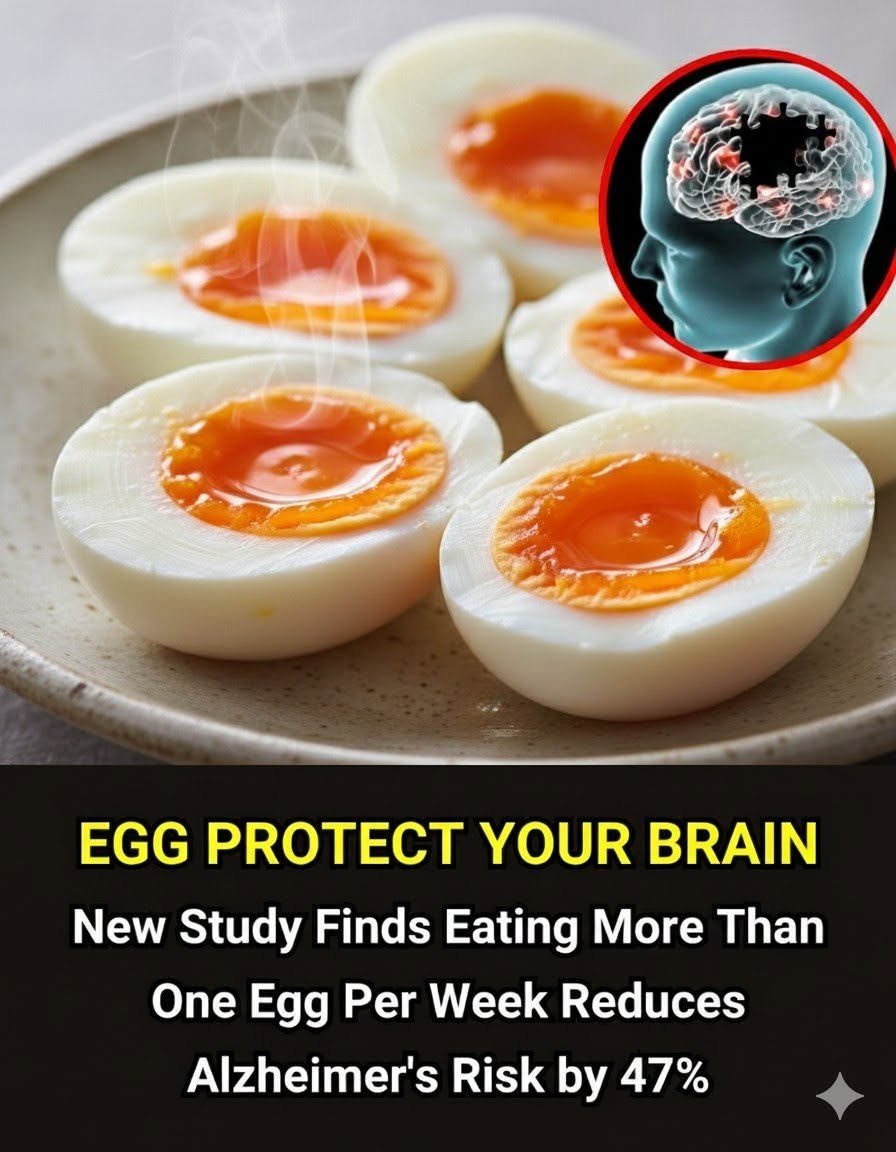
Eggs are a nutrient-dense food containing choline, vitamin B12, selenium, lutein, protein, and other compounds involved in normal brain function. This has made eggs a subject of interest in research on memory and cognitive aging. One 2024 study from the Rush Memory and Aging Project followed 1,024 older adults for an average of 6.7 years and found that people who ate more than one egg per week had a lower observed risk of Alzheimer’s dementia than those eating one or fewer eggs per week. The researchers also found that dietary choline appeared to explain part of the association. A newer 2026 prospective study involving nearly 39,500 adults likewise found that moderate egg consumption was associated with a lower incidence of Alzheimer’s disease. These findings are interesting, but they do not prove that eating eggs prevents Alzheimer’s disease.
The often-repeated claim that eggs “reduce Alzheimer’s risk by 47%” needs particular caution. The 47% figure does not come from evidence showing that eating an egg reduces Alzheimer’s risk by 47%. A 2006 Framingham study found that people with higher blood levels of DHA had a 47% lower risk of all-cause dementia, but that study was about DHA levels—not eating eggs—and it did not establish that eggs caused the reduction. Research specifically examining eggs and cognition is more nuanced. A 2025 systematic review found that moderate egg consumption was associated with some favorable cognitive outcomes in several studies, but the results were inconsistent and researchers emphasized the need for better-controlled trials. Similarly, a 2026 meta-analysis found that approximately one egg per day was associated with lower cognitive-decline risk, but observational evidence cannot establish cause and effect.
For most people, eggs can be part of a balanced, brain-supportive diet, especially when combined with vegetables, whole grains, legumes, nuts, and other nutritious foods. The National Institute on Aging emphasizes that there is currently no specific food proven to prevent Alzheimer’s disease and that overall dietary patterns and healthy lifestyle habits are more important than relying on a single “superfood.” So, if you enjoy eggs, there is no need to fear them simply because they contain dietary cholesterol, but there is also no scientific reason to believe that eating a particular number of eggs will guarantee better memory or prevent dementia. Disclaimer: This article is for general educational and informational purposes only and does not constitute medical, nutritional, or treatment advice. Current research shows associations between moderate egg consumption and certain cognitive outcomes, not proof that eggs prevent Alzheimer’s disease. Always verify health claims through reliable scientific and medical sources and consult a qualified healthcare professional for personalized dietary guidance.
Leave a Reply