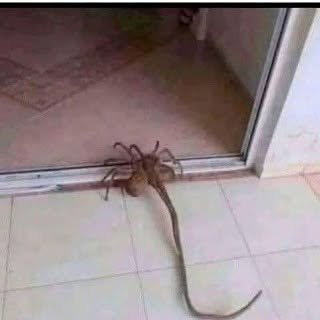
Encountering a massive, multi-legged organism near a doorway can trigger immediate shock, but this viral image features a famous science-fiction movie prop rather than a real biological arachnid. The creature depicted is the iconic “Facehugger” from Ridley Scott’s legendary Alien film franchise. Characterized by its pale, finger-like jointed appendages and long, whip-like tail, this fictional organism is purely a cinematic creation designed by special effects artists. While internet memes frequently circulate this image claiming it shows an exotic household pest, no real-world spider or insect species possesses this distinct anatomy.
Understanding the origin of viral creature images highlights how digital media spreads playful horror tropes and pop-culture references online. In the Alien movie universe, the Facehugger serves as a parasitoid stage in the life cycle of the Xenomorph, created specifically to evoke deep psychological horror and arachnophobia. High-detail practical props, silicon models, and life-sized replicas are widely collected by film enthusiasts, often placed in everyday household settings to create convincing viral prank photos. Differentiating fictional movie props from actual domestic pests helps eliminate unnecessary fear and promotes accurate biological knowledge.
Recognizing the distinction between cinematic special effects and genuine wildlife is essential for proper home safety and pest management. Real domestic spiders—such as wolf spiders, huntsman spiders, or cellar spiders—play beneficial ecological roles by controlling disease-carrying insects around homes. Unlike exaggerated movie monsters, native arachnids avoid human contact and rarely pose significant dangers. By maintaining clear household perimeters, sealing doorway gaps, and relying on verified entomological sources for creature identification, homeowners can manage real insect encounters calmly without falling for internet hoaxes.
Leave a Reply