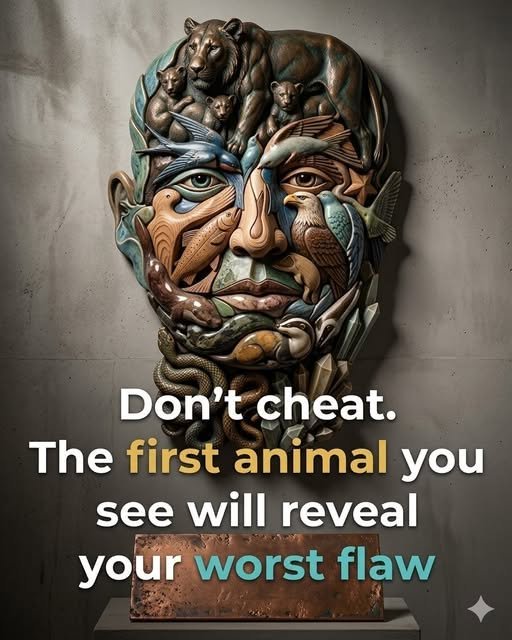
Digital media platforms frequently feature composite visual artwork or optical illusion sculptures—such as a carved human face composed of various hidden animals like lions, birds, and fish—paired with manipulative hooks like “This image knows your personality—what did you see first? Don’t cheat. The first animal you see will reveal your worst flaw”. These viral posts rely on the Barnum effect (forer effect), curiosity-driven gamification, and generalized psychological profiling to provoke heavy user comment engagement, personal sharing, and ad-monetized click-through rates rather than offering authentic psychometric evaluation.
From a psychological and cognitive science perspective, optical illusions and “first-glance” personality tests possess zero scientific validity for diagnosing personal flaws, behavioral traits, or psychological profiles. When viewers look at complex multi-layered artwork, visual processing depends entirely on factors like focal length, contrast, scanning patterns, and image resolution rather than unconscious psychological shortcomings. Personality quizzes that assign specific negative traits based on random visual selection rely on vague, universally applicable statements that individuals naturally relate to, creating a false sense of personalized accuracy. Content-farming networks systematically deploy these interactive psychological gimmicks to exploit human curiosity and manipulate social media engagement algorithms for digital advertising revenue.
Evaluating personal behavior, psychological strengths, and character development effectively relies on established psychometric assessments (such as the Big Five personality traits or validated clinical inventories) and self-reflection rather than engaging with viral internet quizzes. Understanding how clickbait algorithms weaponize cognitive biases and optical illusions helps online audiences navigate social media content with critical media literacy. For verified psychological guidance, behavioral assessment, or personal growth counseling, consulting licensed psychologists or accredited mental health professionals provides authoritative, scientifically grounded insights.
Leave a Reply