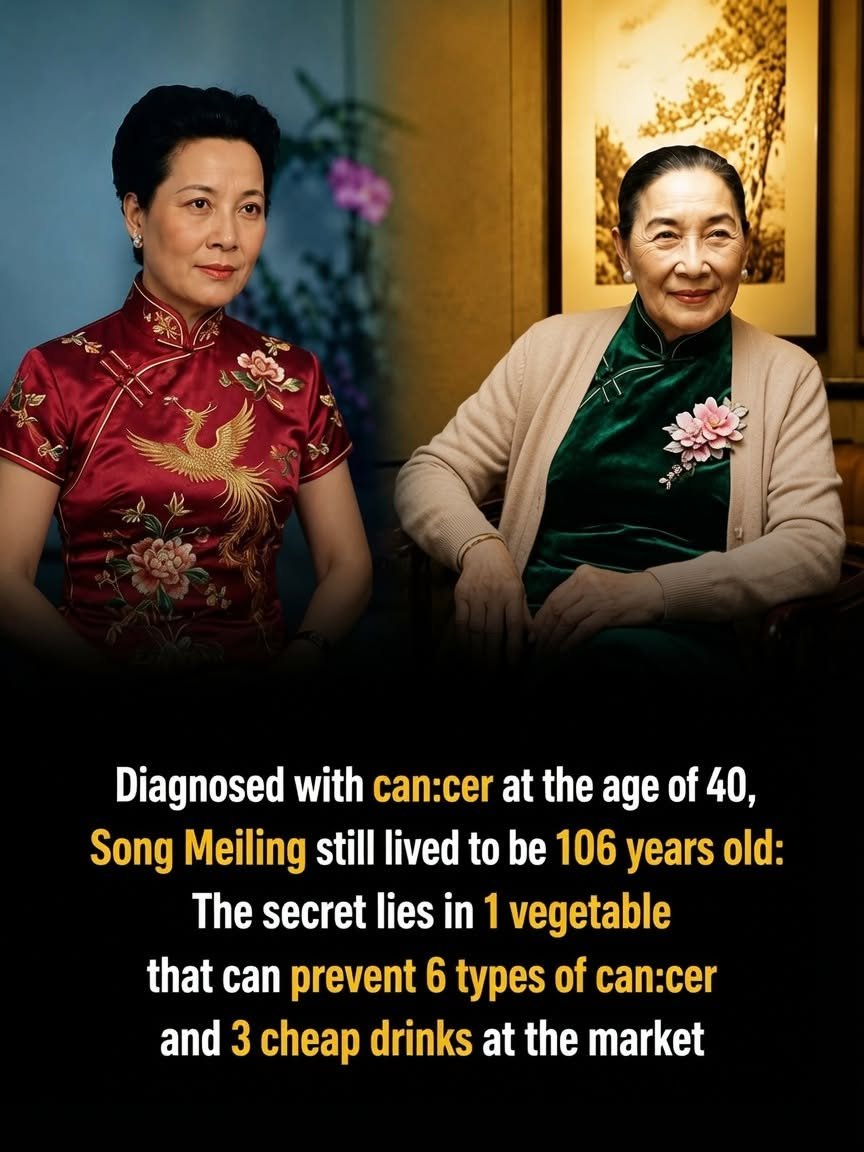
Digital media platforms frequently feature historical portraits and sensationalized graphic tiles—such as depictions of Soong Mei-ling (Madame Chiang Kai-shek)—paired with dramatic claims like “Diagnosed with can:cer at the age of 40, Song Meiling still lived to be 106 years old: The secret lies in 1 vegetable that can prevent 6 types of can:cer and 3 cheap drinks at the market”. These viral posts rely on strategic character punctuation (such as “can:cer”), historical figures used out of context, and exaggerated “miracle cure” hooks to bypass content moderation filters, provoke public health curiosity, and drive rapid social media sharing and ad-monetized click-through rates rather than offering accurate oncological or nutritional science.
From an oncology and nutritional science perspective, individual longevity and cancer survival cannot be attributed to a single “miracle vegetable” or specific market drink. While historical records indicate that Soong Mei-ling lived to an advanced age (passing away at 105 or 106) and underwent medical treatments for health issues later in life, her lifespan was the result of a complex interplay of genetics, elite access to twentieth-century medical care, lifestyle routines, and general environmental factors. Specific vegetables like celery or broccoli contain beneficial antioxidants, vitamins, and phytochemicals (such as luteolin or sulforaphane) that support overall health, but no single food item possesses the pharmaceutical capacity to single-handedly prevent multiple types of cancer or reverse malignancies. Content-farming networks systematically take historical figures, attach pseudoscientific health claims to everyday produce, and fabricate simple solutions to complex diseases to manipulate engagement algorithms and maximize digital ad revenue.
Evaluating dietary health claims and cancer prevention strategies effectively relies on robust epidemiological evidence, peer-reviewed clinical research, and guidance from accredited health organizations rather than viral social media memes. True cancer prevention involves comprehensive lifestyle choices, including maintaining a balanced diet rich in diverse whole foods, avoiding tobacco, limiting alcohol, exercising regularly, and adhering to evidence-based medical screening guidelines. Understanding how clickbait algorithms exploit historical figures and medical fears helps consumers approach health information with critical media literacy. For verified guidance on cancer prevention, nutrition, or screening protocols, consulting board-certified oncologists, registered dietitians, or established health institutions provides authoritative, scientifically grounded care.
Leave a Reply