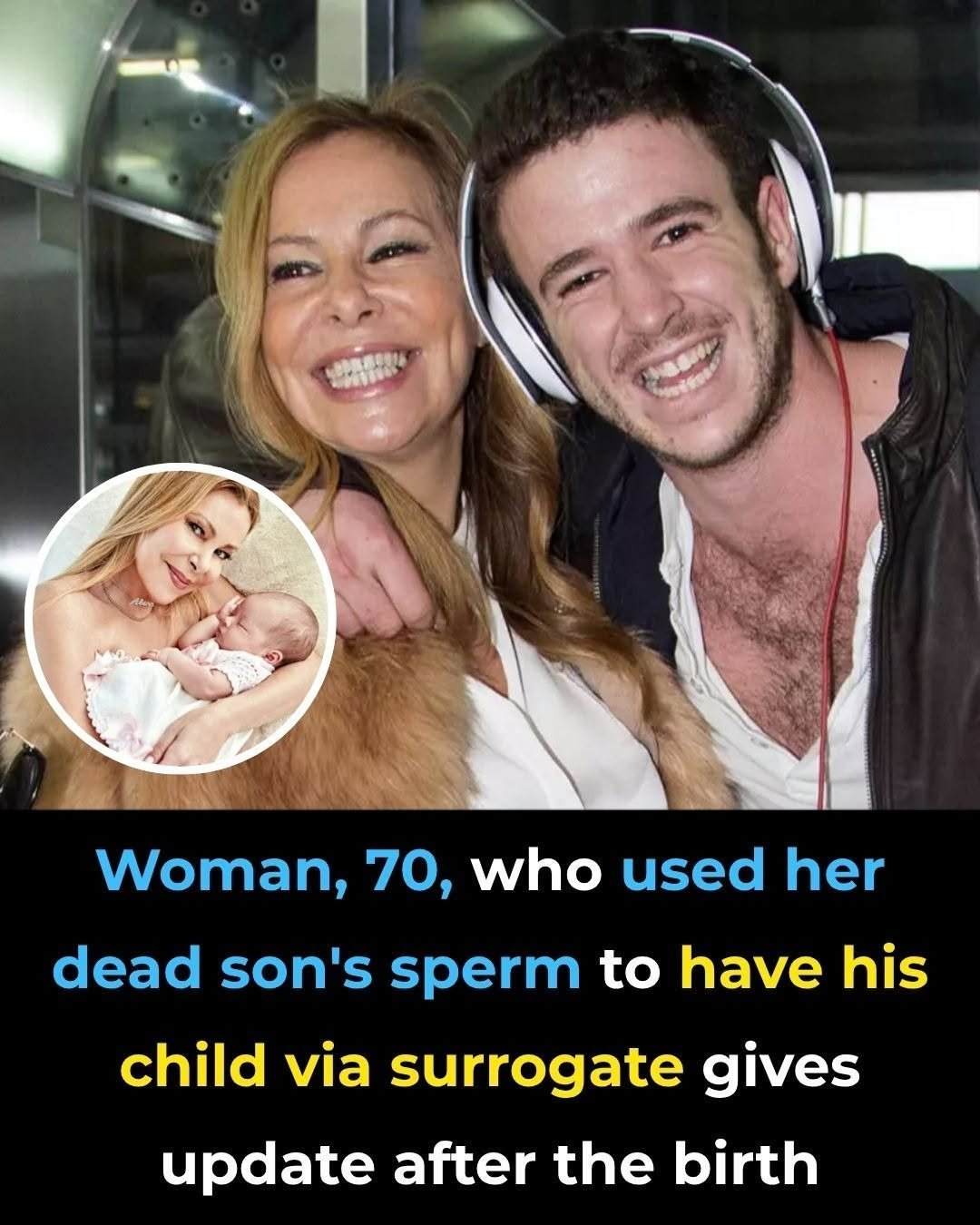
Digital media platforms frequently feature emotional celebrity images—such as portraits of Spanish actress Ana Obregón alongside her late son Aless Lequio and newborn infant—accompanied by sensationalized headlines like “She shared the reason why she did it” and “Woman, 70, who used her dead son’s sperm to have his child via surrogate gives update after the birth”. These viral posts rely on shocking family dynamic hooks, open-ended curiosity prompts, and ethical taboo framing to incite intense moral outrage, provoke heavy comment section debates, and drive rapid social media sharing and ad-monetized click-through rates rather than offering balanced legal or bioethical education.
From a medical ethics, reproductive technology, and family law perspective, this viral story refers to the real-world 2023 case involving Spanish media personality Ana Obregón. Her 27-year-old son, Aless Lequio, tragically passed away from Ewing sarcoma in 2020. Prior to undergoing oncology treatments, he preserved his biological samples. Obregón subsequently traveled to the United States—where commercial gestational surrogacy is legal—to conceive a child using her late son’s frozen specimen and an egg donor, legally adopting the newborn (Ana Sandra) as her daughter while acknowledging her as her biological granddaughter. While the headline correctly summarizes the core facts of the case, content-farming networks systematically strip away the complex bioethical, psychological, and legal contexts surrounding posthumous reproduction, recasting solemn family tragedies as sensationalized clickbait to manipulate platform recommendation algorithms and maximize digital ad revenue.
Evaluating assisted reproductive technologies and posthumous conception effectively relies on established international bioethical frameworks and legal standards rather than taking sensationalized social media posts at face value. High-profile cases of posthumous gamete use raise profound questions regarding informed consent, reproductive autonomy, the legal definition of parenthood across international jurisdictions, and the psychological welfare of children born to aging or deceased biological parents. Understanding how clickbait algorithms exploit extreme personal circumstances helps digital audiences approach complex news stories with critical media literacy. For verified guidance on reproductive law, bioethics, or medical fertility protocols, consulting licensed family law attorneys, medical ethics boards, or accredited reproductive healthcare organizations provides authoritative, scientifically grounded clarity.
Leave a Reply