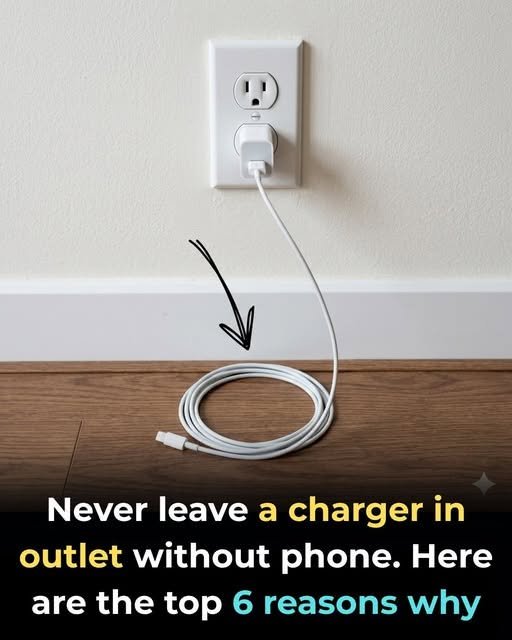
Digital media platforms frequently feature clean household photography—such as a smartphone wall charger plugged into an outlet with the cord coiled on the floor—paired with alarming headlines stating “Never leave a charger in outlet without phone. Here are the top 6 reasons why”. These viral posts rely on exaggerated household hazards, fear-based utility hooks, and manufactured urgency to bypass content moderation filters, provoke electrical safety anxiety in comment sections, and drive rapid social media sharing and ad-monetized click-through rates rather than offering accurate electrical engineering or physics education.
From an electrical engineering and physics perspective, leaving a modern phone charger plugged into a wall outlet without a device attached consumes a negligible amount of electricity—often referred to as “phantom load” or vampire draw—typically measuring less than a fraction of a watt. Quality modern chargers contain internal transformers and smart circuitry that automatically cut off significant power draw when no load is detected. While cheap, uncertified, or counterfeit chargers lacking proper thermal fuses or insulation can theoretically pose minor long-term wear or overheating risks if left indefinitely in faulty outlets, standard UL-certified chargers present virtually no fire hazard from being left plugged in empty. Content-farming networks systematically take minor electrical efficiency tips and rare hardware defect scenarios, exaggerating them into severe household dangers to manipulate engagement algorithms and maximize digital ad revenue.
Managing household electrical safety and energy efficiency effectively relies on standard electrical maintenance and certified hardware use rather than succumbing to viral internet panic. Recommended practices include using certified original or reputable third-party charging accessories, avoiding overloaded power strips, inspecting cords for fraying, and unplugging devices during severe electrical storms. Understanding how clickbait algorithms weaponize common household routines helps consumers approach online safety claims with critical media literacy. For verified guidance on electrical safety codes, appliance efficiency, or home fire prevention, consulting licensed electricians or official safety regulatory bodies provides authoritative, scientifically grounded care.
Leave a Reply