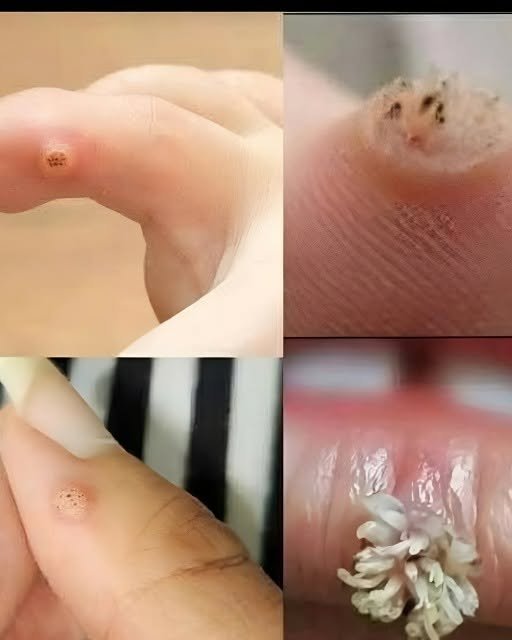
Sensational social media posts often frame common skin growths using alarming language, warning people that small, rough lesions on the hands or feet are dangerous infections. In reality, these small growths are warts—most notably plantar warts on the feet or palmar warts on the hands—which are caused by a strain of the Human Papillomavirus (HPV). While the term “infected” may sound intimidating, HPV strains that cause common warts are benign, highly prevalent, and typically affect only the outermost layer of the skin without causing systemic illness.
A key visual feature of these skin growths is the appearance of tiny dark specks near the center of the thickened skin. Often colloquially referred to as “wart seeds,” these spots are actually tiny clotted blood vessels (capillaries) that supply blood to the growing tissue. Warts can present as small, rough lumps or develop finger-like projections—known as filiform warts—which can look unusual or alarming but remain localized skin conditions. Because the virus thrives in warm, moist environments, it easily spreads through tiny cuts or skin abrasions, particularly around swimming pools, public showers, or locker rooms.
Although warts are generally harmless and can eventually clear up on their own as the immune system recognizes the virus, they can be persistent or uncomfortable, particularly on pressure-bearing areas of the feet or hands. Over-the-counter treatments containing salicylic acid, cryotherapy (freezing), and proper hygiene can help manage and remove them. It is important to avoid picking, scratching, or attempting to cut warts at home, as this can break the skin, spread the virus to other parts of the body, or lead to secondary bacterial infections.
Leave a Reply