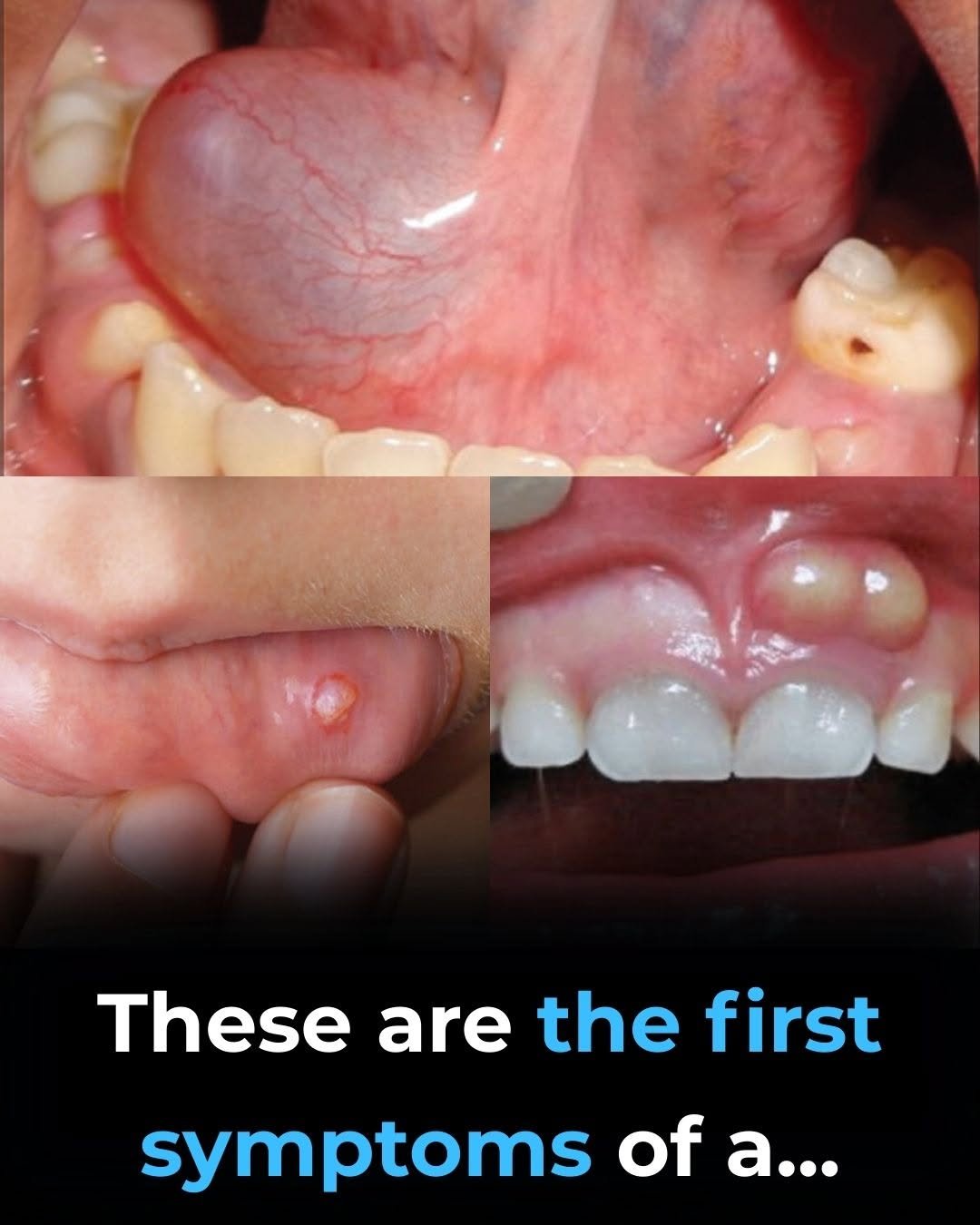
Digital media platforms frequently feature composite clinical photographs showing various oral mucosal conditions—such as a ranula under the tongue, an aphthous ulcer on the inner lip, and a gingival cyst on the upper gums—paired with incomplete, alarmist headlines like “These are the first symptoms of a…”. These viral posts rely on censorial truncation, visceral discomfort triggers, and open-ended medical warnings to provoke health anxiety, encourage panic in comment sections, and drive rapid social media sharing and ad-monetized click-through rates rather than providing accurate oral pathology education.
From an oral pathology and clinical stomatology perspective, the image composite compiles entirely distinct, non-fatal oral conditions that have separate etiologies. The top panel shows a ranula (a benign mucus extravasation cyst caused by a blocked sublingual salivary gland duct). The bottom-left panel illustrates a routine aphthous ulcer (canker sore), an acute localized inflammatory lesion. The bottom-right panel displays a gingival cyst or localized dental abscess. While content-farming networks systematically group these diverse oral conditions together under sinister cliffhanger headlines to imply early stages of systemic illness or oral cancer, most benign oral mucosal lesions resolve spontaneously or through straightforward, localized dental procedures.
Managing oral health and evaluating mucosal changes effectively relies on professional clinical examination rather than succumbing to fear-based online claims. Maintaining thorough oral hygiene, avoiding physical trauma to delicate oral tissues, and monitoring persistent swelling or non-healing sores (lasting longer than two weeks) ensure timely, appropriate medical care. Understanding how clickbait algorithms weaponize common dental and mucosal conditions helps consumers navigate health information online with critical discernment. For verified diagnostic evaluation, biopsy, or targeted clinical management regarding lesions inside the mouth, consulting a licensed dentist, oral surgeon, or periodontist provides authoritative, scientifically grounded care.
Leave a Reply