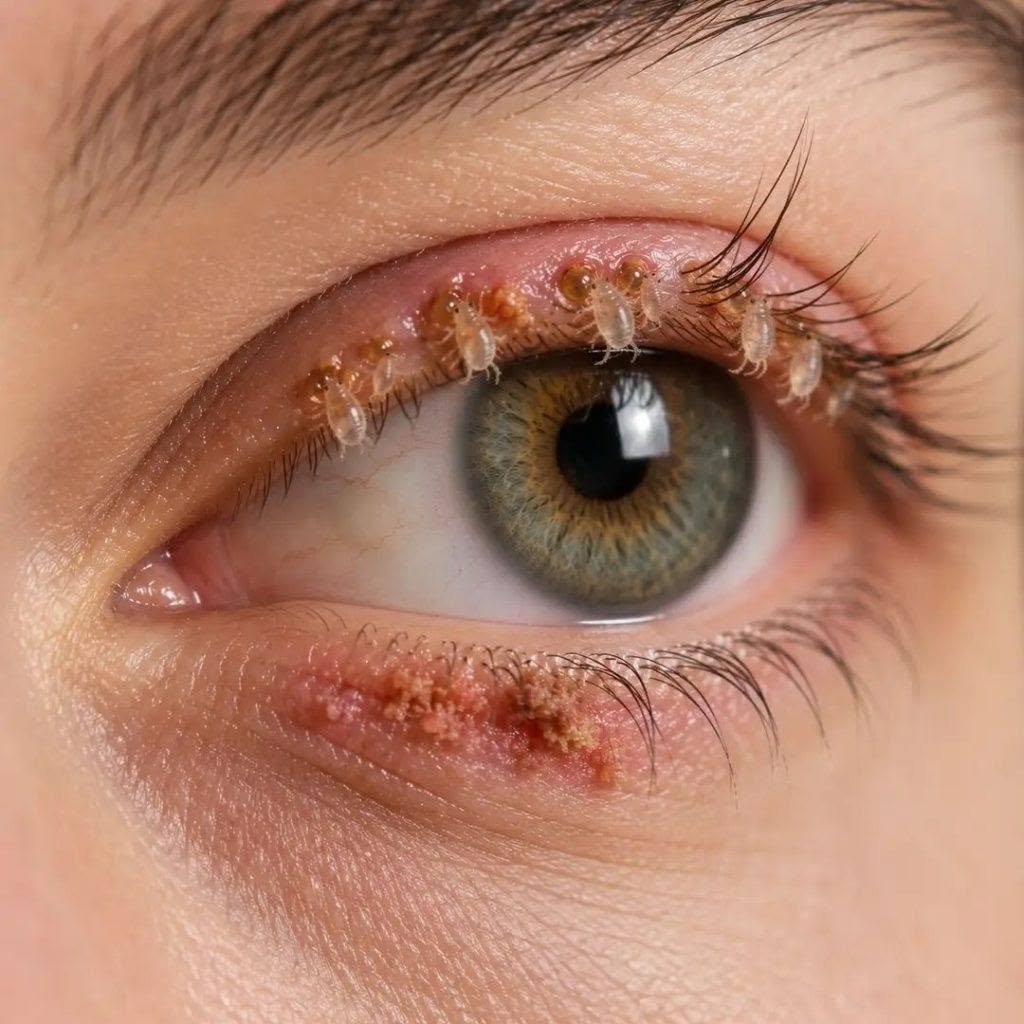
Digital media platforms frequently feature gross-out imagery depicting oversized parasites nestled along human eyelids, accompanied by incomplete warning captions about the severe dangers of sleeping with makeup or unwashed extension lashes. These viral posts rely on artificial intelligence image generation, exaggerated phobias, and health horror tactics to provoke disgust, trigger viral sharing, and maximize digital engagement metrics rather than providing scientifically accurate medical or cosmetic education.
From an ophthalmology and parasitology perspective, the image presented is a synthetic composite generated by artificial intelligence rather than a real microscopic photograph or medical case photo. Microscopic human parasites such as Demodex folliculorum (eyelash mites) do naturally inhabit hair follicles and sebaceous glands near the eyelids in most adults, but they are microscopic organism structures completely invisible to the naked human eye. While sleeping with unwashed eye makeup or improper eyelash extension hygiene can cause blepharitis (eyelid inflammation), dry eye syndrome, bacterial conjunctivitis, or Demodex overgrowth, these organisms never manifest as macroscopic, crab-like creatures lining the lid margin. Content-farming networks routinely generate synthetic parasite graphic hoaxes to exploit medical anxieties and maximize click-through advertising revenue.
Maintaining eye health and eyelid hygiene relies on proper, evidence-based cosmetic care rather than viral internet panic. Removing mascara, eyeliner, and cosmetic adhesives thoroughly every evening using gentle, ophthalmologist-tested cleansers prevents clogged meibomian glands and minimizes bacterial proliferation. Understanding how generative AI tools create hyper-realistic health horror imagery helps readers cultivate critical media literacy. If you experience persistent eyelid itching, redness, crusting along the lash line, or ocular irritation, consulting a licensed optometrist, ophthalmologist, or dermatologist provides safe, accurate, and professional medical evaluation.
Leave a Reply