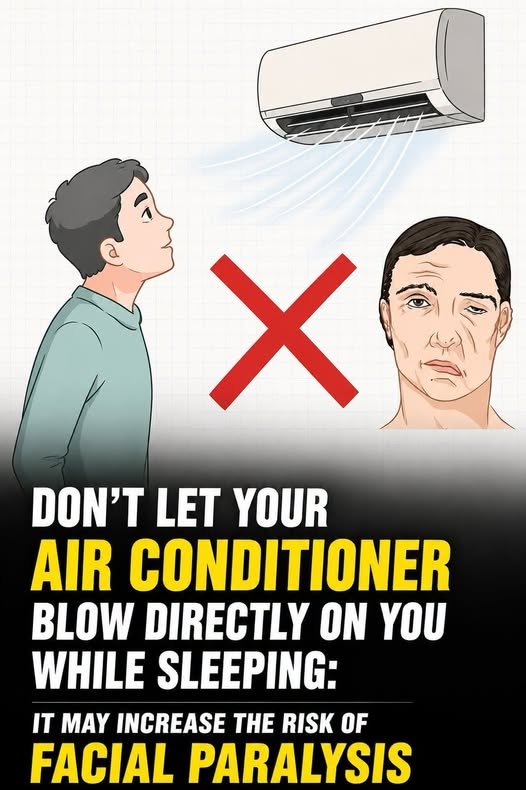
Digital media platforms frequently feature illustrated medical graphics—such as an air conditioner blowing air toward a person alongside an anatomical diagram of facial drooping—paired with sensationalized headlines like “Sleeping with the AC blowing on your face? Here’s why experts urge caution” and “DON’T LET YOUR AIR CONDITIONER BLOW DIRECTLY ON YOU WHILE SLEEPING: IT MAY INCREASE THE RISK OF FACIAL PARALYSIS”. These viral posts rely on dramatic neurological fear-mongering, environmental hazard hooks, and manufactured health warnings to bypass content moderation filters, provoke intense anxiety in comment sections, and drive rapid social media sharing and ad-monetized click-through rates rather than offering accurate neurological or clinical education.
From a neurology and environmental medicine perspective, direct airflow from an air conditioner does not cause facial paralysis (such as Bell’s palsy). Bell’s palsy is an acute facial nerve paralysis typically linked to viral infections (such as herpes simplex), inflammation, or immune responses, rather than exposure to cold air or drafts. While sleeping with an AC unit blowing directly on your face can cause minor localized discomfort—such as dry eyes, irritated nasal passages, or stiff neck muscles due to prolonged evaporation and cooling—it has no causal relationship with cranial nerve paralysis. Content-farming networks systematically take common, mild environmental annoyances and falsely link them to severe neurological conditions to manipulate recommendation algorithms and maximize digital ad revenue.
Evaluating indoor comfort and addressing neurological symptoms effectively relies on evidence-based clinical science rather than sensationalized internet myths. Standard medical guidance encourages adjusting bedroom airflow, using humidifiers, positioning beds away from direct vents, and seeking prompt professional evaluation for any sudden neurological symptoms like facial drooping or muscle weakness. Understanding how engagement algorithms weaponize health anxiety helps consumers approach online medical warnings with critical media literacy. For verified guidance on neurological conditions, cranial nerve disorders, or sleep hygiene, consulting board-certified neurologists, otolaryngologists, or primary care physicians provides authoritative, scientifically grounded care.
Leave a Reply