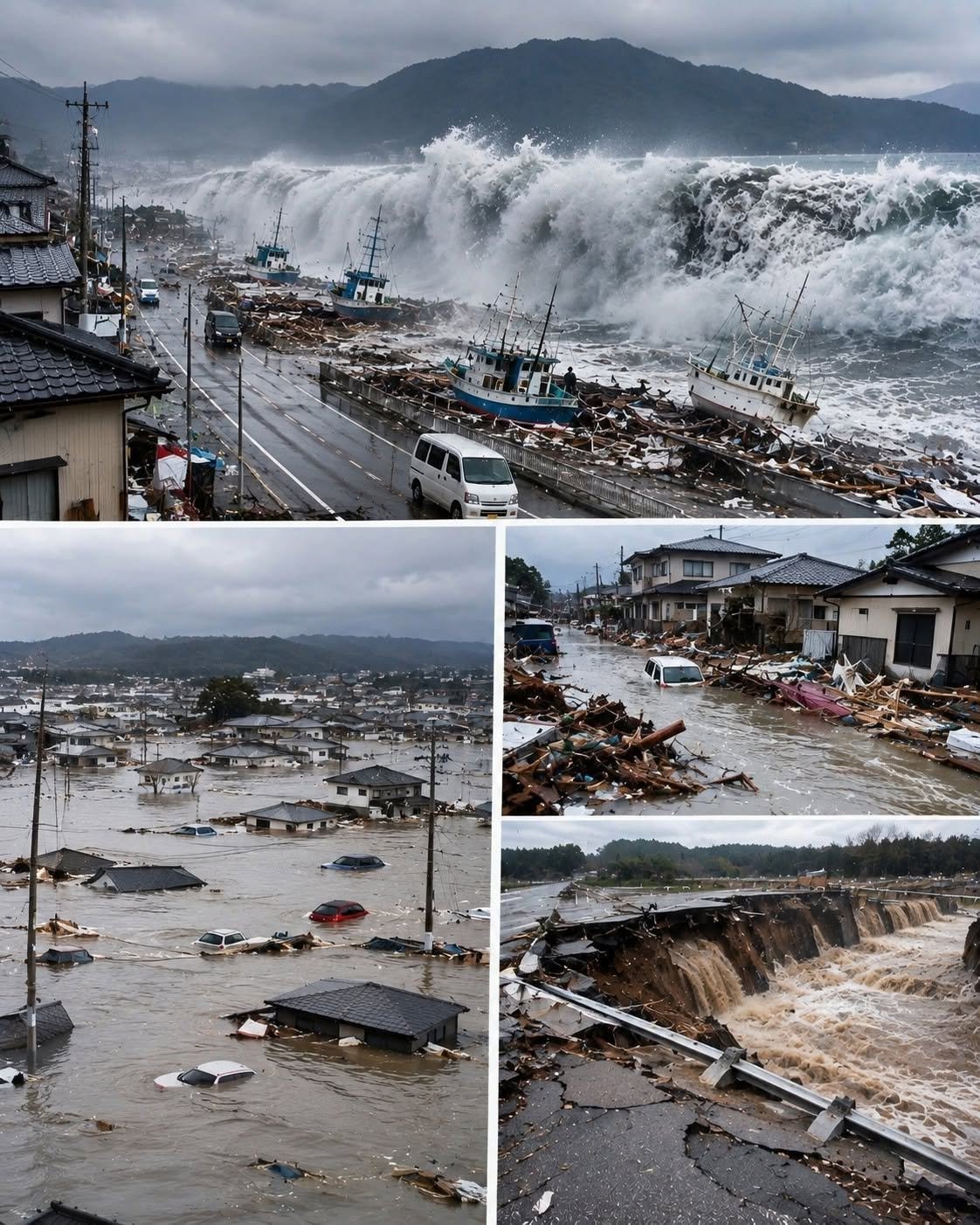
On March 11, 2011, a powerful 9.1-magnitude undersea megathrust earthquake struck off the coast of Japan’s Tōhoku region, triggering massive tsunami waves that devastated coastal cities across Miyagi, Iwate, and Fukushima prefectures. Cities such as Miyako, Kesennuma, Rikuzentakata, and Sendai faced unprecedented destruction as surge waves reaching up to 40 meters inundated kilometers of mainland territory within minutes.
The catastrophic force of the water swept away whole neighborhoods, destroyed critical infrastructure, and altered the coastline permanently. The disaster also compromised cooling systems at the Fukushima Daiichi Nuclear Power Plant, leading to a major nuclear accident and prompting wide-scale evacuations across surrounding municipalities.
In response to the tragedy, Japan implemented advanced disaster prevention measures, constructed sea walls, and revamped early warning systems. The resilience demonstrated by affected communities remains a global testament to emergency preparedness, community strength, and ongoing disaster risk reduction efforts.
Leave a Reply