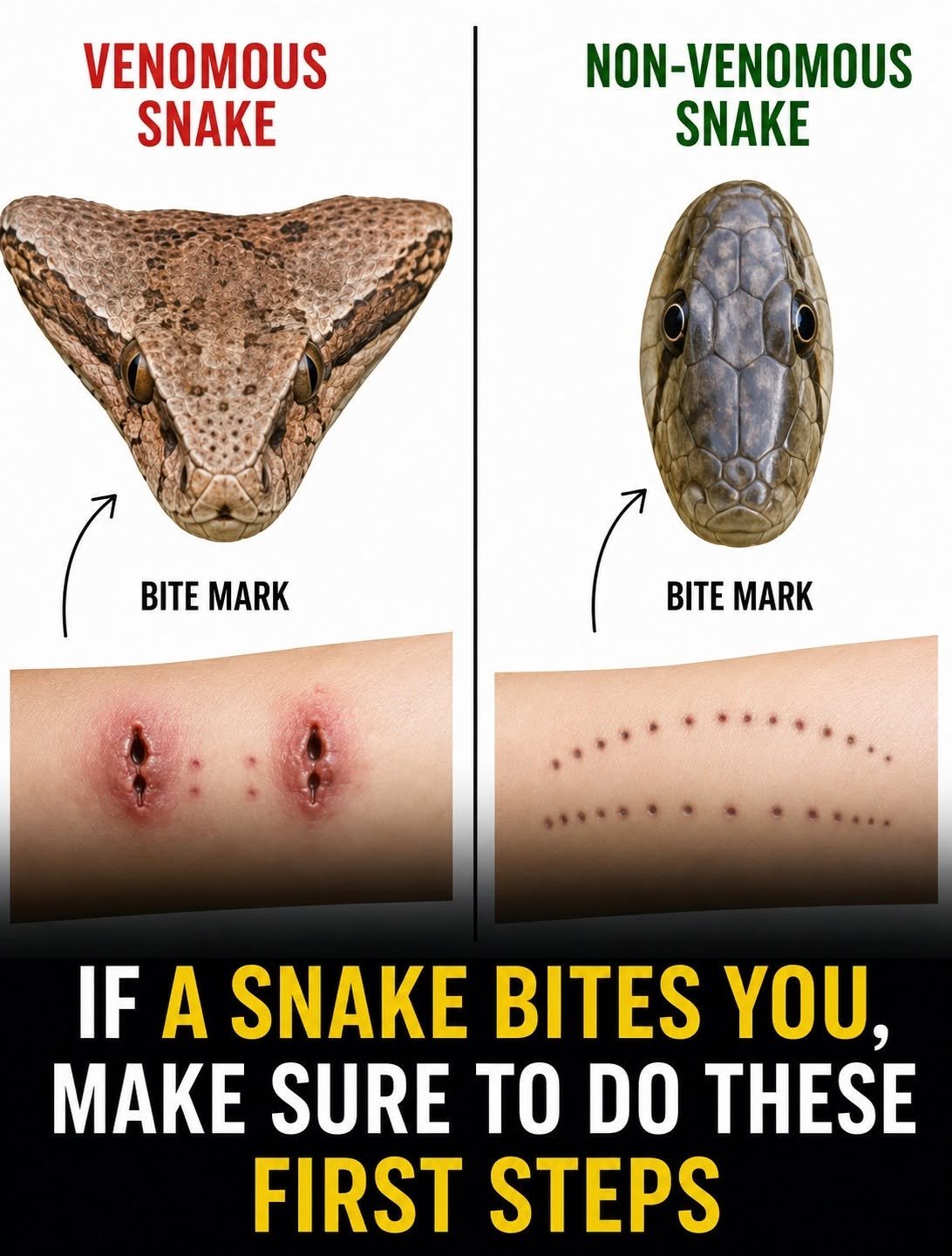
Digital media platforms frequently feature side-by-side comparison infographics—such as split diagrams claiming to differentiate triangular “venomous” heads and twin fang punctures from rounded “non-venomous” heads and semi-circular teeth marks—paired with titles like “Snake bi.te – don’t panic, do the following” and “IF A SNAKE BITES YOU, MAKE SURE TO DO THESE FIRST STEPS”. These viral posts rely on censorial text modifications (such as “bi.te”), simplified false-dilemma diagrams, and life-threatening medical oversimplifications to bypass content moderation filters, provoke acute survival anxiety, and drive rapid social media sharing and ad-monetized click-through rates rather than delivering accurate emergency clinical guidance.
From a toxinology, herpetology, and emergency medicine perspective, relying on visual head shapes or puncture patterns to determine whether a snake bite is venomous is extremely dangerous. Many highly deadly venomous species—including cobras, mambas, kraits, and coral snakes—possess rounded, sleek heads without the broad triangular shape characteristic of vipers. Furthermore, bite marks vary wildly depending on the angle of impact, movement during the strike, tissue depth, and whether a venomous snake delivered a “dry bite” or lost a fang. Content-farming networks systematically oversimplify complex biological species and medical diagnostics into easy-to-read infographics, presenting inaccurate guidelines that can cause victims to delay critical emergency care or attempt harmful traditional first-aid interventions purely to maximize platform engagement and digital ad revenue.
Managing a potential envenomation effectively relies on immediate emergency medical response and evidence-based first-aid protocols rather than social media identification guides. In any snakebite scenario, the vital protocol is to assume potential venomous exposure, remain calm to slow venom circulation, immobilize the affected limb below heart level, remove restrictive clothing or jewelry, and transport the victim to an emergency medical facility immediately for antivenom evaluation. Outdated and dangerous practices—such as applying tourniquets, cutting the wound, sucking out venom, or trying to capture the snake—must be strictly avoided. Understanding how clickbait algorithms weaponize survival anxiety helps online audiences navigate health graphics with critical media literacy. For verified emergency first-aid guidelines, toxinology protocols, or regional wildlife identification, consulting local poison control centers, emergency medical professionals, or accredited toxicological institutions provides authoritative, lifesaving care.
Leave a Reply