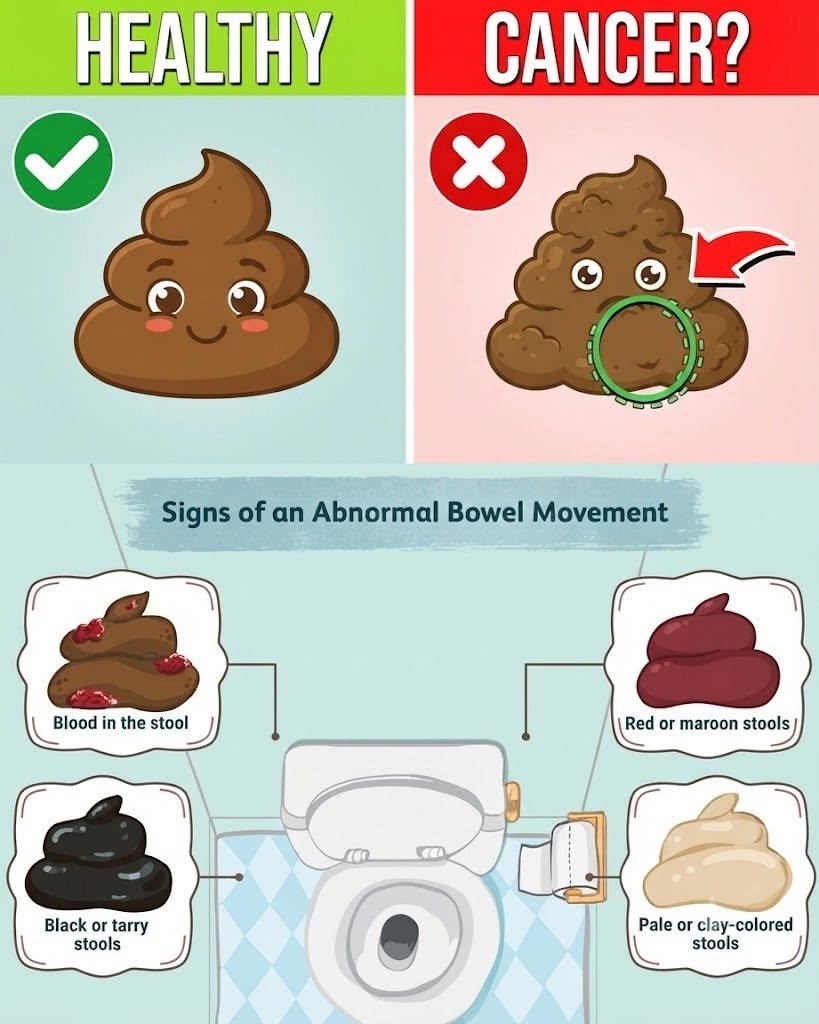
Digital media platforms frequently feature alarmist medical infographics and clickbait graphics claiming that subtle variations in stool color or shape act as an immediate diagnosis of severe internal malignancies, such as colorectal cancer. These viral posts are specifically designed to provoke health anxiety, gastrointestinal fear, and rapid online sharing rather than providing accurate, evidence-based clinical or gastroenterological education.
From a clinical and gastroenterological perspective, variations in stool color and consistency are overwhelmingly caused by routine dietary factors, fluid intake, medication use, or transient digestive transit times. For example, bright red or dark pigments often stem from consuming foods like beets, artificial dyes, or iron supplements, while pale stools may relate to temporary bile duct flow changes or antacid use. While persistent blood in the stool or unexplained, chronic changes in bowel habits warrant professional evaluation to rule out gastrointestinal conditions, jumping directly to cancer diagnoses based on a cartoon graphic flattens complex diagnostic medicine to drive click-through metrics.
Maintaining long-term digestive health involves consuming a fiber-rich, balanced diet, staying adequately hydrated, attending routine age-appropriate health screenings, and relying on professional clinical guidance rather than alarming internet generalizations. Personalized diagnostic care should always reflect a comprehensive physical exam and clinical labs rather than online self-diagnosis. If you notice persistent rectal bleeding, unexplained weight loss, chronic abdominal pain, or lasting bowel changes, consulting a licensed physician or gastroenterologist provides safe, evidence-based direction.
Leave a Reply