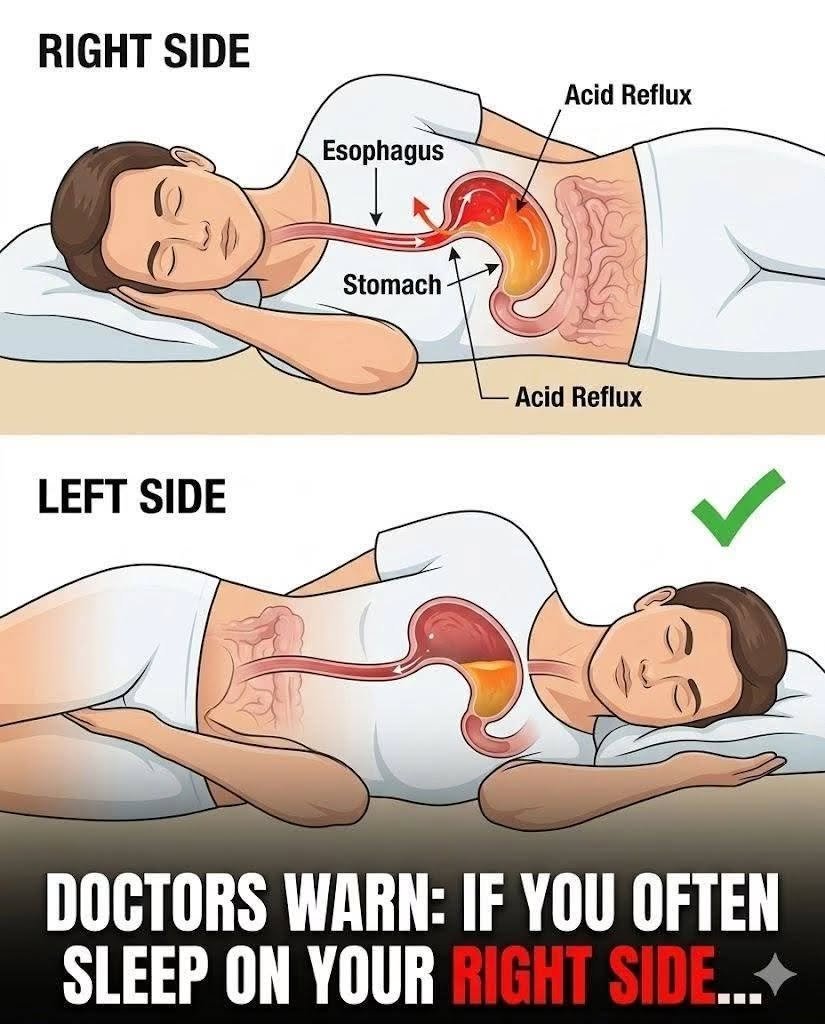
Digital media platforms frequently feature anatomical diagrams illustrating body positioning paired with dramatic, cut-off clickbait headlines—such as warning that sleeping on your right side poses immediate or mysterious health dangers. These viral posts are specifically engineered to leverage daily health anxieties, provoke curiosity, and drive rapid online comment sharing rather than providing accurate, nuanced medical or physiological education.
JPG+ 1
From a clinical gastroenterology perspective, there is a well-established anatomical mechanism linking sleep posture to gastroesophageal reflux disease (GERD) symptoms. Due to the asymmetric curvature of the human stomach and the placement of the lower esophageal sphincter (LES), lying on the left side keeps the gastroesophageal junction above the level of gastric acid, reducing nocturnal acid exposure. Conversely, sleeping on the right side positions the sphincter lower relative to the stomach pool, which can allow gastric juice to pool against the valve and increase transient reflux episodes in individuals prone to GERD. However, while left-side sleeping is a recognized clinical lifestyle modification for heartburn management, sleeping on the right side does not cause organic injury or organ dysfunction in healthy individuals without underlying acid reflux conditions. Content-farming networks routinely exaggerate normal anatomical positioning principles into terrifying, absolute medical warnings to maximize digital engagement metrics and ad revenue.
JPG
Managing sleep quality and gastrointestinal comfort involves maintaining a balanced diet, avoiding heavy meals within three hours of bedtime, elevating the head of the bed if experiencing GERD, and relying on professional clinical guidance rather than alarming internet generalizations. Individual sleeping posture preferences should reflect overall musculoskeletal comfort and personal health conditions. If you experience persistent nocturnal heartburn, chest discomfort, or acid regurgitation, consulting a licensed physician or gastroenterologist provides safe, evidence-based care.
JPG
Leave a Reply