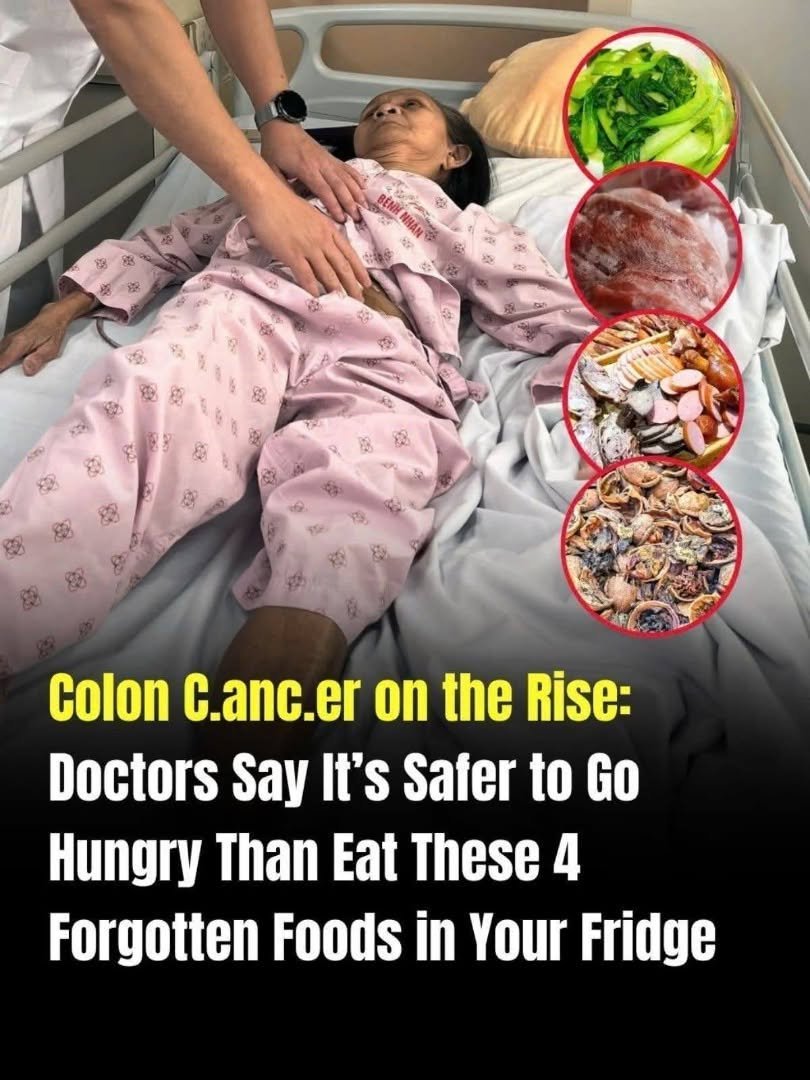
Digital media platforms frequently feature stock photography or composite images of hospitalized patients alongside circular cutouts of everyday foods—such as leafy greens, frozen meats, processed sausages, and moldy nuts—paired with sensationalized headlines claiming “Colon C.anc.er on the Rise: Doctors Say It’s Safer to Go Hungry Than Eat These 4 Forgotten Foods in Your Fridge”. These viral posts rely on strategic character punctuation (such as “C.anc.er”), extreme false-dilemma claims (“safer to go hungry”), and health-anxiety hooks to bypass social media content moderation filters, incite domestic panic, and drive rapid sharing and ad-monetized click-through rates rather than delivering accurate nutritional or oncological education.
From a gastroenterology and food microbiology perspective, routine consumption of properly handled and refrigerated leftover food does not directly cause colorectal cancer. The primary microbial hazard associated with forgotten or improperly stored refrigerated leftovers is acute foodborne illness (food poisoning caused by pathogens such as Listeria monocytogenes, Escherichia coli, or Salmonella) rather than oncogenesis. While chronic dietary factors—such as heavy intake of ultra-processed meats containing nitrates/nitrites, high red meat consumption, low dietary fiber, and exposure to mycotoxins (like aflatoxin on moldy nuts)—are established risk factors for gastrointestinal pathologies, framing routine refrigerated leftovers as an immediate oncology hazard is scientifically misleading. Content-farming networks systematically take standard food safety guidelines, sensationalize them into extreme cancer warnings, and deploy fear-mongering graphics to manipulate engagement algorithms and maximize ad revenue.
Maintaining refrigerated food safety and supporting long-term digestive health relies on standard kitchen hygiene and balanced nutrition rather than succumbing to sensationalized internet claims. Applying the standard “four-day rule” for refrigerated leftovers, keeping refrigerator temperatures at or below 40°F (4°C), reheating stored meals to an internal temperature of 165°F (74°C), and discarding visibly moldy or off-smelling foods prevent microbial foodborne risks. Understanding how clickbait algorithms weaponize dietary anxieties helps consumers navigate online health information with critical discernment. For verified guidance regarding colorectal cancer prevention, dietary risk factors, or age-appropriate screening protocols (such as colonoscopies), consulting board-certified gastroenterologists, registered dietitians, or accredited health organizations provides authoritative, scientifically grounded care.
Leave a Reply