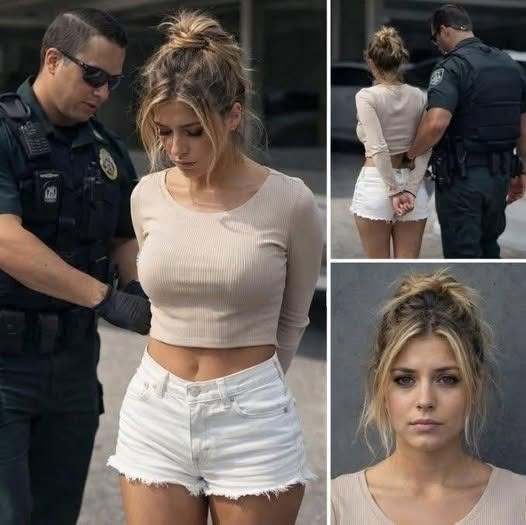
Digital media platforms frequently feature composite photo panels depicting photogenic individuals being handcuffed or mugshot-style portraits—such as a woman in casual attire surrounded by law enforcement officers—paired with incomplete, sensationalized headlines like “Unbelievable: Woman caught having s…”. These viral posts rely on censorial truncation, sexualized intrigue, and artificial law enforcement scenarios to bypass content filters, provoke tabloid curiosity, and maximize social media sharing and ad-monetized click-through rates rather than reporting authentic crime journalism.
796969532_1414566150768084_8125097222199652924_n.jpg
From a digital forensics and synthetic media analysis perspective, the images presented are AI-generated fakes designed to mimic real arrest photos and mugshots. Generative artificial intelligence models routinely display telling visual artifacts, such as hyper-smooth skin textures, unnatural hand or handcuff alignments, generic law enforcement badges lacking real departmental insignia, and visual inconsistencies between different angles of the same subject. Content-farming networks systematically generate synthetic “viral crime” scenarios and pair them with suggestive, unfinished captions to manipulate user engagement algorithms, inflate ad impressions, and drive traffic to external websites.
796969532_1414566150768084_8125097222199652924_n.jpg+ 2
Evaluating public crime news and social media arrest stories effectively requires verifying claims against accredited news organizations, official police department blotters, and public court records rather than accepting AI-generated imagery at face value. Understanding how clickbait networks utilize synthetic visuals to manufacture fake scandals helps foster critical media literacy online. For factual reports on legal proceedings, law enforcement actions, or authentic news events, consulting established news outlets and official public safety portals provides reliable, verified information.
Leave a Reply