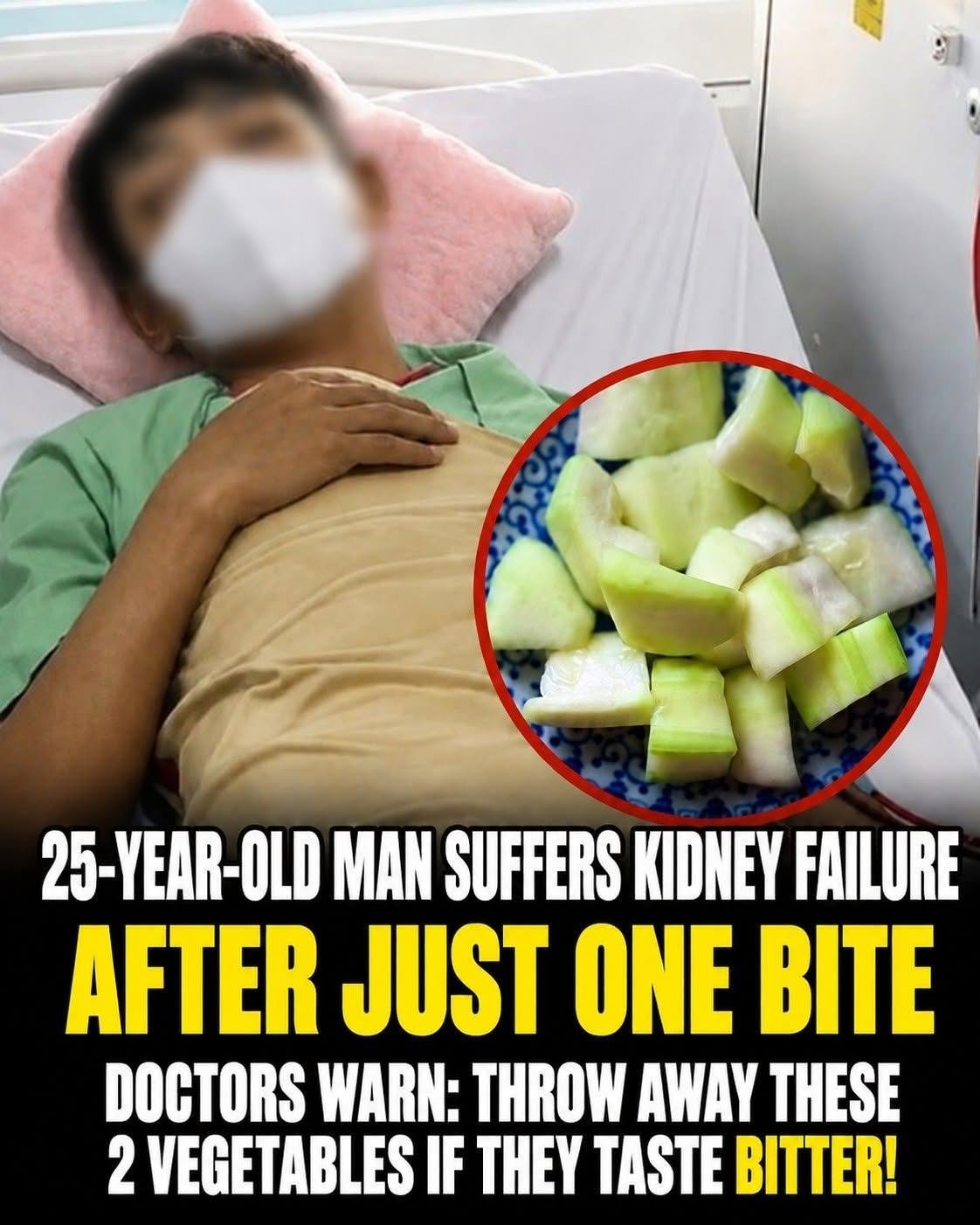
Digital media platforms frequently feature composite medical graphics depicting bedridden patients paired with alarming headlines—such as claiming a 25-year-old man suffered sudden kidney failure after taking “just one bite” of a bitter vegetable. These viral posts rely on sensationalized medical emergencies and hyperbolic framing to exploit safety anxieties, provoke alarm, and drive rapid online comment sharing rather than offering nuanced, evidence-based toxicological or clinical education.
JPG+ 1
From a clinical toxicology and nephrology perspective, consuming extremely bitter vegetables from the Cucurbitaceae family (such as bottle gourds, cucumbers, squashes, or pumpkins) can cause cucurbitacin toxicity (toxic squash syndrome). Cucurbitacins are natural chemical compounds produced by plants as a defense mechanism; in high concentrations, they act as potent gastrointestinal toxins causing severe nausea, vomiting, hematemesis, diarrhea, hypotension, and potential multi-organ stress, including secondary acute kidney injury due to hypovolemic shock. However, severe toxicity typically requires ingesting significant quantities of bitter juice or cooked produce, rather than an instantaneous single bite. Content-farming networks routinely weaponize authentic agricultural food safety warnings into dramatic, exaggerated single-bite catastrophes to maximize digital engagement metrics, click-through rates, and advertising revenue.
JPG
Practicing food safety involves discarding any gourd, squash, or cucumber that exhibits an unusually harsh or bitter taste, as cooking does not destroy cucurbitacin toxins. Preventive health relies on sensible food hygiene and verified clinical guidance rather than sensationalized online panic. If you experience severe abdominal pain, persistent vomiting, or symptoms of severe dehydration after consuming bitter produce, consulting a licensed physician, toxicologist, or medical emergency team provides safe, evidence-based care.
JPG+ 1
Leave a Reply