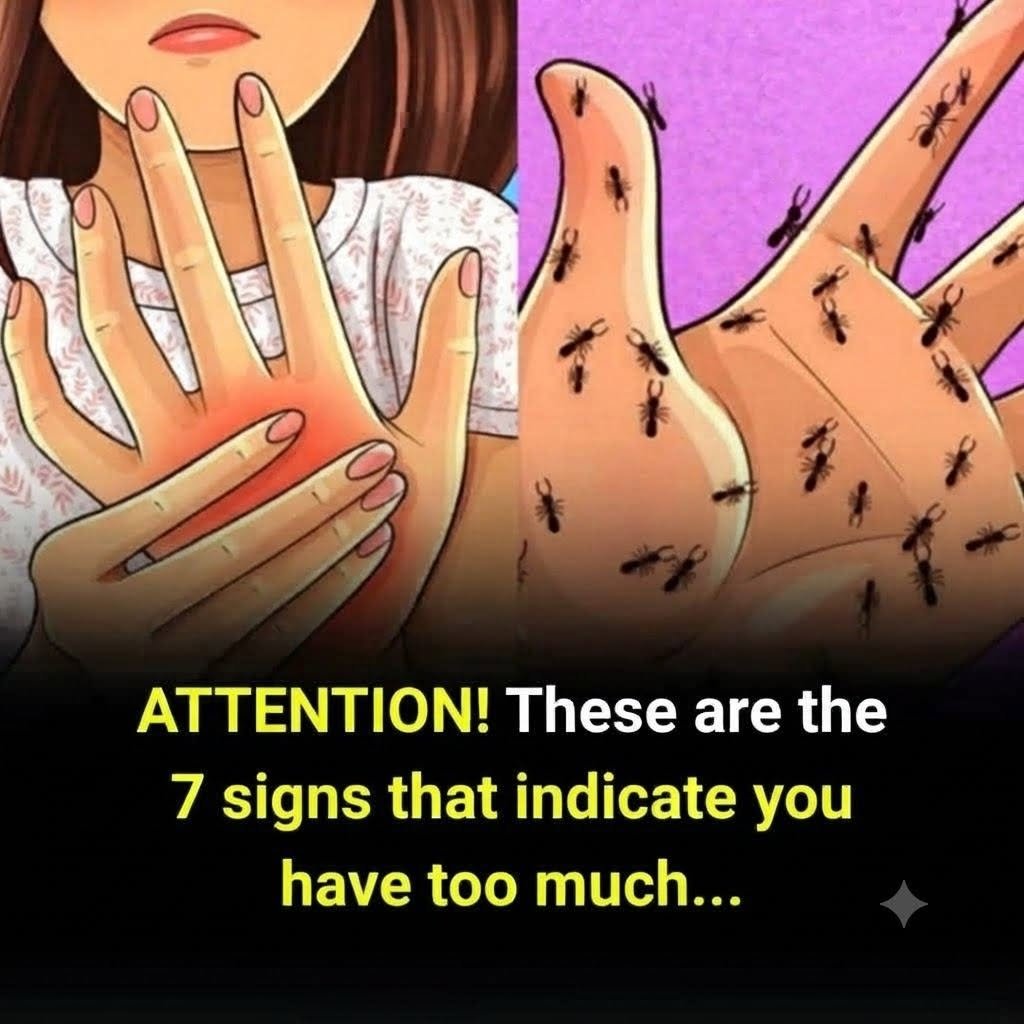
Digital media platforms frequently feature stylized vector illustrations or artwork—such as a hand experiencing burning redness alongside an image depicting ants crawling across human skin—paired with urgent headlines claiming “ATTENTION! These are the 7 signs that indicate you have too much…”. These viral posts rely on censorial truncation, visceral discomfort triggers (such as insect crawling imagery), and vague “toxin overload” claims to provoke health anxiety, encourage panic in comment sections, and drive rapid social media sharing and ad-monetized click-through rates rather than providing accurate neurological or medical education.
797339549_1413900060834693_7280168979942474395_n.jpg+ 1
From a clinical neurology and internal medicine perspective, the sensations depicted in the graphic correspond to paresthesia (tingling, burning, or “pins and needles”) and formication (the tactile hallucination of insects crawling on or under the skin). Rather than indicating a mystical “overload of toxins” requiring unproven detox supplements, these peripheral nerve sensations stem from established neurological or systemic causes, including peripheral neuropathy (often related to diabetes), nerve compression, severe anxiety, alcohol withdrawal, or vitamin deficiencies (such as B12). Content-farming networks systematically leverage disturbing visual metaphors—like ants crawling on limbs—to tap into evolutionary phobias, exaggerate routine physical sensations into terrifying systemic warnings, and manipulate platform distribution algorithms to inflate ad revenue.
797339549_1413900060834693_7280168979942474395_n.jpg+ 2
Managing nerve sensations, systemic stress, or peripheral discomfort effectively relies on evidence-based medical diagnostic evaluations rather than succumbing to pseudo-scientific detox claims. Comprehensive clinical assessment usually involves blood panels to evaluate metabolic function and nutrient levels, nerve conduction studies, and targeted management of underlying medical conditions. Understanding how clickbait algorithms weaponize common neurological symptoms and visual phobias helps consumers evaluate online health claims with critical media literacy. For verified diagnostic evaluation, nerve assessments, or guidance on persistent tingling or abnormal skin sensations, consulting a primary care physician or board-certified neurologist provides authoritative, scientifically grounded care.
Leave a Reply