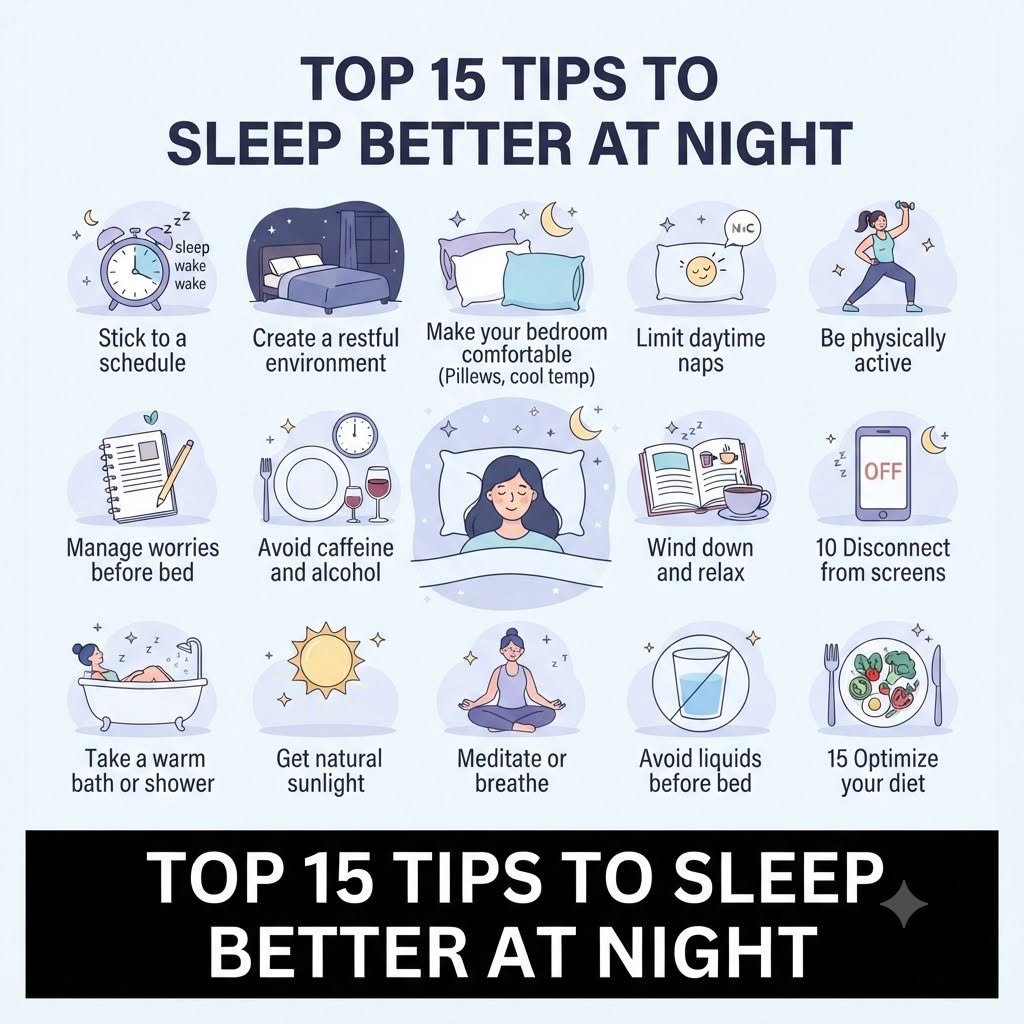
Better sleep usually comes from consistent habits rather than one miracle trick. Start by keeping a regular bedtime and wake-up time, aiming for around 7–9 hours of sleep if you are an adult. Create a relaxing pre-bed routine, keep your bedroom cool, quiet, and dark, and avoid bright screens or stimulating activities close to bedtime. Getting natural daylight during the day and exercising regularly can also help reinforce your body’s sleep-wake rhythm. Other practical habits include limiting caffeine later in the day, avoiding nicotine close to bedtime, and keeping alcohol away from your bedtime routine because it can interfere with sleep quality. The CDC recommends maintaining a consistent sleep schedule, creating a comfortable sleep environment, avoiding electronic devices before bed, and avoiding large meals and alcohol before bedtime. (cdc.gov)
Here are 15 simple habits you can gradually incorporate: 1) keep a consistent sleep schedule, 2) allow enough time for 7–9 hours of sleep, 3) get daylight exposure during the morning or daytime, 4) exercise regularly, 5) create a calming bedtime routine, 6) keep the bedroom dark and comfortable, 7) reduce bright light before bed, 8) avoid caffeine in the afternoon and evening, 9) avoid nicotine close to bedtime, 10) avoid heavy meals shortly before sleeping, 11) limit alcohol near bedtime, 12) keep daytime naps short and earlier when possible, 13) use your bed primarily for sleep, 14) if you cannot sleep, get up briefly and do something quiet until you feel sleepy, and 15) address persistent snoring or other sleep problems with a healthcare professional. The National Heart, Lung, and Blood Institute recommends many of these strategies as part of healthy sleep habits and notes that a consistent routine can help your body recognize when it is time to sleep. (nhlbi.nih.gov) You do not have to adopt everything overnight—choosing a few realistic changes and practicing them consistently can be more sustainable.
If you regularly get enough time in bed but still wake feeling exhausted, frequently wake during the night, or experience loud snoring, gasping, choking, or witnessed breathing pauses, don’t simply assume you need more sleep. These can sometimes be signs of a sleep disorder such as obstructive sleep apnea and may warrant professional evaluation. (nhlbi.nih.gov) Similarly, persistent difficulty falling asleep or staying asleep may require more than lifestyle changes. Keeping a simple sleep diary can help you identify patterns and provide useful information to a healthcare professional. Remember that good sleep is part of overall health alongside nutritious eating, physical activity, stress management, and appropriate medical care. Disclaimer: This article is for general educational and informational purposes only and does not constitute medical diagnosis, treatment, or personalized medical advice. Sleep needs and responses to lifestyle changes vary between individuals, and no single routine guarantees perfect sleep. Some online sleep advice may be exaggerated or unauthenticated, so always verify important information through reliable medical sources and consult a qualified healthcare professional about persistent or severe sleep problems.
Leave a Reply