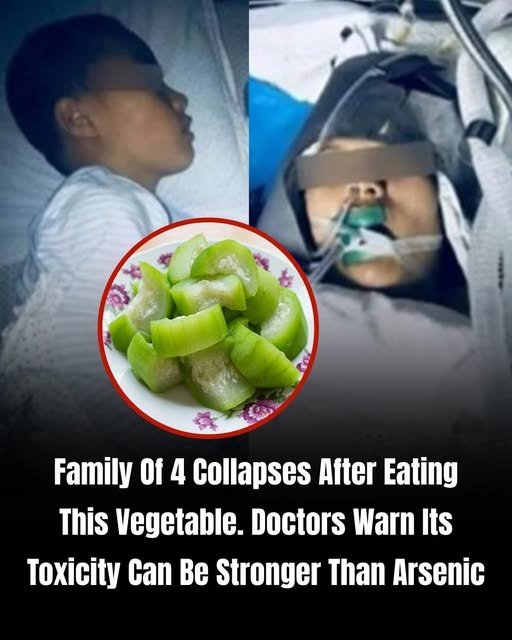
The image depicts sliced bottle gourd (often called lauki or sponge gourd) alongside sensational headlines claiming a family collapsed and that its toxicity is “stronger than arsenic”. While the extreme comparison to arsenic is sensationalized clickbait, there is a genuine medical condition behind bitter gourds: Toxic Cucurbit Poisoning (or Toxic Squash Syndrome).
The Chemistry: Cucurbitacin Toxicity
- Natural Defense Mechanism: Members of the Cucurbitaceae family—which includes bottle gourds, cucumbers, squashes, and pumpkins—produce natural biochemical compounds called cucurbitacins. These compounds impart a distinct bitter taste designed to protect the plants against insects and herbivores.
- Cultivated vs. Wild/Stressed Plants: Standard commercially grown gourds are bred to have negligible, safe levels of cucurbitacins. However, cross-pollination, high temperatures, drought stress, or improper storage can trigger a surge in cucurbitacin levels, making the vegetable intensely bitter and toxic.
- Clinical Symptoms: Ingesting abnormally bitter gourd juice or flesh can cause severe gastrointestinal distress, including nausea, severe vomiting, abdominal cramps, hematemesis (vomiting blood), gastrointestinal bleeding, and a sharp drop in blood pressure.
The Rule of Thumb: Avoid Bitter Gourds
- Taste-Test Before Cooking: Always taste a tiny slice of raw bottle gourd or cucumber before cooking or juicing it.
- Discard Instantly: If it tastes noticeably bitter, discard the entire vegetable immediately. Neither cooking, boiling, nor adding spices neutralizes cucurbitacins.
- Seek Medical Care: If someone experiences severe abdominal pain or vomiting after eating a bitter gourd, they should seek medical attention promptly for hydration and supportive care.
Sensational Clickbait vs. Medical Facts
Social media graphics claiming a vegetable is “more toxic than arsenic” manipulate real medical warnings into viral fear-mongering:
- Sensational Hyperbole: Comparing rare plant poisoning to heavy metal toxins like arsenic is scientifically inaccurate and designed to maximize fear.
- Engagement Farming: Using alarming hospital imagery and withholding the name of the vegetable forces users to click through, leave comments, and share the post out of panic.
While toxic cucurbit poisoning is a real medical risk, simple kitchen precautions—discarding any gourd that tastes bitter—completely eliminate the hazard.
Leave a Reply