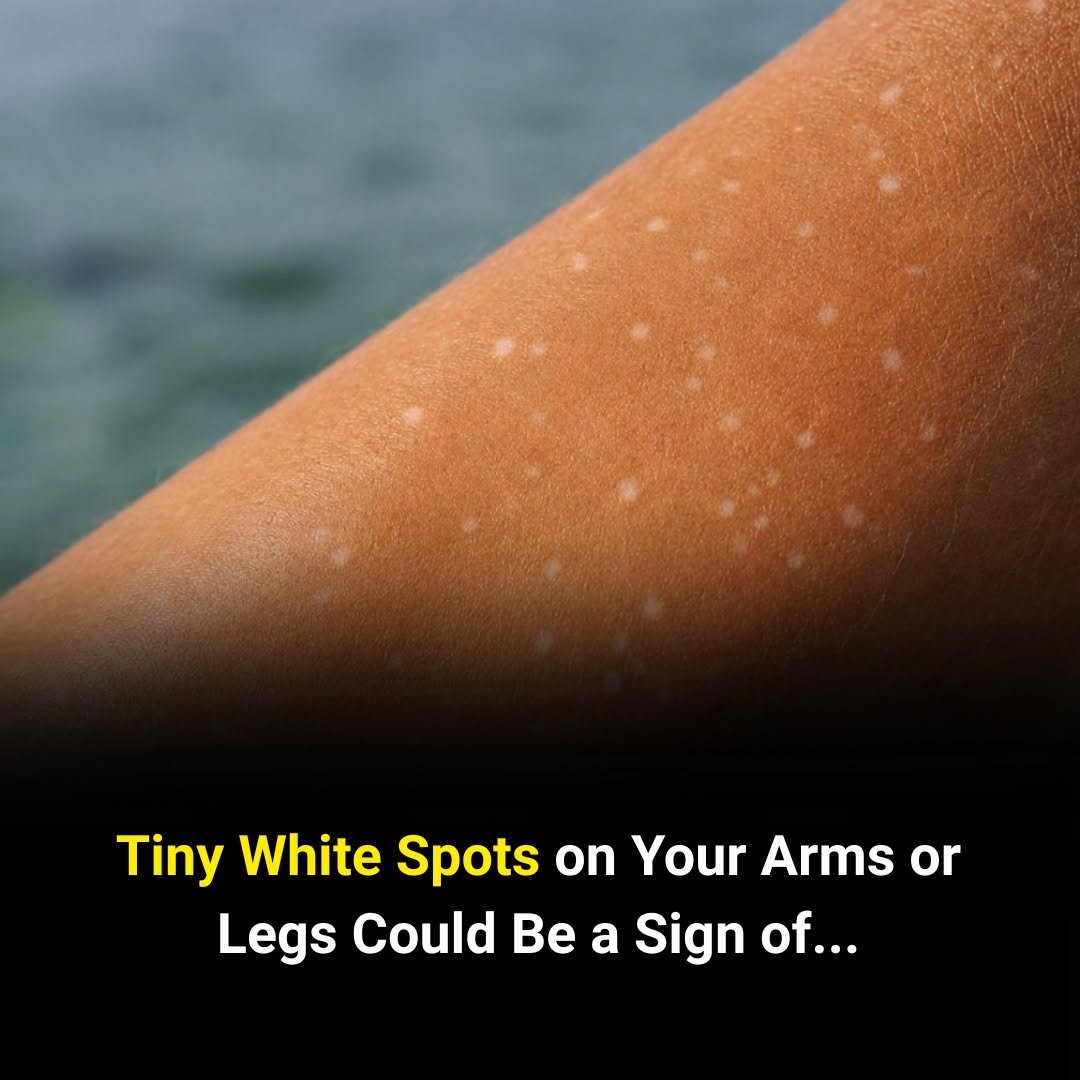
Tiny white or lighter-colored spots on the arms or legs can look harmless, and often they are. However, changes in skin pigmentation can have several possible explanations, ranging from ordinary sun-related changes to conditions such as vitiligo or fungal skin infections. Vitiligo occurs when pigment-producing cells called melanocytes are damaged or no longer function normally, producing pale or white patches. It can affect the hands, arms, knees, elbows, feet, and other areas, and the patches may gradually become more noticeable. Another possibility is pityriasis versicolor, a common fungal skin condition that can create pale, pink, brown, or lighter patches, particularly on the upper arms, chest, back, and neck. Because several different conditions can produce similar-looking spots, the appearance alone is not enough to determine the cause.
There are also completely benign explanations for small white spots. Some may represent areas of reduced pigmentation that have existed for years, while others can appear after previous inflammation, irritation, injury, or sun exposure. The pattern can provide useful clues: vitiligo often produces clearly defined pale patches and may occur symmetrically on both sides of the body, while pityriasis versicolor can produce flatter patches that may have fine scaling and sometimes mild itching. Importantly, having white spots does not automatically mean you have a serious disease, and it is not appropriate to assume that every pigmentation change represents a vitamin deficiency or another internal health problem. If the spots are new, increasing in number, changing in appearance, becoming itchy or scaly, or appearing alongside other unusual skin changes, a doctor or dermatologist can examine them and determine whether further testing is necessary. NHS guidance specifically recommends professional assessment when you are concerned about changes in skin color.
The best approach is to avoid self-diagnosing from social-media pictures and instead monitor any persistent skin changes. Taking occasional photographs in similar lighting can help you notice whether the spots are spreading or changing, while protecting exposed skin from excessive sunlight is especially important when areas have lost pigment. People with vitiligo have less melanin in affected areas, making those patches more vulnerable to sunburn, so appropriate sun protection is recommended. If the spots continue to spread, become symptomatic, or simply concern you, arrange an examination with a qualified healthcare professional or dermatologist. Disclaimer: This article is for general educational and informational purposes only and does not constitute medical advice, diagnosis, or treatment. Tiny white spots can have many different causes, and their appearance alone cannot establish a diagnosis. Always verify health information through reliable medical or scientific sources and consult a qualified healthcare professional for an accurate assessment.
Leave a Reply