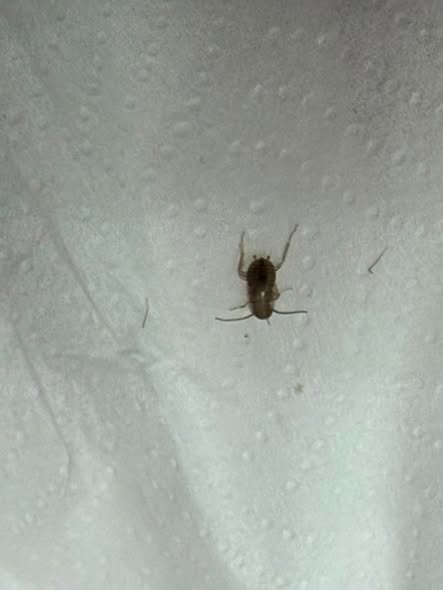
Based on the photograph, this insect does appear consistent with a cockroach nymph, although the exact species cannot be confirmed from this image alone. It has the small, wingless body and long antennae commonly seen in immature cockroaches. Since you’re in North Texas and have already found around seven, including several dead ones, it is worth taking the sightings seriously rather than assuming they are isolated visitors.
One possibility is a German cockroach nymph, particularly if the insects are very small and have a darker body with a lighter central marking. Texas A&M describes German cockroach nymphs as smaller, wingless insects with characteristic pale markings along the darker body. However, other Texas cockroach species can also produce small, dark nymphs, so the photograph does not provide enough detail for a confident species-level identification. American, smokybrown, oriental, and other cockroaches occur in Texas, and their immature stages can look quite different depending on age. The number of sightings is the bigger reason to investigate. Cockroach nymphs generally develop from egg cases and remain hidden in cracks, crevices, cabinets, plumbing areas, wall voids, or other protected locations. German cockroaches are particularly associated with indoor environments and can reproduce rapidly under favorable conditions. Finding several nymphs can therefore suggest that there may be an established population nearby, although insects can also enter homes from outdoors depending on the species.
Rather than panic, start with identification and monitoring. Place sticky monitoring traps in areas where you have seen them, particularly along walls, under appliances, near sinks, and in dark corners. Keep food sealed, clean crumbs and spills promptly, reduce moisture from leaks, and remove unnecessary cardboard or clutter that can provide hiding places. If you continue finding nymphs, discover adults or egg cases, or see activity in multiple rooms, a professional pest inspection can help determine the species and locate the source. Texas A&M notes that effective cockroach management combines identification, sanitation, and appropriate control measures. Seven sightings are enough to justify checking the home, but they do not by themselves prove how large the infestation is. A sharper close-up photograph, preferably showing the insect from directly above and including something for scale, could make identification more reliable.
Leave a Reply