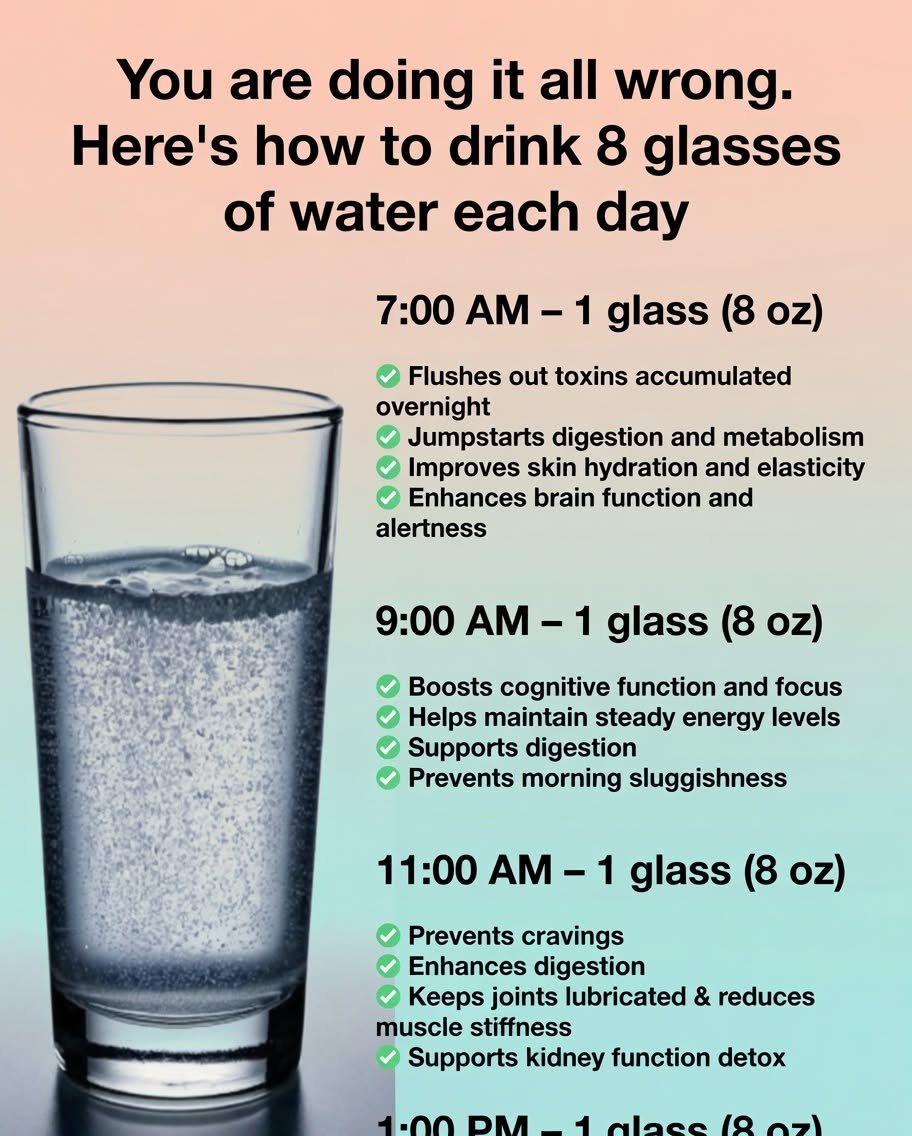
Staying hydrated is essential for normal body function, temperature regulation, digestion, circulation, and waste removal, but the popular “eight glasses a day” rule is not a universal requirement for everyone. Fluid needs vary depending on body size, activity level, climate, diet, age, pregnancy, breastfeeding, and certain medical conditions. The CDC notes that water needs can differ from person to person and that plain water is an excellent way to meet fluid requirements. (cdc.gov) A simple way to build a consistent routine is to spread your drinks throughout the day instead of trying to consume a large amount at once. You might have one glass after waking, another with breakfast, one mid-morning, one with lunch, one during the afternoon, one with dinner, and another in the evening. Foods such as fruits, vegetables, soups, and other beverages also contribute to total fluid intake.
If you frequently forget to drink water, make hydration easy and automatic. Keep a reusable bottle nearby, drink a glass with meals, and take a few sips whenever you return to your desk, finish a task, or come back from outside. You can also add naturally flavorful ingredients such as lemon, mint, or slices of cucumber if plain water feels boring. Choosing water instead of sugary drinks can be particularly helpful because it provides hydration without added sugar and calories. (cdc.gov) During hot weather or exercise, your fluid requirements may increase because you lose more water through sweating. Pay attention to thirst and other signs of dehydration, such as a dry mouth, dizziness, unusual tiredness, or darker urine. However, drinking excessively is not better; very large amounts of water over a short period can be dangerous.
The key is to focus on regular hydration rather than obsessing over an exact number of glasses. If eight glasses fits comfortably into your daily routine, it can be a convenient personal target, but your body’s needs may be higher or lower. People with kidney, heart, or liver conditions who have been instructed to restrict fluids should follow their healthcare professional’s recommendations instead of adopting a generic hydration goal. Likewise, athletes or people working outdoors in hot environments may need a more individualized strategy. Disclaimer: This article is for general educational and hydration information only and does not constitute medical diagnosis, treatment, or personalized advice. The “8 glasses” guideline is not appropriate for everyone, and individual fluid needs vary. Always verify important health information through reliable medical sources and consult a qualified healthcare professional if you have a medical condition or concerns about hydration.
Leave a Reply