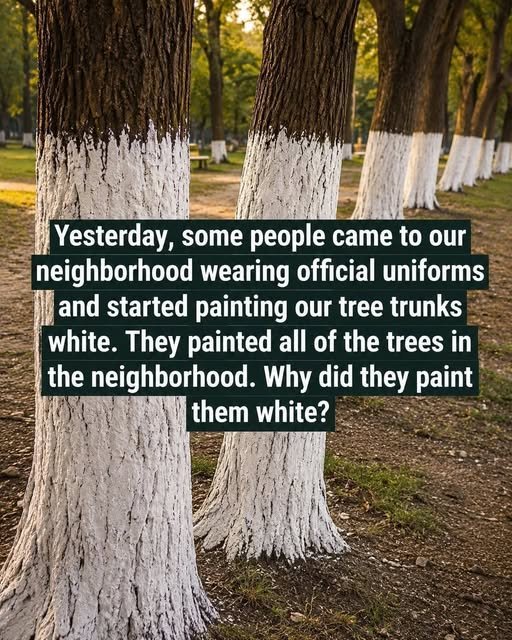
Encountering tree trunks coated in bright white paint along municipal streets, orchards, and public parks often prompts curiosity among residents. Known horticulturally as tree whitewashing or limewashing, this widespread practice is an established agricultural and forestry technique rather than a simple cosmetic choice. Applied by municipal crews and arborists using a mixture of water-based latex paint or slaked lime, whitewashing serves as a critical protective shield against environmental stressors, pest infestations, and bark damage.
Key Environmental and Agricultural Benefits
- Prevention of Sunscald and Thermal Cracking: Young or thin-barked trees are highly susceptible to sunscald during seasonal temperature fluctuations. The white paint reflects direct sunlight, preventing the bark from overheating during bright winter days and rapidly cooling at night, which can cause intense thermal expansion and destructive cracking.
- Protection Against Wood-Boring Pests: Adding whitewash deters wood-boring beetles, aphids, and egg-laying insects from burrowing into bark crevices. The protective coating acts as a physical barrier while filling deep bark fissures where pests typically hibernate.
- Increased Nighttime Visibility and Boundary Marking: In urban environments, municipal authorities paint trees bordering public roads and walkways to reflect vehicle headlights. This enhances roadside visibility for drivers during nighttime hours while signaling officially managed urban forestry zones.
Best Practices for Application
Proper whitewashing requires using non-toxic, breathable coatings to avoid harming delicate plant tissue. Arborists utilize fifty-fifty mixtures of interior water-based latex paint combined with water, ensuring air and moisture exchange across the bark remains unhindered. Oil-based paints or toxic chemical sealants must never be applied, as they suffocate living cambium layers and trap harmful fungi. When performed correctly by municipal teams or home gardeners, limewashing significantly enhances urban tree longevity, reduces maintenance costs, and ensures robust forest health across public ecosystems.
Leave a Reply