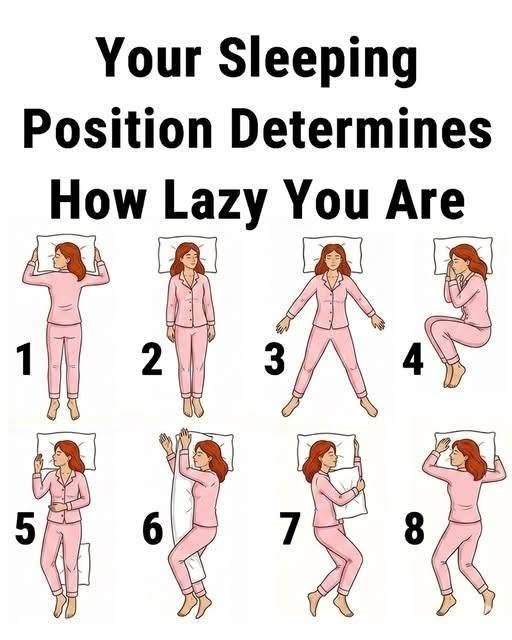
Viral social media graphics often claim that your preferred sleeping posture reveals personal traits, such as laziness, productivity, or core emotional habits. The image illustrates eight common sleep positions—ranging from back sleeping with arms raised (1) and neutral side-sleeping (2) to starfish spreads (3) and curled fetal positions (4). While these personality charts generate high online engagement, medical science confirms that nighttime posture is driven by musculoskeletal comfort, airway alignment, and physical health rather than personal ambition or character traits.
Biomechanical and Ergonomic Realities of Sleep Posture
- Side Sleeping (Positions 4, 5, 6, & 7): Side sleeping is the most common adult posture, highly recommended by sleep specialists to promote spinal alignment and reduce gastroesophageal reflux. Hugging a pillow (Positions 6 & 7) provides crucial hip and shoulder support, preventing joint strain rather than signaling behavioral laziness.
- Back Sleeping (Positions 1, 2, & 3): Lying flat on the back helps evenly distribute body weight and protects the spine. However, wide-spread starfish or raised-arm positions often reflect natural temperature regulation or upper-body tension relief.
- Airway Dynamics: Individuals who shift frequently or adopt unusual sleeping postures often do so unconsciously to keep their airways open, alleviating nighttime breathing resistance or snoring.
Promoting Optimal Sleep Quality over Viral Myths
Debunking pseudoscientific personality quizzes allows individuals to focus on evidence-based sleep hygiene rather than internet tropes. Choosing a sleeping position should be guided by physical comfort, spinal health, and pre-existing medical conditions, such as acid reflux or chronic back pain. Utilizing supportive pillows and a quality mattress ensures proper ergonomic rest, leading to higher daytime energy, improved cognitive function, and long-term health benefits.
Leave a Reply