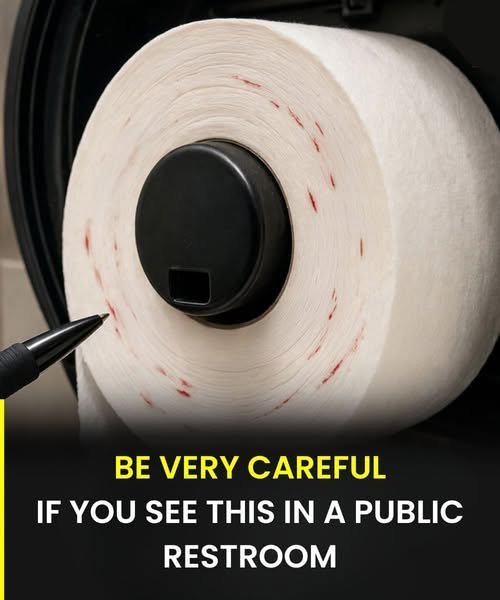
The viral graphic shows a roll of public restroom toilet paper marked with tiny red specks, accompanied by an urgent warning advising people to be extremely cautious. This image represents a widely circulated internet warning that mixes a rare real-world behavior with sensationalized public health panic.
The Claim: Harm Reduction vs. Contamination Myths
- The Urban Myth Origins: Social media posts frequently claim that red or brown specks on toilet paper rolls are blood left behind by intravenous drug users wiping dirty needles to clean them before reuse.
- Real-World Rarity: While some harm-reduction and public health advocates note that needle-wiping on paper rolls can occasionally happen in areas with high rates of public drug use, it is an extremely rare occurrence rather than a widespread public restroom hazard.
- Medical Risk Profile: Viruses like HIV decay rapidly once exposed to air and dried on porous surfaces. While Hepatitis B and C survive longer in blood, transmission still requires significant blood-to-blood or direct mucous membrane exposure, making contractible infection from brief contact with dry, spotted paper biologically unlikely.
- Common Alternative Causes: In most cases, red or pink markings on public toilet paper come from ordinary factors—such as ink transfer from paper roll manufacturing, dispenser rust, dye bleeding, or someone with a bleeding finger or menstrual blood touching the roll.
Fear-Based Health Clickbait Tactics
Graphics framed with vague, alarming text like “BE VERY CAREFUL IF YOU SEE THIS IN A PUBLIC RESTROOM” are textbook examples of fear-driven engagement farming.
Content creators use these sensational formats to maximize platform performance:
- The Fear and Disgust Trigger: Depicting blood or bodily fluids on everyday hygiene items evokes immediate disgust and concern, forcing users to stop scrolling.
- Artificial Mystery (The Clickbait Hook): Withholding the explanation in the image text (“if you ever go into a public restroom and see this…”) forces users to click the post, view advertisements, or open the comment section.
- Comment Section Amplification: Alarmist warnings encourage thousands of users to tag friends, recount personal stories, or debate safety, generating massive comment engagement that tricks platform algorithms into promoting the post.
Recommended Hygiene Practice
If you ever encounter a toilet paper roll in a public restroom with visible discoloration, blood, or damage, simply avoid using that specific roll and inform facility management. However, there is no need to panic—the actual risk of contracting a disease from dried marks on paper remains extraordinarily low.
Leave a Reply