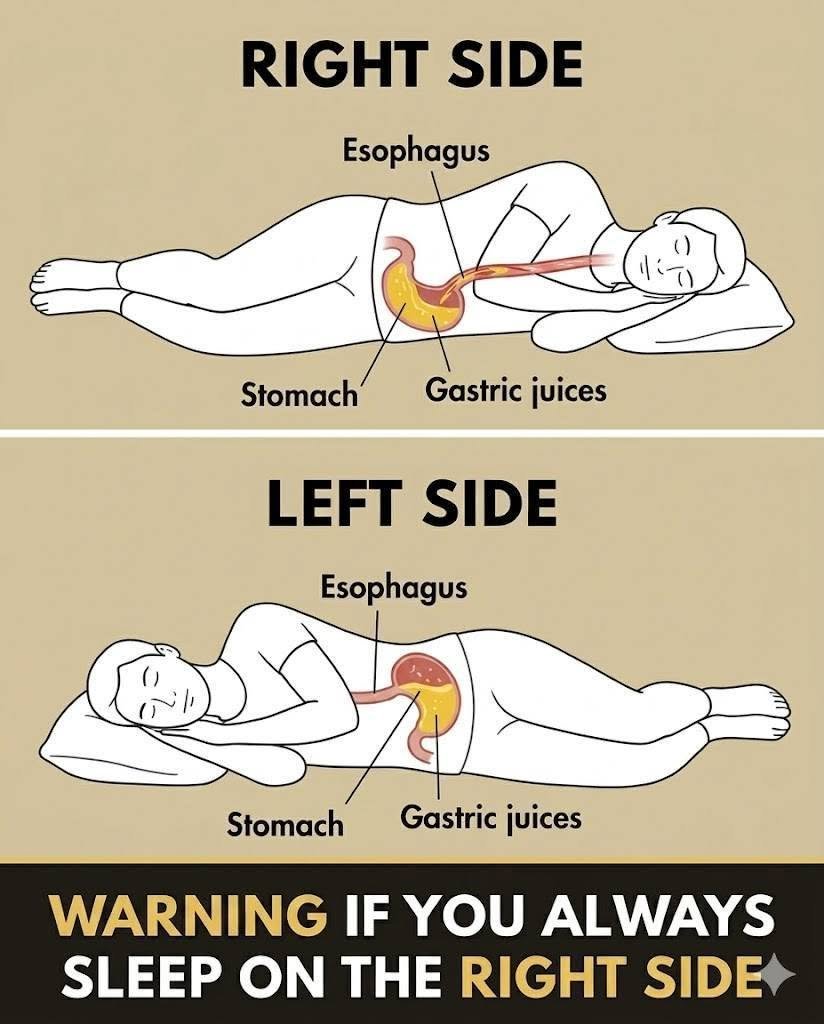
Sleeping on your right side is not inherently unhealthy, and for many people it is simply a comfortable sleeping position. However, your preferred position can influence certain symptoms, particularly digestion and breathing. Research comparing left- and right-side sleeping has found that body position can affect how quickly stomach acid moves into the esophagus. People who experience gastroesophageal reflux disease (GERD) may notice that lying on the right side makes nighttime reflux more likely or more severe. A study published in The American Journal of Gastroenterology found that right-side sleeping was associated with significantly greater acid exposure and slower clearance of reflux compared with left-side sleeping. (pubmed.ncbi.nlm.nih.gov) This is one reason doctors often recommend trying the left side for people whose heartburn becomes worse at night.
Your sleeping position can also affect snoring and sleep-disordered breathing. Side sleeping generally tends to keep the airway more open than sleeping flat on the back, which may reduce obstructive breathing events in some people with obstructive sleep apnea. (pubmed.ncbi.nlm.nih.gov) However, there is not strong evidence that the right side itself is dangerous or that everyone should switch to the left. If you regularly wake up choking or gasping, snore loudly, experience morning headaches, or feel excessively sleepy during the day, the important issue is not which side you sleep on—it is whether an underlying sleep disorder is present. (mayoclinic.org) For people with certain heart or lung conditions, pregnancy, or other medical concerns, the ideal sleeping position may also depend on individual circumstances.
If you sleep comfortably on your right side and wake feeling rested, there is usually no reason to change simply because of your sleeping preference. But if you experience frequent nighttime heartburn, experimenting with left-side sleeping may be worthwhile. Keeping the upper body slightly elevated, avoiding large meals close to bedtime, and identifying personal food triggers can also help reduce reflux symptoms. (mayoclinic.org) If you have persistent reflux, repeated nighttime breathing problems, chest discomfort, or unexplained sleep disruption, discuss these symptoms with a healthcare professional rather than assuming they are caused solely by sleeping position. Disclaimer: This article is for general educational and health information only and does not constitute medical diagnosis, treatment, or personalized advice. Right-side sleeping is not inherently harmful for most people, and research does not support a blanket warning against it. Individual medical conditions can change what sleeping position is most comfortable or appropriate, so verify important health claims through reliable medical sources and consult a qualified healthcare professional when needed.
Leave a Reply