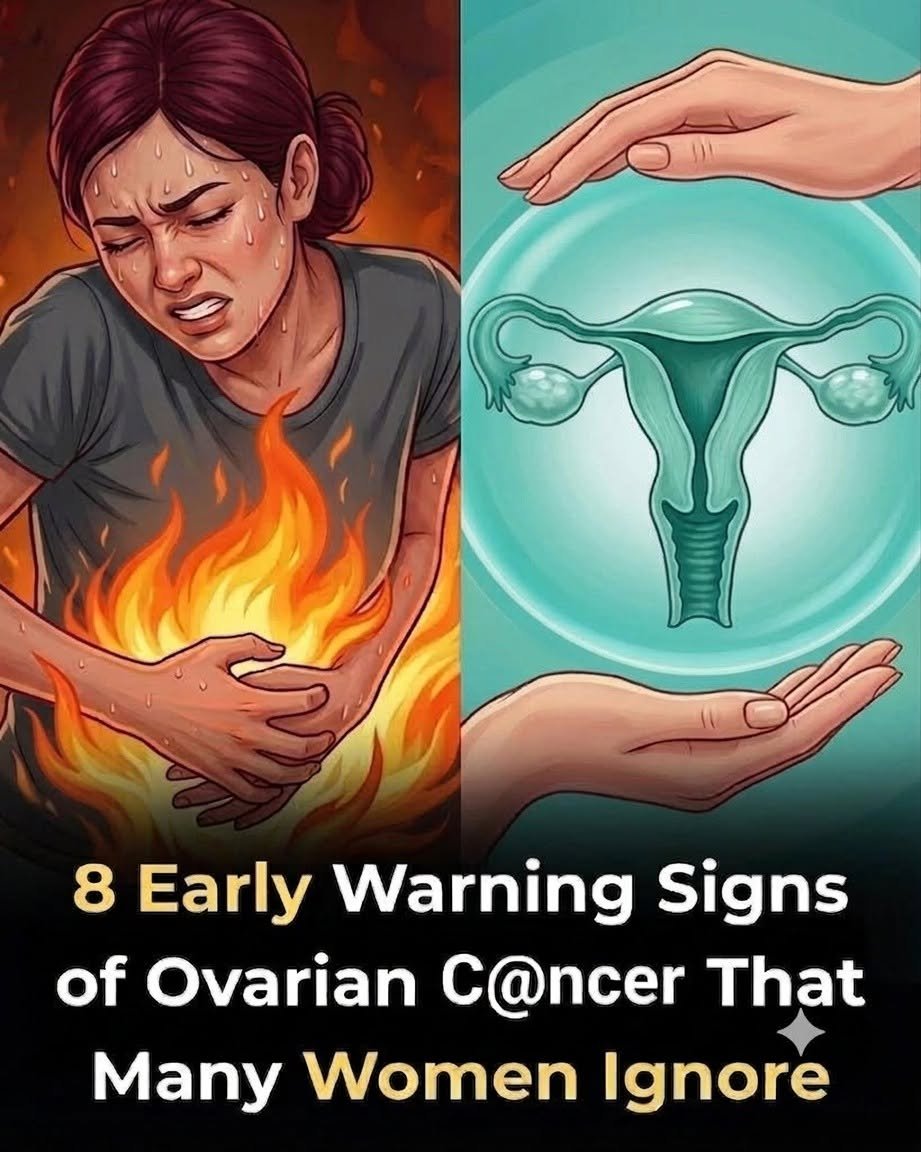
Ovarian cancer can sometimes be difficult to recognize because its symptoms may be subtle, persistent, and easily confused with common digestive or urinary problems. Important symptoms to watch for include persistent bloating or abdominal swelling, pelvic or abdominal pain or pressure, feeling full unusually quickly, reduced appetite or difficulty eating, needing to urinate more frequently or urgently, constipation or diarrhea, persistent back pain, and unusual vaginal bleeding or discharge. These symptoms do not automatically mean ovarian cancer—many common conditions can cause the same problems—but a change that is unusual for you and continues or becomes more frequent should not simply be dismissed. The NHS notes that ovarian cancer occurs more commonly in women over 50, although anyone with ovaries can develop it.
One particularly important clue is persistence and frequency. The CDC advises speaking with a doctor if unusual vaginal bleeding occurs, while other symptoms that continue for two weeks or longer and are not normal for you should also be evaluated. A woman might initially assume repeated bloating is indigestion or that urinary urgency is simply part of getting older, but recurring symptoms deserve a closer look. Other possible symptoms include ongoing tiredness and unexplained weight loss. There is currently no simple, reliable routine screening test for ovarian cancer in women who have no symptoms, and a Pap test does not screen for ovarian cancer. When symptoms raise concern, a healthcare professional may consider examinations, blood tests such as CA-125, and ultrasound or other imaging depending on the individual situation.
The most important message is know what is normal for your body and don’t ignore persistent changes. Keeping a simple record of when symptoms occur, how often they happen, and whether they are becoming more frequent can help when discussing them with a healthcare professional. A family history of ovarian, breast, uterine, or colorectal cancer may also be important to mention because certain inherited genetic changes can increase risk. Early evaluation does not mean you have cancer; it simply helps determine the real cause of the symptoms and, when necessary, allows treatment to begin sooner. Disclaimer: This article is for general educational and informational purposes only and does not constitute medical diagnosis, treatment, or personalized medical advice. The symptoms described can result from many conditions other than ovarian cancer, and having one or more of them does not mean you have cancer. Some health information online may be general, exaggerated, or unauthenticated, so important claims should always be verified through reliable medical sources and a qualified healthcare professional.
Leave a Reply