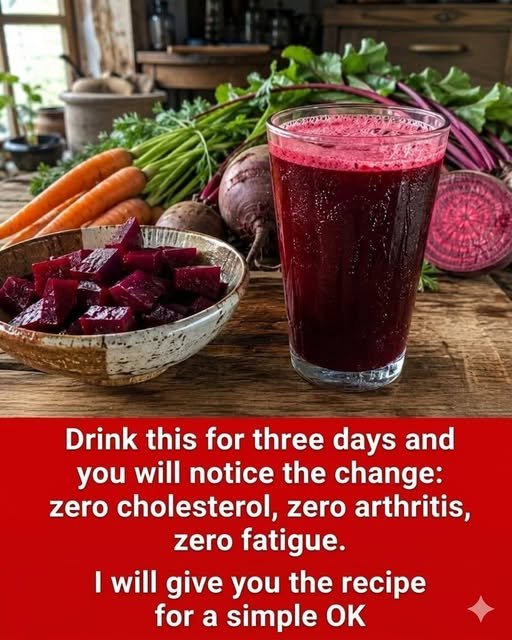
The graphic showcases a rustic kitchen scene featuring a glass of vibrant red juice alongside beets, carrots, and chopped beetroot, under the bold claim: “Drink this for three days and you will notice the change: zero cholesterol, zero arthritis, zero fatigue.” Promises of immediate, total cures for chronic medical conditions within 72 hours are biologically impossible and represent classic health clickbait.
While a blend of beet and carrot juice is a nutrient-dense addition to a balanced diet, it is not a overnight cure-all.
Nutritional Breakdown and Real Health Benefits
- Nitrates and Blood Pressure Support: Beets are naturally rich in dietary nitrates, which the body converts into nitric oxide. Nitric oxide helps relax and dilate blood vessels (vasodilation), which can lead to modest improvements in blood pressure and circulation over time—not “zero cholesterol” overnight.
- Antioxidants and Anti-Inflammatory Compounds: Carrots provide beta-carotene (vitamin A precursor), and beets contain betalains. These powerful antioxidants help combat systemic oxidative stress and inflammation, which can support joint health and general wellness as part of a long-term diet, but they cannot cure arthritis.
- Stamina and Fatigue: Studies show the nitrates in beetroot juice can improve oxygen efficiency during physical exercise, offering a natural stamina boost. However, chronic fatigue can stem from underlying medical issues (like anemia, thyroid dysfunction, or sleep apnea) that juice alone cannot resolve.
- Nutritional Considerations: Juicing removes the insoluble fiber found in whole vegetables, meaning the natural sugars in carrots and beets enter the bloodstream faster. People managing diabetes or blood sugar spikes should be mindful of juice portion sizes.
Deconstructing the Clickbait Formula
Graphics like this use precise psychological design choices to drive engagement on social media:
- Absolute Promises (“Zero” Anything): Claiming “zero cholesterol” or “zero arthritis” uses extreme, unrealistic language to trigger hope in people living with painful or chronic health conditions.
- Comment Baiting (“Give me a simple OK”): Prompts asking users to reply with a specific word (“OK”, “YES”, “RECIPE”) trick platform algorithms into treating the post as high-engagement, boosting its reach to millions of feeds.
- Hyper-Short Timelines: Promising dramatic physiological changes in just 3 days creates an artificial urgency that encourages rapid sharing before critical thinking kicks in.
A daily glass of fresh beet and carrot juice is a great source of vitamins and antioxidants, but real health management requires long-term lifestyle habits and guidance from healthcare professionals, not 3-day miracle drinks.
Leave a Reply