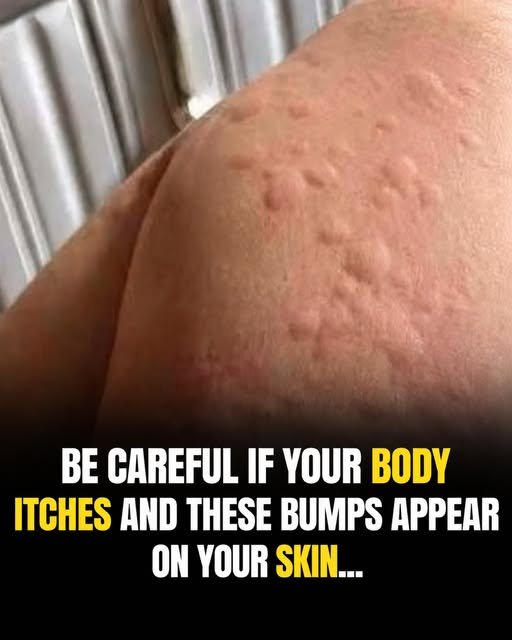
The image shows raised, swollen, itchy red bumps on the skin—a classic presentation of hives (medically known as urticaria)—paired with alarmist text warning scrollers to “BE CAREFUL IF YOUR BODY ITCHES AND THESE BUMPS APPEAR ON YOUR SKIN…”.
While sudden skin outbreaks can be uncomfortable, hives are a extremely common biological reaction rather than a sudden, mysterious medical emergency.
What Are Hives and What Causes Them?
- The Biological Mechanism:
- Hives occur when specialized immune cells (mast cells) release histamine and other inflammatory chemicals into the skin.
- Histamine causes blood vessels to dilate and leak fluid into surrounding tissues, creating raised, smooth, itchy swellings called welts or wheals.
- Common Triggers:
- Allergens: Certain foods (nuts, shellfish, eggs), medications (antibiotics, NSAIDs), insect stings, or latex.
- Physical Factors: Extreme heat or cold, sunlight (solar urticaria), friction/pressure (dermatographia), or sweating.
- Infections: Viral illnesses (like the common cold, flu, or COVID-19) frequently trigger hives in both adults and children.
- Stress: Emotional stress or physical strain can trigger or worsen histamine release.
- Typical Treatment:
- Most mild cases resolve on their own within hours to days. Over-the-counter antihistamines help block histamine activity and relieve itching. Cold compresses also soothe skin irritation.
When Are Hives Actually Dangerous?
While hives themselves are benign, they can occasionally be a symptom of a severe, life-threatening allergic reaction called anaphylaxis. Seek immediate emergency medical care if hives occur alongside:
- Difficulty breathing, shortness of breath, or wheezing
- Swelling of the tongue, lips, throat, or face (angioedema)
- Dizziness, lightheadedness, or feeling faint
- Nausea, vomiting, or severe abdominal pain
Deconstructing Health-Panic Clickbait
This post follows the standard formula used by content farms to drive viral reach:
- Ominous Ellipsis (“…”): Leaving the text incomplete (“BE CAREFUL IF…”) intentionally creates a fear-based curiosity gap, forcing users to click an external link to find out what “deadly condition” they might have.
- Universal Symptoms: Using extremely common symptoms—itching and skin bumps—ensures that almost every viewer can relate, raising engagement as panicked users check their own skin.
- Engagement Harvesting: Frightened scrollers save, share, and comment on the post to ask for medical advice, which social media algorithms reward with widespread exposure.
Leave a Reply